 BikeBiz Bicycle and cycling retail news
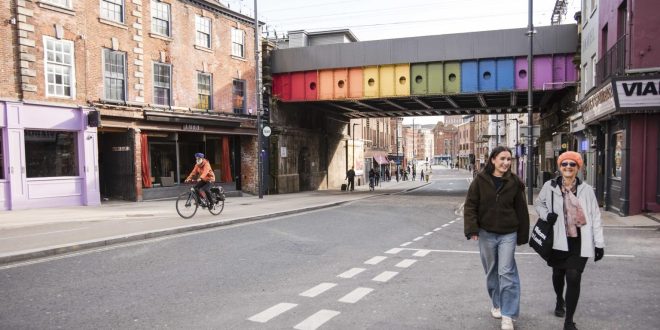
Active Travel England (ATE) has announced almost £300 million in funding to boost walking, wheeling and cycling in communities across England.
The news, shared via the ATE website, LinkedIn and X (Twitter), comes with a video outlining some of the way in which the funding will be utilised.
Active Travel England (ATE) – an executive agency sponsored by the Department for Transport – is the government’s executive agency responsible for making walking, wheeling and cycling the preferred choice for everyone to get around in England.
Funding challenges for stated goals
The agency has endured a tough time since its inception in August of 2022, seeing a succession of funding challenges impact its ability to deliver on stated goals.
In September of 2022, Chris Boardman, head of ATE, stated: “England would need up to £18bn to grow cycling equitably between rural and urban areas, against a current pot of up to £3.8bn”, further adding that “targeted increases in active travel to meet the 50% target would cost £9bn, while doing so equally across rural and urban areas would cost double that, adding “this is what it takes to deliver the product. And then it’s a political decision of how important you think it is”.
Boardman further added: “If we focus on areas of high population density, we focus on [authorities] who have the capability now to meet the targets by 2030, we can do that. If we want to spread it more equitably across the country, go to rural areas, then that will move towards the £18 billion, and that’s a governmental choice.”
March of 2023 saw the Conservative government of the day deliver “a devastating £200m cut to the active travel budget in England.” As Sustrans reported, “This sets us on the completely wrong path for society, the economy and the environment. And it sees the government backtrack on its previous pledges for active travel investment.” Other sources at the time had the budget cut closer to £380 million.
Big numbers in context
What will ‘almost £300 million’ deliver? For context:
“Building a new major road in the UK can cost anywhere between £20 million and £60 million per mile, with a typical “standard” dual carriageway costing around £40 million per mile, depending on factors like terrain, land acquisition costs, and complexity of junctions involved.”
On a more positive note (2018 data): “Cycle superhighway costs range from £1.15 million to £1.45 million per kilometre for a two-way physically segregated superhighway, to £740,000 per kilometre for a two-way lightly segregated superhighway.”
Why active travel matters – for health, for the environment, for the economy
As a snapshot of the challenges facing the entire UK, it has been reported that: “Obesity rates in Wales have doubled since 1994, and we are under-reporting these figures.
“According to Nesta, Wales has far and away the biggest obesity problem in the UK, with 34% of adults obese. Across the UK, ill health alone from obesity costs the NHS £11bn; wider societal costs mount up to £74bn”
Taking a global view, Michelle Smyth, Head of International Sports & Cycling, at the World Federation of the Sporting Goods Industry (WFSGI), spoke with BikeBiz at length, highlighting the impact of increasingly inactive lifestyles.
Making active travel an easy choice requires government to invest in infrastructure which creates a strong sense of safety, and time efficiency – making it the obvious choice, when appropriate. This should also have a positive impact on traffic volumes when car journeys are required.
Bigger picture challenges
As was commented on during media coverage about the proposed third runway at Heathrow – transport infrastructure conversations are routinely presented – by government and private sector vested interests – as delivering a numerically quantified value (even if the source of the numbers is clearly vested in self-interest, biased as a result, and sourced from a decade old paper which has – by a variety of sources – been thoroughly debunked).
Conversely, active travel and public transport infrastructure is repeatedly presented as an all too often unaffordable cost.
This needs to change. Radically.
Image credit: Active Travel England.


