This piece first appeared in the January edition of BikeBiz magazine – not subscribed? Get a free subscription.
[divider style=”solid” top=”20″ bottom=”20″]
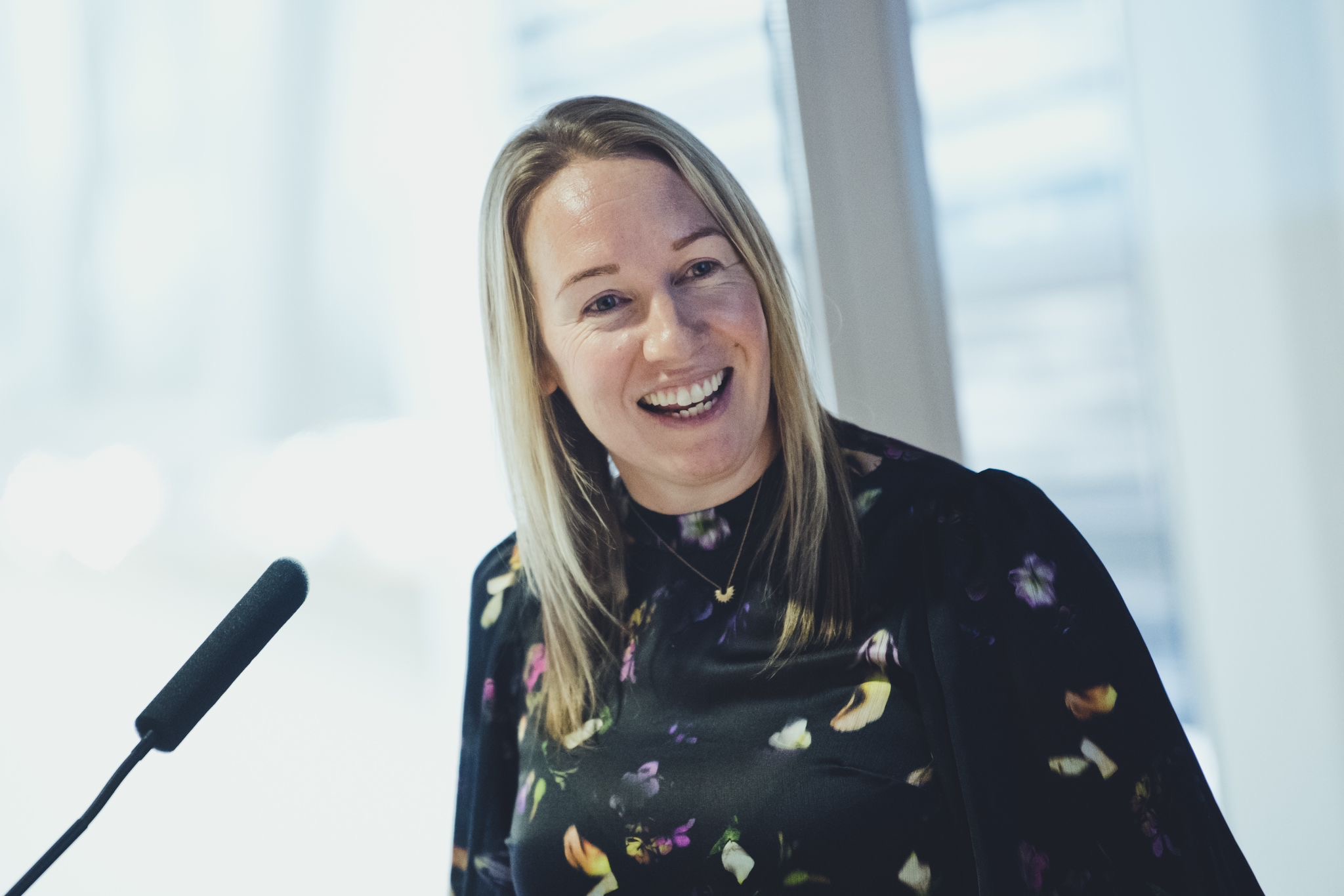
Simon Cox talks with Michelle Smyth, Head of International Sports & Cycling, at the World Federation of the Sporting Goods Industry (WFSGI), exploring the global challenge of population inactivity.
Why does the global challenge of population inactivity matter to bike brands, and the bike business?
Increasing numbers of adults and adolescents fail to get even the minimum amount of exercise.
You can likely see where this is going.
Cycling, as with any other sport and leisure activity, faces the prospect of a rapid decrease in potential new customers, whilst at the same time seeing its existing customer base slowly ageing out (getting older and slowly exiting the market).
If this doesn’t grab the attention of our industry, at all levels, nothing will.
Michelle, let’s start with those eyewatering World Health Organisation (WHO) inactivity numbers.
They’re shocking: A bit of a goosebumps moment whenever I give the figures to people that I’m talking with.
The latest WHO figures came out in June 2024. Adult inactivity levels rose from 28% in 2019 to 31%. Adolescents, 11 to 17-year-olds, see four out of five (81%) not getting enough physical activity.
For context, the WHO identifies a physical activity adult as taking a minimum of 150 minutes of physical activity per week, and, for an adolescent, 60 minutes per day.
Clearly, these metrics are currently not going in the right direction.
What does that mean for the cycling industry?
The next generation of riders – people we depend upon for the long-term viability of our industry – is a rapidly shrinking section of society.
Where the figures for Gen Z (individuals born approximately between 1997 and 2012) are already high for inactivity, Gen Alpha (those born from 2010 to 2024), if following the current trend, is going heavily in the wrong direction – a trajectory that represents an existential threat to the cycling industry.
Beyond the cycling industry, the bigger picture is inactivity directly affecting children’s well-being, their health, and how they spend their hours of play. And it’s also having a massive impact on adults: The impact on workplace health.
What role can the WFSGI play in positively addressing this worryingly negative societal trend?
One of the beauties of the WFSGI is that an inordinate amount – 25% – of our membership, are cycling brands including the likes of Specialized, BMC, Shimano, Canyon, and Giant. We can get companies who are typically competing against each other, to sit together at the table and talk about the issues that they need support on. These issues span regulatory, trade, international sports, ESG and global physical inactivity.
So where issues arise that they cannot solve on their own, and they need to have that collective voice, working together we can facilitate this. Often it’s ‘long journey’ projects.
We’re in a really unique position to enable organisations that are direct competitors, such as Shimano and SRAM, to sit around the table and actually discuss big-picture challenges to find collaborative solutions. It’s quite rare.
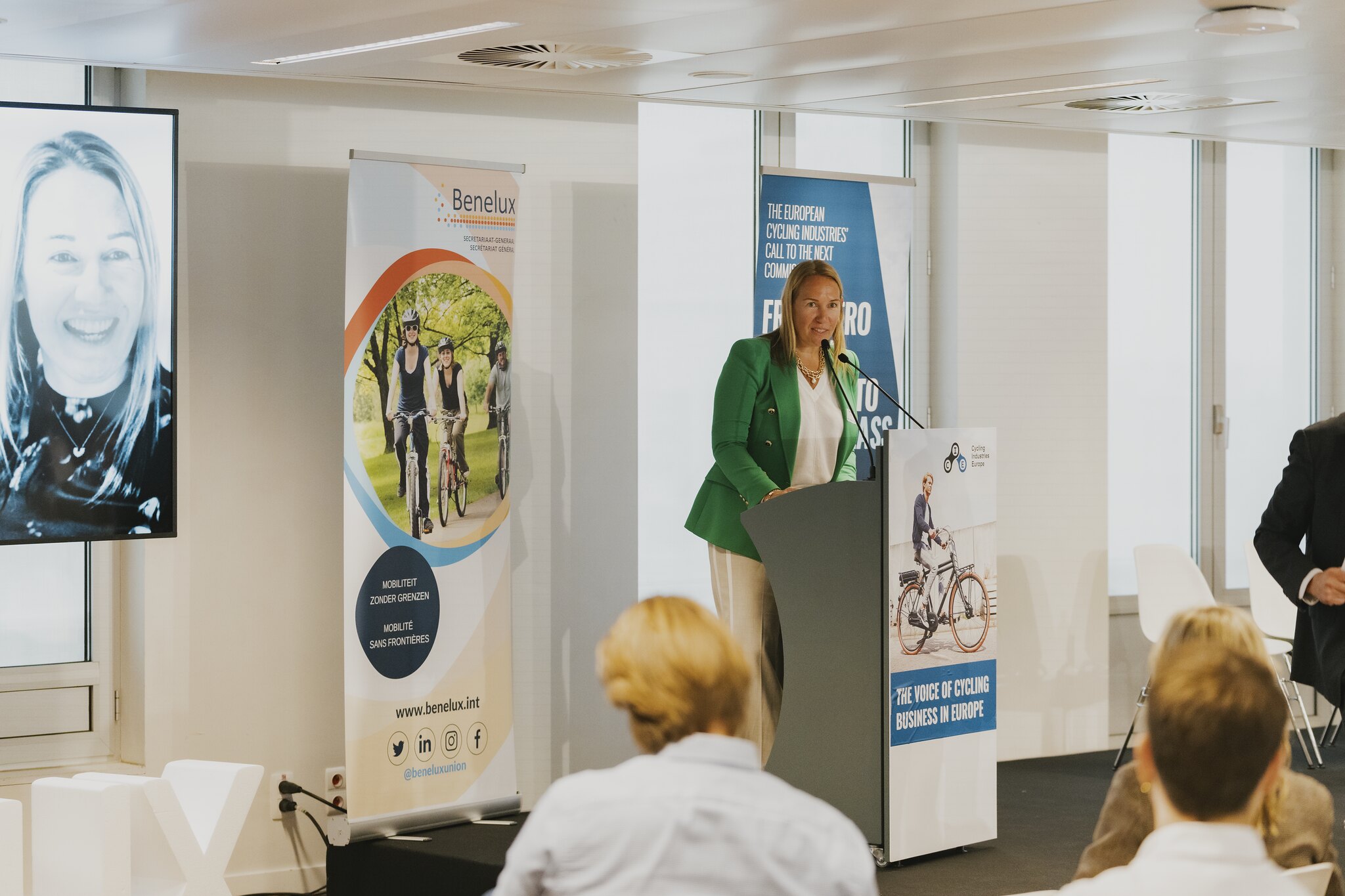
Michelle Smyth at the CIE 2024 Summit
Given the WFSGI name, is this just about sporting goods, products aimed at sporting activity?
So, yes, the sports side is important, but if you look into the mission statements or the vision of nearly all of our cycling brands, the wording is different for each of them, but in general, what is common is getting more people to cycle.
How do we get more people cycling?
Naturally, they’re going to use that sports-brand-generated marketing momentum, which is inspirational and aspirational, featuring the likes of Tom Pidcock or Sophie Caldwell, as a focal point for inspiring people, making people want to cycle.
I think we are seeing a shift in terms of what brands are doing with the products that they’re bringing to the market, but also how they’re marketing them.
Now there’s a lot more interest from the general consumer in terms of gravel adventures – lifestyle-based fun – not necessarily entering an event because they want to win it but just to participate and to be more active and spend time with their family, their friends, making bicycles adaptable to take their children to the shops, for general, daily, travel.
So I think they (sports brands) have a very important role to play, whilst also acknowledging that they have to balance out the sports marketing side of things with more general marketing to the masses.
Ultimately, we – the cycling industry – need more people to ride. The critical word there is ‘people’ because they’re a new audience – a massive majority of the UK population – who are not currently regular bike riders, much less calling themselves cyclists.
How can we get more people active, and using a bike?
I think the e-bike has a massive part to play here.
The tech and the innovation side of the e-bike drive system manufacturers – making the most seamless motor support, the most natural pedal feel, and the longest battery power – these goals are just as applicable when riding in mountains, riding off-road, riding to work, to the shops, doing the school run, replace cars for journeys, where a bike is the best tool for the job.
Ultimately, if we’ve got the battery-assisted drive system, it makes a bike more approachable for people who come from a lower activity level, and a lower physical fitness level, plus the bike is easy to promote as a tool which will decrease the amount of time people take to get to work, whilst improve activity levels, and reduce the impact on the planet as well.
The e-bike market has a huge role to play here, and, naturally enough, this also includes enabling an older generation, for whom an e-bike means they can still enjoy cycling with friends and family members, and still get the same amount of enjoyment.
Critical element number two of this conversation is people feeling safe to ride: Consistently this is the number one reason given for not taking to a bike, for sport, leisure or straightforward A-to-B daily transport.
What is the impact of worsening physical inactivity on the economy?
Here I want to mention the work that WFSGI has done, and continues to do, with the World Health Organization: We’ve got our memorandum of understanding, which is unique to the private sector trade association. It means that we’ve got a clear line of conversation with the World Health Organization through their Physical Activity Unit.
This is critical, because, when we look at the impact of physical inactivity on the global economy, a figure has been put on it. A monetary value. A financial cost. The public healthcare cost of physical inactivity is forecast, in 2030, to rise to $300 billion US dollars – a measurable, quantifiable, drain on the global economy and national health services. The money that will inevitably end up on the epidemic of physical activity could be better spent on providing infrastructure, education, sporting programmes etc.
Now, where we all work together – smart, motivated, capable people examining data and statistics at the World Health Organization – in terms of health, transport, environmental impact, road and infrastructure planning, that’s work that filters down, into legislative actions in the US and in Europe and the UK.
That’s how we collectively – WFSGI members and multinational organisations like the WHO – are going to be able to have a meaningful impact: Faster, together. Because it’s a long process at best. The key is not to work separately, in silos, but rather to make sure that conversation is really, really connected, with everyone marching to the same beat.
Where WFSGI is a global organisation, are there European and North American bodies that engage a common, shared, audience?
Cycling Industries Europe is our equivalent for the European market, and they have done a phenomenal job in terms of the European Cycling Declaration. 4.5 billion euros has been set aside for cycling infrastructure in the 2021-2027 EU Cohesion Policy. Cycling Industries Europe are having a significant, positive, impact in an area that’s so specialist in terms of European legislation.
A similar influence is brought to bear in America by People For Bikes.
For WFSGI it’s very much a question of how can we harmonize what both these organisations are doing, bringing it together, lobbying from a World Health Organization perspective, whilst making sure that the messaging is aligned in all of these different bodies and across these regions.
Where we’ve then got some test case scenarios, with the likes of Paris and Amsterdam, Copenhagen, and London, how can that knowledge and experience be transferred across into these other countries and other cities that want to have that positive impact?
This is where WFSGI can assist, working with cycling industry businesses, with industry associations, working in collaboration with active travel organisations.