As 2026 gets underway, a number of (ongoing) challenges are clear for the cycling industry. Ask anyone in the industry if they want more customers, be they a P&A brand, a bike brand or an apparel brand, and the answer is a universal ‘yes’.
What’s unavoidable, when exploring the ‘need new customers’ conversation: The industry has, for more than 3 decades, reported an 18 to 23% women customer base (with a few outlier exceptions) – against, for example, a UK population which is close to 51% women / 49% men.
It is clear that our industry needs more women riding bikes. With this in mind, we asked Nicole Stanners – the founder of the Muze Women cycling apparel brand – to explore challenges and opportunities.
Nicole, let’s open by exploring your background and how that led to you founding Muze Women.
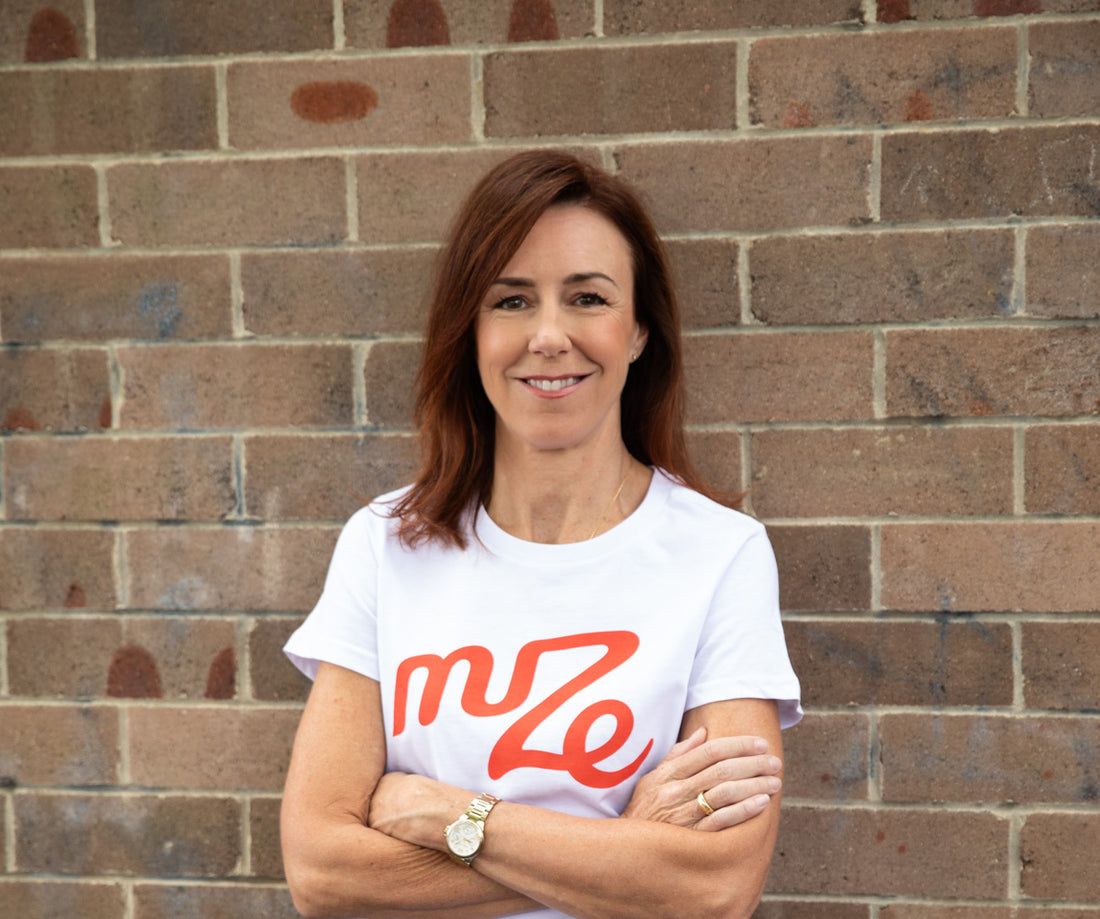
Sure. Before I founded Muze Women, I worked in marketing for big multinationals in the FMCG (Fast-Moving Consumer Goods) and Alcohol sector, like Unilever and Diageo. This sector is so competitive, we’re always looking for white space where you can see an incredibly strong match and an all too often underserved audience. Females are a blue ocean for the cycling market!
Outside of work, I’ve done sports pretty much my entire life. Cycling became my thing sometime around 2015, having been heavily into triathlon since 2010.
Now, triathlon has a pretty much 50 / 50 participation split, so I was really surprised to find cycling wasn’t like this at all. In triathlon, you see people of all shapes and sizes and ages. It’s much more inclusive. Fair to say, I was quite surprised coming into cycling. And then I tried on what was being sold as women’s cycling kit. ‘Unimpressed’ is one way to put it.

It’s certainly confusing that first CrossFit, then Hyrox, all have such significant numbers of women taking part. Add to this the recent rise of ‘strong women’ heading to the gym to lift in visibly increasing numbers.
Why haven’t cycling’s numbers for women significantly increased? What’s happening here?
Imagery is certainly one significant part of this story. When you see cycling in media – not elite athletes, just brands doing their marketing – it’s almost always lean physiques that are in focus. That’s not how the newer gym brands do it. You see a wide variety of body shapes and sizes, all dressing in apparel that makes them look and feel good, feel part of the scene.
So, at a surface level, before we even get into culture or vibe, and the technical aspects of keeping a bike working, or riding in a group, you have an almost universally used visual that isn’t widely welcoming or encouraging.
And then there’s the apparel. I’d say things have improved, but I can remember trying on women’s cycle clothing when I was switching from triathlon to cycling and being very underwhelmed with the choices and the fit.
That sounds like frustration met ‘opportunity’ pretty quickly?
Exactly. And I decided that the best way to stand out – compared to the “pink and shrink it” approach – was to work with an anthropometric expert to develop our patterns from scratch, purpose-built for women and then test them on 40 women of different shapes and sizes.
On a personal level, what was fascinating was that I’m a size eight, and we quickly found out that you see variation here as well, when comparing other size eight women. Now, Lycra is a great material to work with – if you have your patterns right. And this point I can’t emphasise enough: To ensure a correct fit for all body shapes, your patterns need to be obsessed over. If you’ve missed key details or made compromises, your grading problems worsen in larger sizes.
To build patterns from the ground up that were specific to women disproved my initial hypothesis of needing a “slim and curvy” range. My findings indicated that the correct pattern and proper grading would accommodate all body shapes. The only variation is “petite body shape”, which is related to limb dimensions.
I’d highlight specific design choices for our bibs, such as having no cuffs and using double-sided fabric on the thighs, which helped manage different body shapes, particularly for those with varying quads, glutes, and waist measurements.
What have you found out about your customers as a result of your approach?
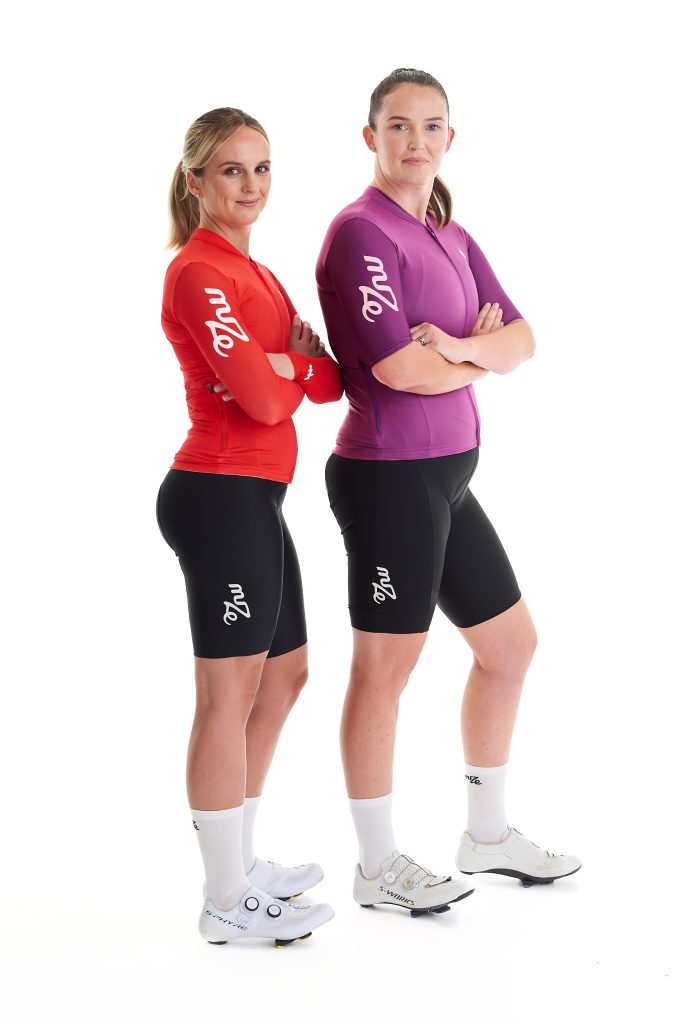 The average female cyclist is aged 40 and size 10-12, which is not exactly what you see in cycling media. And sometimes she wants different things. A great unmet need is a preference for flattering options with a changing body shape – think non-aero, loose-fitting by today’s cycling standards – garments.
We, the industry, need to show the non-elite side of fitness. You mentioned Gymshark, and I’ll mention an Aussie brand, LSKD – both businesses showcase women in a wider range of shapes, sizes, ages and ethnicities. Clothing is flattering, and that can’t be undervalued.
This approach needs to make its way into cycling apparel brands and cycling media – to be championed within the industry. The challenge here is finding a middle ground in imagery that shows women looking “beautiful but strong at the same time,” avoiding the extremes of super masculine or frivolous representations.
I’d conclude by repeating that imagery that is typically ‘elite athlete’ in appearance isn’t doing us – the industry – any favours. Important to mention, many elite female athletes also don’t conform, body shape-wise, to the ‘slim physique / grand tour contender’ stereotype.
With Muze Women, I am intentionally creating imagery and an inclusive community. Doing so has undeniably attracted customers. Now, as an apparel brand, I play one part in a wider community – showing women that cycling is for them, because they can see women who look like them in our imagery, in our brand story, in the way we design our apparel.
Bike brands could do worse than aligning with businesses like ours. Making a statement which shows, and caters for, women of all shapes, sizes, ages, abilities and ethnicities – that everyone is welcome – would have a wider impact on the industry, and, ultimately, that frustratingly low female participation figure.