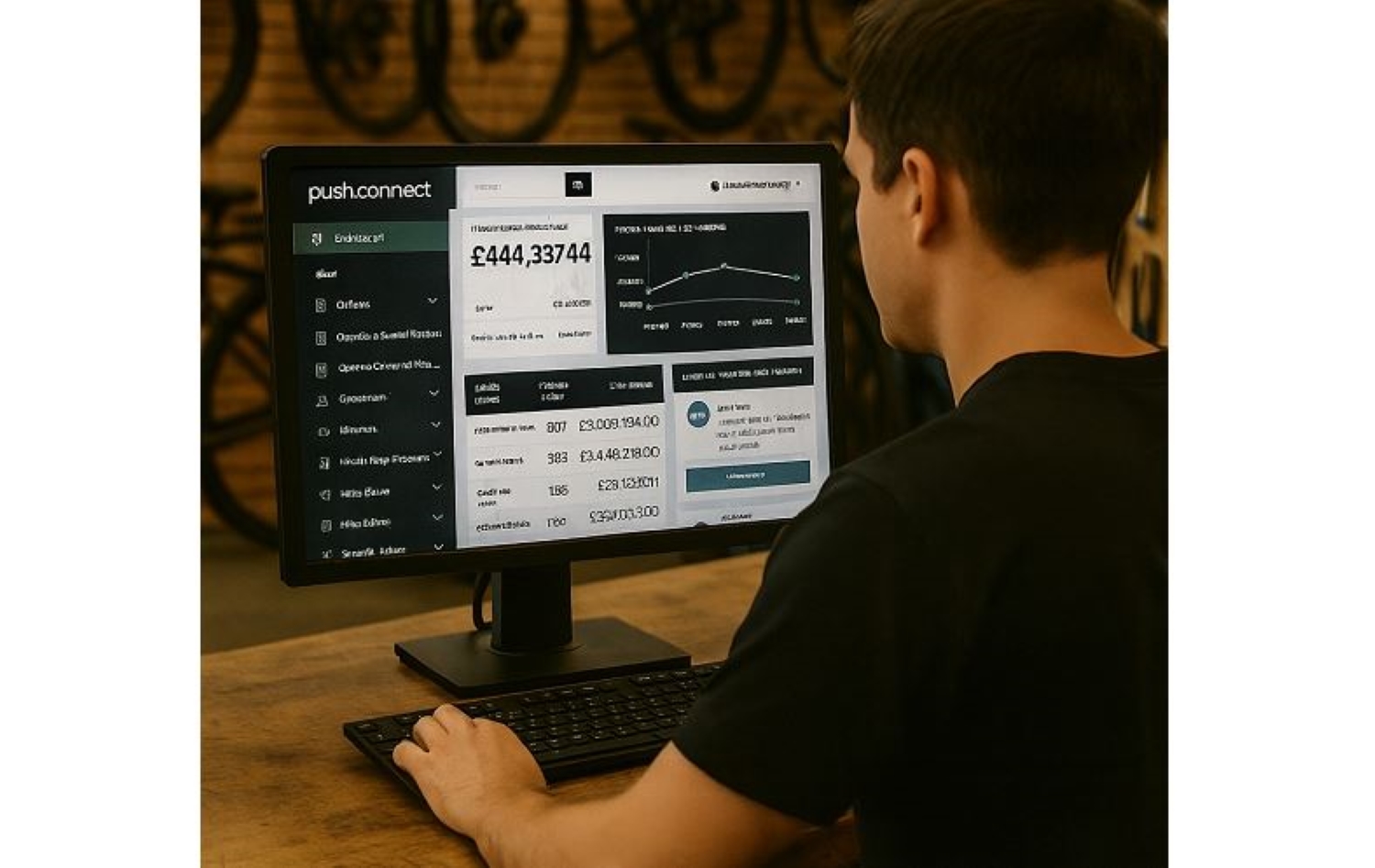
With omnichannel becoming the dominant approach to retail, BikeBiz asked Push co-founder Matthew Power for insights gained from providing an eCommerce platform for the cycling industry.
Under the heading of ‘Four Lessons from the frontline of cycling and eCommerce – powering Retailers, Brands, and Suppliers’, Matthew shares the following insights:
 Over the last couple of years, I’ve had a lot of conversations with people working where cycling and eCommerce meet. Founders, mechanics, marketers, platform builders, shop owners. Different voices, different views, but across it all, a few patterns keep coming up.
Some of those patterns are encouraging. Some show how far we’ve come. But some still highlight the gap between what riders want and what we’re offering online.
This piece isn’t about best practice or benchmarks. It’s about what I’ve noticed from listening to people who are building, selling, servicing, and riding, and what we can learn from them.
If you’re building anything in this space, a brand, a platform, a service, or even just some ideas, here are four things that keep coming up, and that I think are worth paying attention to.
1. Bikes aren’t bought like fridges
There’s a lot of sensible thinking in eCommerce about how to sell better: improve your UX, simplify the checkout, show the product clearly, answer objections. That stuff works, and yes, you’ll find great images, spec sheets, and five-star reviews on washing machines, too.
But a bike isn’t a fridge. You don’t dream about a fridge. You don’t join a fridge group ride, or upgrade your fridge cockpit, or hang a fridge on your wall.
Even practical bike purchases carry emotion. People don’t just want to know what the bike does, they want to imagine what it will feel like to ride. They want to know if it fits their lifestyle, their identity, their aspirations. A product spec can’t tell that story on its own.
Sure, the structure of eCommerce might look similar, with images, features, social proof, comparisons, but the emotional weight behind it is different. Social proof matters, but in cycling, it’s not just about product quality. A rider review or a customer photo isn’t just functional, it’s a window into how someone felt riding that bike, where it took them, what it meant.
The best cycling eCommerce doesn’t just help people buy a bike, it helps them feel something about the idea of owning it.
2. The offline trust gap is still real
One thing that hasn’t changed, despite years of online growth, is how important bike shops are.
Walk into a good one and you’ll get real expertise, helpful advice, maybe even someone who remembers the last time you were in. Trust builds quickly when you’re face-to-face with someone who genuinely rides and cares.
Online, that trust is harder to earn, but not impossible.
Great cycling eCommerce isn’t just about moving products. It’s about helping people feel informed and looked after. That means more than just having a chatbot and clear shipping policies. It means anticipating questions, offering reassurance, giving people confidence that they’re not alone after they click ‘buy’.
I’ve seen some great examples, like live chat with real staff, follow-up emails that offer sizing or setup tips, even short videos from mechanics walking through the assembly process. It’s not about replicating the bike shop perfectly, it’s about translating that same feeling of support into digital touchpoints.
Trust takes work. But once you have it, it’s worth far more than any one transaction.
3. Strong brands build communities
If you’ve spent time around cycling brands, you’ve probably heard the word “community” more times than you can count. It’s become something of a default slide in pitch decks and brand guidelines.
That’s where the difference lies: the best brands don’t just say they value community, they build it into the product experience itself.
Sometimes that’s a thriving Facebook group where people share tips, rides, and stories.
Sometimes it’s a loyalty programme that’s actually generous. Sometimes it’s offline, with events, group rides, or mechanics showing up at the trailhead on a Sunday morning.
When riders feel like they’re part of something, not just buying from something, they become loyal in a way that can’t be bought with a discount code. They start posting, referring, creating content, answering questions for each other. They defend the brand. They help shape it.
Community creates resilience. When paid ad costs go up, stock’s delayed, or a new competitor enters the market, your community is what keeps people close.
Community isn’t just marketing, it’s the most durable form of customer experience.
4. You don’t need to be big, just fast and clear
There’s a belief that to succeed in this space, you need to be huge. Big warehouse, big team, big partnerships. And sure, that can help, but it’s not the only way.
Some of the most interesting brands I’ve seen recently are small and nimble. They don’t have the biggest budget, but they know exactly who they’re for, and they move quickly.
They launch quickly. They update based on feedback. They talk like real people, not press releases. And they aren’t afraid to be niche.
That focus is powerful. You don’t need to please everyone. You just need to speak directly to the kind of rider you exist for, whether that’s gravel racers, e-bike commuters, cargo bike parents, or weekend road riders..
Being small gives you permission to be personal. It means your customers can actually feel like they know you. And in an industry where people often buy from people, even online, that’s a big advantage.
So what now?
I don’t pretend to have all the answers, but I am paying attention to the questions. Like:
- How do we make online experiences feel as welcoming as in-store ones
- How do we make it easier for people to find the right bike, not just a bike
- What does good service look like when your customer might only buy from you once every few years
- How do we use content, people, and tools to build something people come back to, not just something they click on
If you’re working on anything in this space, a store, a platform, a new idea, I’d love to connect. The more people we have building with care, the better it gets for the whole industry.
Also, because I’m always curious, what’s the best bit of cycling eCommerce you’ve come across lately? A site, a tool, a checkout experience? Let me know.
Final thought
Cycling is changing. eCommerce is changing. When the two meet, it’s not always going to be smooth, but it’s full of potential. If we get it right, it becomes easier for people to find the right bike, get the right support, and enjoy riding more. And that’s good for the whole industry.