
This piece first appeared in the August 2026 edition of BikeBiz magazine – not subscribed? Get a free subscription.
By Molly Hurford
A casual comment in an online forum sums up why Leatt is on the rise while other companies are struggling.
In May, Leatt posted an interesting press release: At a time when the bike industry as a whole seems to be struggling, with sales numbers seemingly down across the board, Leatt’s Q1 revenue was shockingly up a whopping 27 per cent. The South African brand is focused on protective gear for MTB and moto, with helmets, neck braces, body armour, clothing, sunglasses and more—and we wanted to understand how they were navigating the industry’s ups and downs and coming out on top. Leatt’s Global Brand Communications Lead, Dain Zaffke, has a few ideas, and they’re applicable to any cycling brand looking to improve its profitability today.
Of course, while there are some general secrets to a company like Leatt’s success, it has to be noted that part of their recent profitability is based on trends within the industry. As e-mountain bikes become more popular, and e-bikes in general have opened up cycling to new audiences, a lot of new riders are finding that they have more need for protection beyond a cheap helmet. E-MTBs in particular are key because they turn any trail network into a potential enduro course: Riders can now session downhill segments faster and with higher frequency, and with some electric boost, they can go uphill wearing more protective gear without worrying about overheating.
But every brand can take advantage of some of the big picture ways that Leatt is thriving in 2026:
Respect the consumer
For 20 years, the brand has focused on protecting riders on two wheels, earning their trust and their respect. And that’s largely thanks to their origin story: When avid motorcyclist Dr Chris Leatt started Leatt in 2004, he took his son to a motocross race. At the race, there was a fatal crash, and he was asked to help. Shortly before, his four-year-old had just gotten his first dirt bike. Leatt loved riding motorcycles, but he was suddenly confronted head-on with the dangers of the sport.
“He started thinking, there’s got to be a way to prevent or help reduce the chance of a fatal neck injury,” says Zaffke. “He started putting all of his time, energy and money into developing a neck brace. He got the design patented and asked friends to help fund the company. The Leatt Brace revolutionised rider safety in motocross and gravity mountain biking. That’s how it started, with this true, authentic purpose, and that’s part of the company’s culture today.”
Respect the distributors and retailers
While direct-to-consumer sales are part of the brand’s sales, Zaffke says that there’s nothing more important than the education piece that comes from their distributors and retail partners, who help the consumer find exactly what they need—and create long-term fans and buyers in the process. “We have some really long-term distributor partners around the world, and we’re in this business together,” he says. “That’s a contrast to other places I’ve worked, where the executive team is like ‘do we even need a distributor, imagine how much money we could make if we just cut them out!’ Those conversations simply don’t happen at Leatt.”
“I think in the earlier days of e-commerce, a lot of brands forgot how important it was to have real people who could help consumers navigate an overwhelming number of options,” he adds. With more choice than ever before, people want those IRL recommendations. “Core bike geeks might know what they’re looking for, but then there’s this wider world of people that are interested in bikes, and they really benefit from the helping hand of a knowledgeable human being at their local bike shop.”
Focus on the long-term opportunities
“When the pandemic bubble burst, when the bike boom slowed down, so many companies started downsizing rapidly,” says Zaffke. “Short-term metrics were top of mind. I shouldn’t be so critical, because they had businesses to run; there are lots of reasons why they had to hit those performance metrics by the quarter and by the fiscal year, and that stuff is important. But the big difference with Leatt has been a long-term vision and a commitment to investing in growth.”
In fact, Zaffke himself came to Leatt because of that bubble bursting—and since then, the brand has brought in more of the best talent in the industry. “We’ve attracted a lot of talented people that weren’t getting the support they needed from other brands,” he says. “Imagine you’re a highly talented product developer without the tools or resources to bring new products to life. Where would you want to work?”
Go in-house as often as possible
While many helmet and soft goods brands rely on third-party sources for fabrics and foams, Leatt’s research and design team actually creates proprietary materials for most of their products. This costs more at the outset, says Zaffke. But in the long run, it frees them from licensing deals that could come with added costs,
“Working alongside the factories we use, we’re learning about what’s possible together,” he says. “On the apparel side, we create our own fabrics and our own membranes. Every fabric we use is special to Leatt, so, for example, when the product developer for apparel is listing his needs, one of the top priorities can be how we minimise our environmental impact. It’s pretty exciting to be able to tune that, and it might not make a difference on a single piece of apparel, but when you look at 1000s that are created, it really starts to add up.”
“I think we really benefit from having that stuff in-house,” he adds. “We have a complete understanding, versus a lot of helmet brands that are simply talking to a factory and basically ordering ingredients and technologies off a menu.”
View cycling through a global lens
Because Leatt is a South African company, it was obvious that they would have to think about global marketing in a different way compared to an American or European company, where the continent alone could provide plenty of growth opportunities. Even Leatt’s online footprint is different depending on the country you’re shopping from. Many brands this size cut corners on their websites, hosting everything in one place with a widget that adjusts pricing, but Leatt gets granular—and makes it easy to create a worldwide fanbase.
Get your fans to advertise for you—on a budget
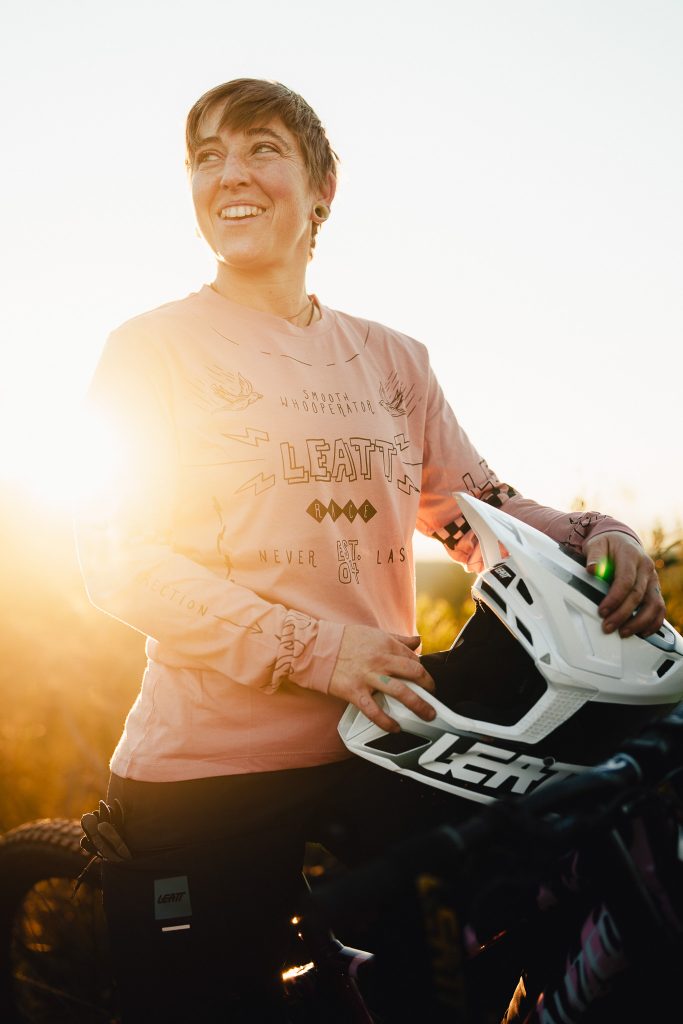
One of Leatt’s most popular pieces isn’t a helmet or a neck brace: It’s a branded long-sleeve and pants set. Their Gravity Ride Kit is durable, simple, and most importantly, it’s around £79. “Some of Leatt’s biggest brand drivers have a really strong value proposition,” Zaffke says. Our margin on the Ride Kit is not great, but it gets Leatt out there. It’s a big volume piece for us, and a really great value proposition—riders are getting used to seeing things like that from Leatt, and we’ve earned a reputation for creating cool gear that’s not outrageously expensive.”
Keep innovating, but without the ego
Zaffke reads the comments: Pinkbike in particular is one of his main ways of learning what customers really think about Leatt products, and this information helps them develop new products and tweak the existing line-up. “That’s what drives a lot of our innovation: we’re listening to, and addressing, riders’ needs,” he says. “I think a major mistake of a lot of companies is that they come from a place of arrogance, where they feel like they know better than the end user. A lot of brands want to drive trends and tell riders what they need. Leatt’s perspective in general is to listen.”
Build a company people want to work for
Zaffke isn’t just a public relations guy for Leatt; he’s a success story about how the brand has treated its staff. It was only a few months after joining the company that he began a battle with lung cancer, and he says that Leatt was supportive throughout his journey, and after. “It’s not a faceless corporation, they’re real people,” he says. “Part of it might be the culture in South Africa. But more than anything, I think it’s the company culture set by the CEO, Sean Macdonald. He’s just such a great guy and such a kind human being. He cares about the company’s success, but it’s clear he cares about the employees and our customers, too. That trickles down throughout the company.”
“One of our sales guys recently summed up our ethos by saying, ‘don’t be an asshole,’” he laughs. “It seems like so many of the missteps by Leatt’s competitors – the big legacy brands that seem like they’re going backwards – are driven by ego and greed. We’ve seen steady, sustainable growth by not letting greed or ego dictate our decisions.”
For retailers interested in Leatt, please contact your ZyroFisher account manager or email salesteam@zyrofisher.co.
