
Bikmo has revealed that reported bike thefts in England and Wales continue to decline, based on newly released police data. The findings show another year of progress, reinforcing a long-term downward trend in bicycle theft.
The announcement coincides with the launch of Bikmo’s updated, free Bike Theft Heatmap, now featuring the latest police data, which reveals that reported bicycle thefts in England and Wales have been decreasing over the past few years:
● 2022: 71,835 reported incidents
● 2023: 63,028 reported incidents
● 2024: 54,802 reported incidents
● 2025: 48,595 reported incidents
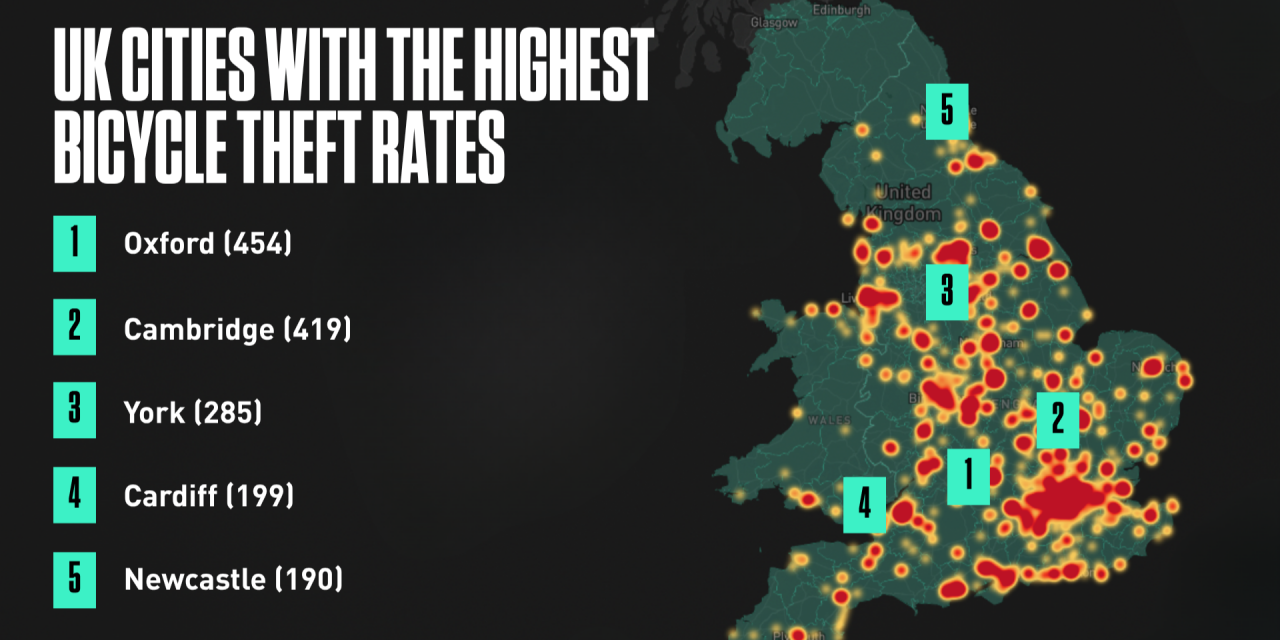
This trend indicates a consistent year-on-year decrease in bicycle thefts, with a 11% reduction from 2024 to 2025. Certain areas continue to experience higher rates of bicycle theft. Based on theft rates per 100,000 residents, the top five UK cities are:
1. Oxford – 454 per 100,000 (down from 660 in 2024)
2. Cambridge – 419 (down from 729)
3. York – 285 (down from 445)
4. Cardiff – 199 (down from 233)
5. Newcastle – 190 (down from 252)
Despite a continued decline in reported bicycle thefts in England and Wales, the resolution rate for these crimes remains persistently low. Over the past years, only around 2% of reported bike theft cases led to a suspect being charged, while approximately 89% were closed without a suspect ever being identified. This low prosecution rate may contribute to underreporting, as many victims feel that reporting the theft is unlikely to result in recovery or justice.
At Bikmo, our mission is to protect riders and the places they ride. Bike theft is one of the biggest concerns for cyclists, and we believe that by providing free access to local crime data, we can help riders make smarter decisions. Tools like our Bike Theft Heatmap empower the cycling community with information to avoid hotspots and reduce the risk of theft.
We’re proud that this tool is used not just by riders, but also by law enforcement and policymakers looking to reduce crime and encourage more people to choose sustainable transport – David George, CEO of Bikmo.
The government’s commitment to active travel has grown substantially, with £626 million pledged over the next four years to fund walking and cycling infrastructure across England – enough for 500 miles of new routes. But as more people are encouraged onto their bikes, theft remains a significant barrier to uptake. For the cycling insurance industry, this is a clear reminder that security concerns must be addressed alongside infrastructure investment.
While falling theft numbers are encouraging – police forces recorded 48,595 bicycle thefts across England and Wales in 2025, down from 54,802 the previous year – bike crime remains a real concern for many riders, especially in urban centres. Bikmo says this is why it continues to invest in tools like the Bike Theft Heatmap, empowering riders with data to make smarter decisions about security and storage.
Titus Halliwell, National Police Lead for Cycle Crime, said:
It is promising to see continued reductions in cycle crime across the UK, supporting the growth in cycling. Our local partnerships are focusing efforts where they are most needed – and cyclists can further reduce their risk by locking their bikes securely and registering them with BikeRegister.
As cycling becomes more central to how we move through cities, Bikmo is calling for greater collaboration between government, police, local authorities and the cycling community to tackle theft head-on, ensuring that riders feel confident choosing two wheels over four.