

This piece first appeared in the July edition of BikeBiz magazine – not subscribed? Get a free subscription.
by Mark Sutton
Bike share is performing comfortably ahead of the market for sales of full-size commuter bikes at present. So, do these riders become bike shop customers, and if not, what is next for their journey? Mark Sutton investigates…
Out of not much more than curiosity and the need to hit a CyclingElectric.com editorial brief recently, I took on a number-crunching task, assuming that steadily rising bike sharing costs would soon equate to a fully paid-for electric bike, if you were a regular user. A specialist e-bike retailer in London backed up my thinking, similarly wondering why people would bike share when, presumably, they could just buy an e-bike and own the asset, thereafter cutting further costs.
I have been a semi-regular Lime user myself, and before I really got to grips with the daily ride pass packages, I had grown a bit weary of the 27p per mile costs. On this basis, assuming that many newbie cyclists would never commit to packaged products if their interaction was fleeting, I developed a bit of a bias.
Looking in greater detail at the sums behind the idea, I’ll admit to being a bit taken aback by the value bike share can offer. Here’s a quick breakdown:
Using a baseline spend of £1,000 to obtain either a quality bicycle, or an entry-level electric bike, and benchmarked against a £3.50 one-hour ride pass with London’s official Santander, it would take just under one year of daily usage (333 days) to match the cost of the bike. All of this assumes your commute is made up of roughly two 30-minute journeys.
Actually, it could be better still. Santander offers an annual package at only £120, or a monthly £20 buy-in, which,
compared to the main daily tariffs, is very appealing, even if you don’t cycle each day. As for Lime’s most cost-effective means to buy in, there is an £8.99 rolling subscription with unlimited unlocks. Over the course of the year, that’s £107.88.
The mathematics, then, are not particularly favourable to those who have convenient access and a regular need. In truth, they’re spending less for a year’s worth of bike hire than you would need to on a quality D-lock for a city like London, where bike theft is very high.
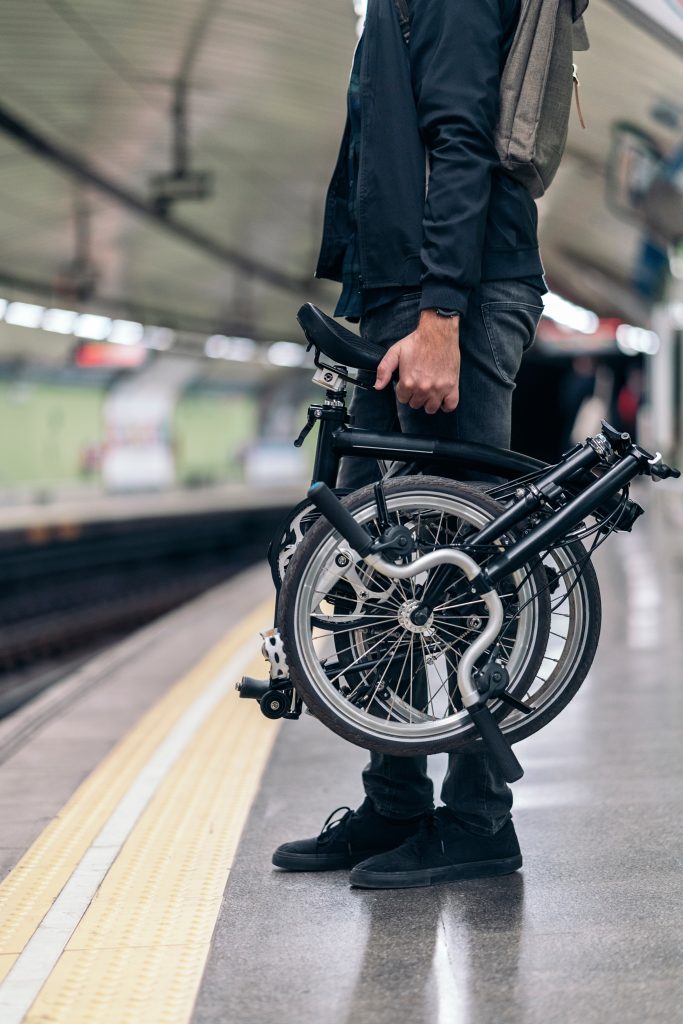
Photo: Shutterstock-Santypan
I spoke to David Watkins of Dash Rides, the cycle to work provider that has a broad spectrum view of sales, subscriptions and bike sharing, offering the salary sacrifice benefits to all of his firm’s customers. Of his interactions with the array of buyers, he told me, “Bike share has certainly exploded in popularity, and it’s the inherent flexibility that is useful to people; knowing that you can change your plans and not worry about where your bike is. That said, I think it’s lowering the barrier to entry to electric bikes later, so in my experience, it becomes complementary, rather than competing. Speaking of our offering, I see it as a sliding funnel. Often, the bike share is the rider’s introduction, subscriptions deliver a further flexible option, then by the time you’re going to purchase, you are becoming more of a traditional cyclist at that stage. You know a bit more about what you want by then, the journeys you’ll take and where you’ll lock it at the other end. Naturally, theft scars many people, so these things are important.”
I asked a London bike retailer what they thought of the situation. Gavin Hudson runs Butternut Bikes in North London, and while primarily a workshop, he also sells Tern and Estarli e-bikes.
“I think the main reason that they are popular is actually linked to the fact that they are theft-proof,” starts Gavin.
I asked him separately whether living conditions in London have prompted a sales data trend that shows folding bike sales are holding up, while full-size commuter bikes are down year-on-year. Yes and no, it’s the fear of theft again, supposes Gavin, all the while acknowledging the fact that his younger customers are facing more cramped living conditions and some even storage issues, particularly for e-bikes, which some landlords are now forbidding from properties on account of scaremongering press headlines that conflate e-bikes with conversion kits of dubious origin. For his customers, folding bikes are often more attractive and now more so on account of TfL’s ban on non-folding e-bikes on many services in the city. On this note, a stat: the average rented living space has declined in the past 20 years from 43 to 36 square metres. Prices skyrocketed the other way, of course, a triple whammy for smaller, rented and cheaper access to things, you’d think.
“We definitely get a decent amount of people saying that they spend a lot of money on bike share bikes, and some of those we can look to convert to e-bikes, but if you look around, the share of people riding share bikes is a huge percentage of overall cyclists in our (hilly) part of North London. I do find it interesting that they happily ride Lime bikes, but they’d never be seen dead buying or riding a different brand step-through frame bike. If I watch commuters in our area, I’m amazed that it looks like at least 30% of cyclists are on share bikes, often more.”
It’s noteworthy the effect the weather can have on bolstering already strong ridership rates. In the spring of this year, when the number of sunny days exceeded the summer of 2024 by May, Lime reported a 96% increase in trips around the capital. So strong was the performance for the leading operator that data revealed that half of all Londoners aged 18 to 34 were hirers at least once per week. In 2024, the firm reported stacking up 16 million rides, which naturally drove certain newspapers into a frenzy. As a result, the firm added 2,500 parking spots and hired 60% more staff to manage on-street fleets at a £20 million cost.

Photo: Shutterstock-Chris Lawrence
Concluding for us, David from Dash adds, “That Lime statistics is mind-blowing. Of course, for some users, that can get very expensive in the end, but applying the cycle to work scheme makes it more affordable and with Dash Fle,x we’re giving people the opportunity to start the day on a Lime and finish it on the Santander bikes; they’re not locked into one, which is great if your plans are fluid. It takes away the worry about where you’re going to park your bike securely and if it will be there later on.”
It’s hard not to conclude from the available data and the insight on the ground that something is shifting where bike share is available, particularly in younger demographics whose first experience of cycling may well be bike sharing; and there’s great odds it will be an electric bike now, given the steady shift in the fleet makeup toward pedal-assisted models. Some facts are hard to escape: younger generations are generally cash light, space poor and increasingly comfortable with the concept of subscription over ownership.
For the bike industry and its inner-city retailers, that begs the question: What’s next for pedal cycle sales in cities?
