
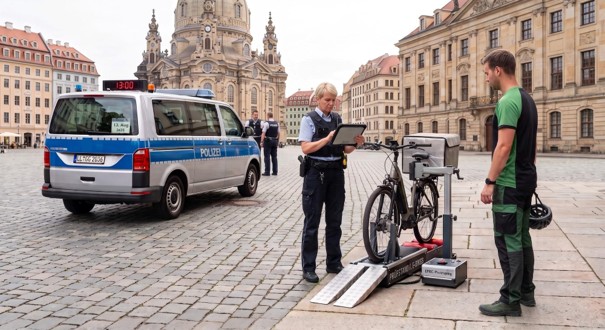
German engineering company EMEC-Prototyping is developing a mobile test bench designed to help police and testing organisations identify illegally tuned electric bikes during roadside checks.
The Dresden-based business said the compact, AI-enabled system will provide reliable results on site and can be carried in a patrol vehicle before being set up within minutes.
EMEC-Prototyping is targeting compatibility with a broad range of vehicles, including pedelecs, speed pedelecs, cargo bikes and e-scooters, using a single test bench.
The project responds to growing concern about modified e-bikes on German cycle paths. The German Police Union estimates that up to 10% of pedelecs on the country’s roads have been manipulated, according to manager magazin.
A TU Dresden study commissioned by the German Road Safety Council found that 7% of surveyed delivery riders said they had tuned their bike for more speed. A further 4% said they had converted it for moped-style operation without pedal assistance.
German bicycle associations ZIV and Zukunft Fahrrad have called on Federal Labour Minister Bärbel Bas to include safe and legally compliant electric bicycles in occupational health and safety rules for work equipment. The organisations have also warned that illegal tuning could increase accident risk and damage the reputation of e-bikes.
The test bench is scheduled to become available from summer 2027. Development is funded by the Free State of Saxony and co-financed by the European Union through the European Regional Development Fund, following a funding decision from Sächsische Aufbaubank.
Founded in 2010, EMEC-Prototyping develops products and test systems for electric bicycles, light electric vehicles and other sectors from its Dresden test centre.