
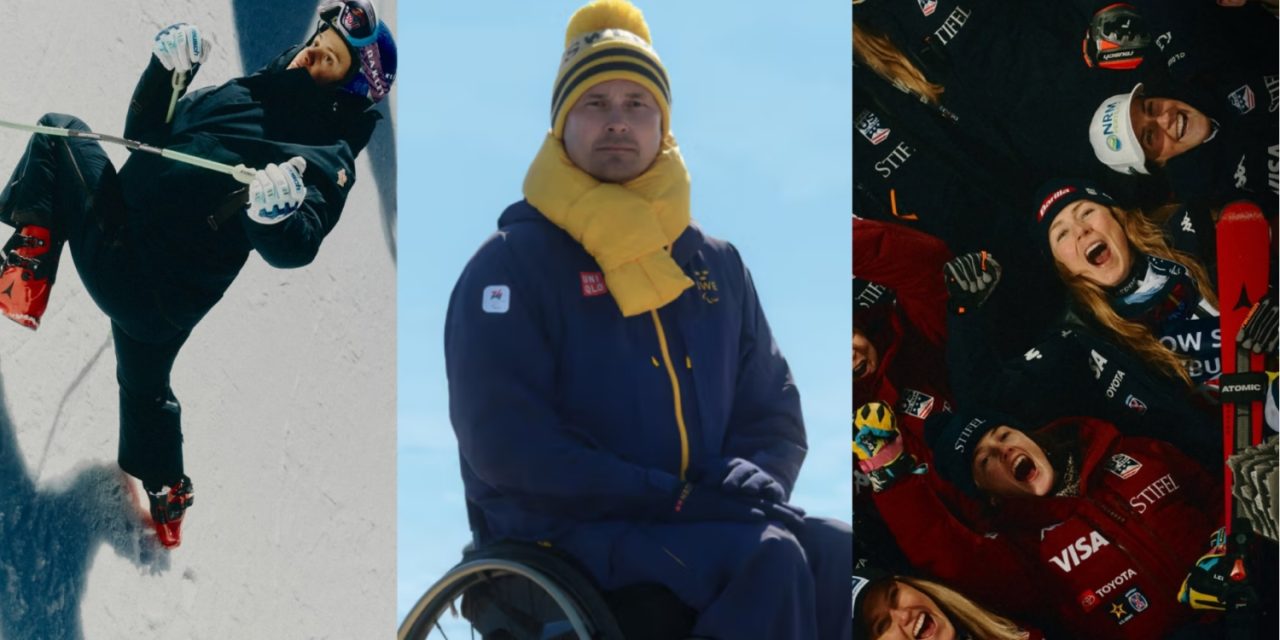
Sport is business, and sponsorship is often the highest form of visibility and value exchange. At the Olympics (summer and winter), this has previously put some athletes and sports bodies at odds with a national team Olympic kit supplier. One famous example: Michael Jordan draping the Stars and Stripes (flag) over the US team kit supplier logo, when on the podium, being presented with his medal, because they were not his personal sponsor. A growing number of athletes have taken action, in more discreet ways, when faced with this conflict.
Oftentimes, this elevates conversations around how much (or, rather, how little) an athlete receives for winning a medal, compared with the financial support they receive from personal sponsors (amongst other sources of funding) across the 4-year cycle that leads to each Olympics.
Few at the Games are their chosen sports equivalent of Michael Jordan. For many aspiring Olympians, including Team GB long jump athlete Jacob Fincham-Dukes, who returned to work only three days after a Paris 2024 Olympic final appearance, social media means audience exposure – which carries very real value for the sponsors who assist in funding the Olympic dream.
Sponsorship and modern media
In today’s content creator-driven media landscape, the old media model comes under ever-increasing pressure. The International Olympic Committee will be aware that for a younger generation, the Olympics is not the same status-elevated, sporting world-stopping, full global media focus event. Just this past week, The Washington Post announced it won’t send reporters to the upcoming 2026 Winter Olympics in Italy. Something unimaginable previously.
The last summer games received a host of commentary about its legacy media (terrestrial TV) style approach to coverage, where sports with less profile got little coverage, despite modern media meaning athletes elevated their own profile and engaged a wider audience. This all matters when sponsorship makes the Olympic dream possible.
It’s in this landscape that events, including the Olympics, find themselves increasingly competing for relevance, via attention. Outside of the Olympics its been long accepted that Atheltes are the stars, and their ability to build a personal audience has real power that extends far beyond individual events, no matter the scale, or respect in which the event – itself a brand – is held.
Reflection on this, Mish Sher, Global Head of Sport and Entertainment, WPP Media, comments: “Athletes aren’t just spokespeople anymore. They’re culture-makers, storytellers, and strategic partners. In today’s attention economy, the brands that win are those who build with athletes, not around them. ”
 WFSGI and IOC are working to deliver positive sponsorship change
Ansley O’Neal from WFSGI has been behind a very under-promoted, but hugely impactful IOC and IPC collaboration called ‘Road to the Games‘.
Road to the Games is a formal relaxation of the IOC’s Rule 40 marketing guidelines, established to allow eligible sporting goods brands – WFSGI members – to tell the stories of their sponsored Olympic athletes and NOC teams, before, during, and after the Games.
Ansley O’Neal, WFSGI Head of Storytelling, shares, “Road to the Games is about elevating the human spirit of the athletes who inspire us. As we look to Milano Cortina, we have an extraordinary opportunity to celebrate athletes in a way that honours their lived experiences and the communities that support them. This next chapter represents an exciting moment in the relationship between the IOC, the IPC, and the sporting goods industry—one rooted in integrity, shared purpose, and a belief in storytelling as a force for good.”
Cycling specific example: Rapha, and the Olympic athletes’ journey to the games
Making this cycling specific – think Rapha and their new US Cycling sponsorship. Previously the white armband – Rapha’s brand identity ‘signature’ – would not have been visible in the lead up to, or at, the Olympics – in official Olympic media. A US Olympic Team (Team USA) kit supplier logo would be universally applied across all kits worn at the Olympics, for every sport.
As you can imagine, this – Road to the Games – is a seismic shift in athlete storytelling surrounding the Olympic Games.
From an IOC perspective, Road to the Games campaigns focus on athletes, not products, and are designed to drive engagement with Olympic content while protecting the integrity of the Games. This provides opportunities for modern media-based story sharing, where athletes can showcase their training without having to consider the previous, Olympic-specific, sponsorship restrictions.
The impact of the pilot Road to the Games in Paris was huge:
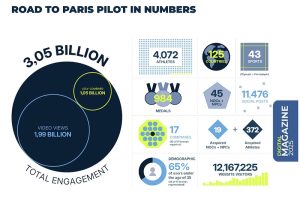
Athletes in focus. New media. New opportunities. New audiences reached
Road to the Games represents a pioneering marketing framework for athlete-first storytelling before, during and after the Olympic Games, run in collaboration with the IOC and the IPC.
A ground-breaking initiative in the global sports industry, Road to the Games enables participating athletes to share their Olympic journeys in a way that was previously not possible under Rule 40 restrictions.
A new model for celebrating athletes
- Building on insights from the Road to Paris pilot project in 2024, which united the IOC, IPC and 17 leading sports brands to celebrate more than 4,000 athletes across 135 countries, generating 3 billion engagements
- Milan–Cortina 2026 is the first Winter Games fully shaped by this new framework, which will continue to LA28 – this next phase at Milano Cortina represents a continuation of that success.
- 26 sports brands will take part in Road to the Games at Milano Cortina.
Emma Zwiebler, CEO of WFSGI, explains, “For decades, the sporting goods industry has supported athletes’ year-round—long before and long after Olympic and Paralympic competition. Road to the Games acknowledges this contribution, providing a structured and transparent way for brands to highlight the athletes and teams they support and to invest in elevating their incredible stories in and beyond the Olympic community, particularly the next generation.
The framework remains fully aligned with the principles of Rule 40, ensuring that communications remain athlete-centred, non-commercial, and values-driven.”
Road to the Games is only eligible for WFSGI members. At present a significant number of cycling brands that are Olympic sponsors are already members.