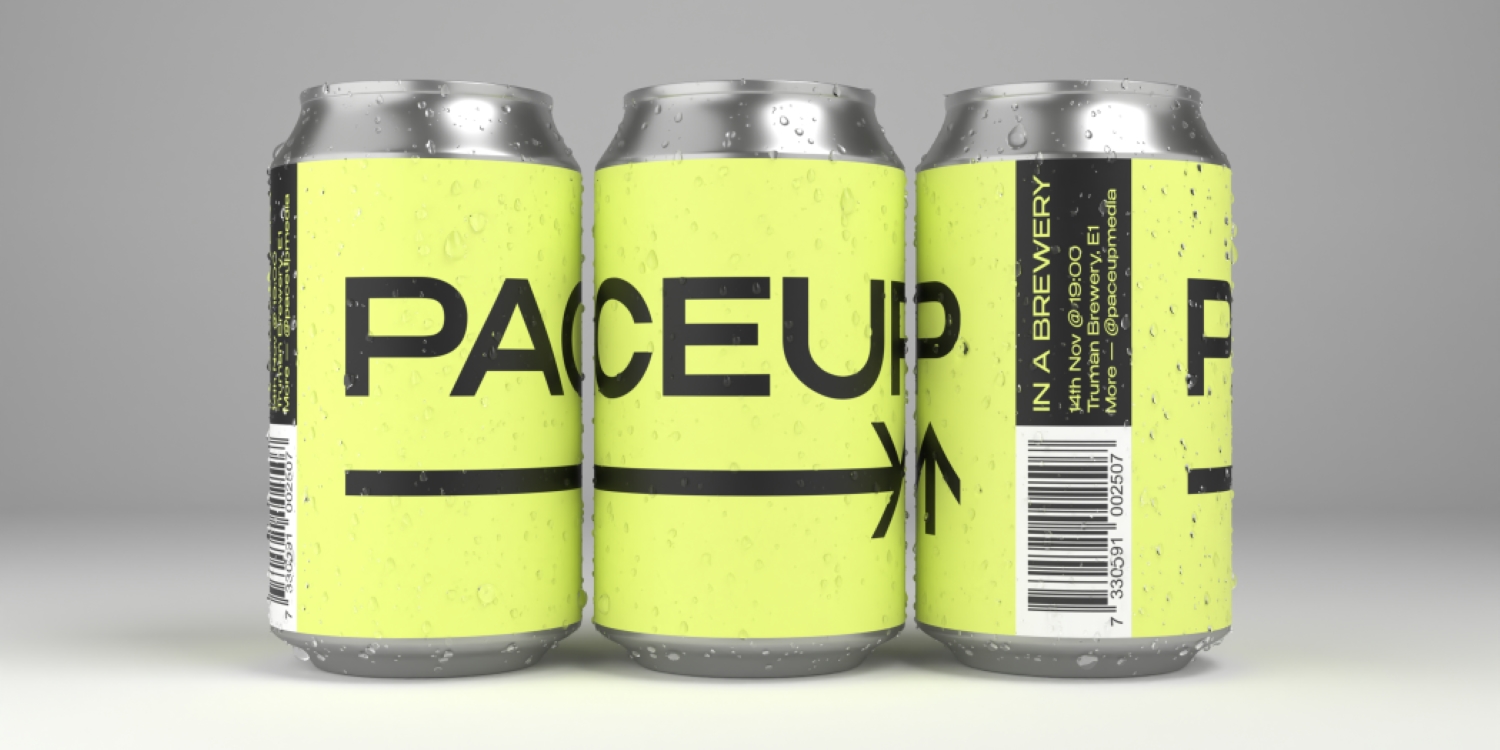
Welcome to The Big Debate: A conversation hosted by PaceUp Media’s Ollie Gray.
Here you’ll find industry leaders coming together to debate a hot topic: “Is achieving cycling PR on an earned basis becoming exponentially harder to achieve?”
Up front, we’ll say it’s rare that we get to see such candid conversations.
On this occasion, Guy Kesteven sets the tone, with Julian Roberts, Tyler Benedict, and James LaLonde taking time to give detailed responses to Ollie’s original question.
Is this long-form content that would make an amazing podcast? ‘Yes’. For now, we’re sticking with text…..
[divider style=”solid” top=”20″ bottom=”20″]
 Ollie Gray, PR Account Director, PaceUp Media
My opening question… ‘Is achieving cycling PR on an earned basis becoming exponentially harder to achieve?’
From where I’m sat, it feels like the answer is yes, for a few reasons…
– Market saturation: It’s a well-worn trope to say that the pandemic and subsequent bike boom resulted in some severely distorted demand signalling. But even now, it still feels like the industry hasn’t fully recalibrated. When discussing this recently with Bryson Ross, he summed it up in his typically nail-on-the-head way… “too many brands and the size of the pie isn’t growing”.
– Media landscape: Ad revenues are down, and attention is harder to come by. Throw in the uncertainty of AI’s long-term impact, and you’ve got a pretty fragile press environment. Publishers are having to work with increasingly quantified metrics for ROI, leaving little space for truly independent journalism. The Escape Collective model shows there’s an audience for independence, but that’s because they’ve made that independence a core tenet of their identity. The hybrid ad/subscription models appear to be faltering.
– Shifts away from event-based coverage: It’s harder and harder to justify travel. There are just so many trips. I think right now at PaceUp, we’re organising 5 or 6 that fall into a window of a couple of months. They sit across different product categories and with different objectives, and I think they can still be a very effective tool in building brand connection… but the fact remains, it’s a lot of volume. And we’re just one agency. Particularly when it comes to product (bike) launches, journalists increasingly indicate a preference for covering them remotely, followed by at-home testing.
– Brand pressures: A result of the plateau following those golden days is that brands are under ever-increasing pressure and, accordingly, have ever-increasing expectations of what PR can do in the short term. In real terms, I’ve seen brands reaching for the PR lever as a sales tool with a regularity I’ve not experienced before. The challenge here lies in convincing brands that the true value of earned PR is long-term brand building… which is difficult when they’re so focused on short-term bottom line.
All of this makes the job more complex, but simultaneously more important. The role of PR in cycling (and endurance sport more broadly) isn’t diminishing; it’s evolving. And the challenge is to adapt how we create impact in a space where attention, trust, and meaningful storytelling are scarcer than ever.
Curious to know where you lot sit on this, whether you’re agency, media, brand, or just an onlooker…
Guy Kesteven

Where to even start on this, Ollie
Most media don’t have the time or money to produce decent earned content anymore. They’re just desperately trying to get the clicks the publishers, marketing departments and accountants demand by throwing anything they can grab onto the page.
Soon as media started diversifying – web, self-promo, Facebook ads, sendy or side boob influencers – budgets got spread thinner, and legacy leviathans were too big or too convinced of their own swaggering righteousness that they didn’t change fast enough.
When I was one of the first people who started doing POV review videos in 2017 (initially just as a way of recording notes), they were fresh and got great engagement. MBUK liked the concept but wouldn’t pay for the content I was creating, but other brands supported me. MBUK’s immediate response was ‘these are now a threat, cease and desist’. I had no option, as they paid my mortgage at the time.
Other people like Rob Rides EMTB and Dave Arthur picked up the baton and ran, while I lost 75% of my WMB and MBUK work. Same shrinkage reflected what coverage brands could expect for their product, too. 75 words for a non-winning bike in the bike of the year inclusion? Why would you send a £5k bike for that?
Then every part of the media got double-shafted during COVID. First, brands didn’t need to promote; then they couldn’t afford to. So everyone is just flapping about in an empty pool. And as you all know, wherever you are in this game, it never takes long for someone to copy any original idea you have and do it for free to gain market share. That’s massively exploited by many brands, too.
– Hire a professional film crew for £10k or get the kid in the warehouse who’s handy on CapCut to get what you perceive as the same content for free.
– Risk a mauling in a contexted, researched, experienced, informed professional review that comes out long after launch or give a local dirt jumper or good-looking roadie a free bike and get far more ‘views’ with a totally positive tone the second bikes appear in store.
Legacy media don’t help themselves either. Mixing earned content with paid-for advertorial, affiliate-driven listicles, blatant product placement without declaring it. Or completely debasing painstakingly written professional reviews with a shitty clickbait headline.
I know for a fact that’s the biggest turn-off for a lot of brands, and as a writer, I’ve been hung out to dry by that too.
Ollie Gray
That’s a good point, well made, on the boom/bust cycle. A lack of brands’ willingness straight into a lack of ability to market themselves properly. Pair that with publishers’ slow uptake on modern & effective ways of delivering content, and you’ve got a recipe for a bad outcome.
Guy Kesteven
But when you’re literally trying to stay alive month to month, short-term survival takes over from long-term reputation conservation for all but a few principled idiots who’d rather go down fighting than burn their reputations just to stay warm this winter.
Oh, and if anyone is really believing a lot of the stats I see some media throwing about from sponsored / boosted / blatantly click farmed – or my favourite – carousel carpet bombing forums and then claiming that the 600,000 views you got on your content dick pic engine are worth more than the 600 the same content got on YouTube because it was being waved in the face of ‘engaged viewers’.
If you want to see real value, find the videos and posts that have people saying they’ve followed advice previously and got exactly the product they wanted. Or asking genuine questions and having them answered with honesty, not with one eye on what a sponsor might think. I could go on and on.
Long-form content so buried in ads and pop-ups it’s unreadable. Copycat podcasts, embarrassingly behind-the-curve social media posts, clueless captions created by overworked interns shared across multiple titles, AI-generated headlines or even full ‘buyer’s guides’ that often shuffle higher-affiliating products further up over time.
The brutally harsh bottom line is that a lot of media deserve to die in the same way that many brands do.
– Too slow, too compromised, too convinced of their own righteousness.
– Mistaking arrogant showboating for authoritative.
– Making indignant, angry calls to brands when they get passed over for the next launch despite pissing them off by being unprofessional the previous one.
– Or, at the other end of the scale, influencers wondering why no one wants to fund their van life or gravel pro dreams when they never actually finish a race, or there are a million other muppets shooting the same cliche content.
So, to answer your original question, Ollie, support the media you want to survive because you think it works for your client’s purpose – be that bullish, banal, toothless, opinionated, polished or shot on a potato to be real and relatable. But please actually look at what you’re getting yourself, not what you’re told you’re getting. And, maybe, just maybe, invest in the earned media that you’re saying is so important, because like slow-growth oak, it takes an age to mature, but not everyone wants Ikea.
I’m not even talking money, because the grafters and innovators will find a way to survive like they always have. Just send them stuff to test on their own terms, share that content hard and champion their cause. There’s a few of us proving that small voices can be surprisingly loud if people really listen to them, but we still need help to stand out in a mess of increasingly desperate screaming.
Julian Roberts
 Really great insights here, I think you’re spot on about how the landscape has changed. One of the biggest challenges I see is the erosion of trust in traditional outlets. Consumers have clocked onto the fact that some reviews are “pay to play”, and once that credibility is gone, it’s very hard to win back. I’ve had people tell me outright that they don’t even read certain platforms anymore because of it.
That feeds into your point about brand pressure, too. When the expectation is immediate sales impact, the temptation is to push for quick hit coverage… but the problem is, those quick hits often feel hollow. Endless “best bottle cages of 2025” style content doesn’t create a lasting impression, does it?
Meanwhile, journalists are travelling less, so the role of authentic voices, whether that’s influencers or community-led creators, becomes stronger. In a way, the shift feels less about abandoning PR and more about rethinking how credibility and connection are built in an environment where attention is so fragmented.
Put it this way, on average, you have one thumb scroll to captivate someone.
Guy Kesteven
Julian, you’ve absolutely nailed it with so many points here. As someone ‘inside’ it’s actually really refreshing to see someone ‘outside’ totally get it. Thanks.
Tyler Benedict
 Is it possible the downward slope in earned media overlays the downward slope in direct advertising?
Not to suggest it’s pay to play, but the cycling media has long been expected to publish PR as a new story, but without brands expecting to have to support those media with ad dollars.
This has been beaten to death, but it also hasn’t changed. And the current market conditions (both on the struggling cycling industry side and the crushing blow to site traffic that AI search summaries have had) aren’t making it any better.
I agree with many of the comments here:
– “Earned” is a long-term play for brand building
– Media are drowning in press releases (Bikerumor’s queue is often 100+ on any given day)
– Most media are now skeleton crews, so priority goes to the biggest news
– Legacy media have the advantage of being a trusted resource that riders check daily to see what’s new, but…
– … Upstart media have a hard time justifying time spent on rewriting PR when that effort is now mostly just training AI
– Which leaves “thought leadership” and personality-driven content creators focusing on the most interesting, important stories put into their own words as opposed to “here’s the latest widget”
Personally, I still love events and always have.
The best ones not only create an experience that highlights the product(s) being launched, it also gives editors a chance to dive deep with the designers, engineers AND marketers to get a better story.
Is this necessary for every product? No.
But for big, technically interesting or complex products, it’s key to getting a good story. The devils in the details only really come out to play when you have a few days to play with a new toy AND have access to the people to designed and manufactured it, playing right alongside you.
For brands, the trick is learning which outlets and editors treat these trips as an opportunity to create great content and those who see them as a vacation…or just making sure you’re getting the most appropriate editors on the trip for a given outlet.
Ollie Gray
Tyler, totally agree on the launch event mentality.
You fairly quickly filter out those who want to come just for the fun of it, vs those who see experiential bike launches as opportunities to properly get underneath the design philosophy that has led to the creation of the product in front of them.
I can safely say that I relish any opportunity to work with press who fall into the latter camp, but (unsurprisingly) it’s their time that seems to most valuable/difficult to get
Tyler Benedict
Ollie, I can only speak with certainty on how we operated at Bikerumor, which is that the editors were free to go to any event they wanted as long as the brand was covering expenses, but of course, we still had to weigh our time versus obligations. Mostly, though, we just squeezed the daily “feeding the beast” content into time between activities at the events.
I was extremely fortunate to have a team of writers that hustled so hard.
The press trips are absolutely a perk of the job, which is why we so often took advantage of them and then tried to make it worth the brand’s expense by producing good content. (I wish I could say that effort translated into ad sales, too)
That said, I know for sure some outlets with more “corporate” ownership didn’t want to be paying a writer’s salary for them to be OOO for 3-5 days only to cover a single product, so it’s not always an editor’s decision whether they go or not. Which is why it’s often easier to get an influencer or solo creator to attend a launch, but, and this is what I’ve heard directly from numerous brand managers, the results from these creators are mixed at best, and if it’s only getting posted fleetingly to social, there’s little or no long term value to justify the expense of bringing them to an event.
For this crowd, it probably does make more sense to give or loan them a product to test, however then you have to look at it from their perspective, and this next part applies to traditional media, too – are they going to be able to monetize their efforts covering your product through affiliate or sponsorships or ad revenue or increased subscribers, followers, or site traffic?
If not, even if they love you, and especially if they don’t get to keep the product, then any content they produce for you is basically charity on their part. And charity doesn’t pay the bills.
James LaLonde
 100% agree. Earned media has gotten exponentially harder over the past decade. And you nailed the core issues with ad revenue decline and media fragmentation.
The print-to-digital transition wiped out many outlets that couldn’t adapt fast enough. The survivors, whether legacy like Play Sports Network or newer like Escape Collective, only made it by building digital first models, and even they face constant pressure.
But I think the biggest shift is volume. Journalists are drowning in pitches – hundreds a week in some cases. The last thing they need is another generic press release about a product that’s “revolutionising performance.”
That’s why I’ve always believed in quality over quantity. Better to invest months developing one authentic story that matters than firing off weekly announcements that disappear into the noise. Those deeper stories take longer to land, but they create real value: the journalist gets compelling content, the brand earns credibility, and the audience actually cares.
The brands treating PR as a short-term sales lever are the ones struggling most. Earned has always been about long-term trust and brand building. It just takes more focus and strategy now, and less “spray and pray”.
[divider style=”solid” top=”20″ bottom=”20″]