
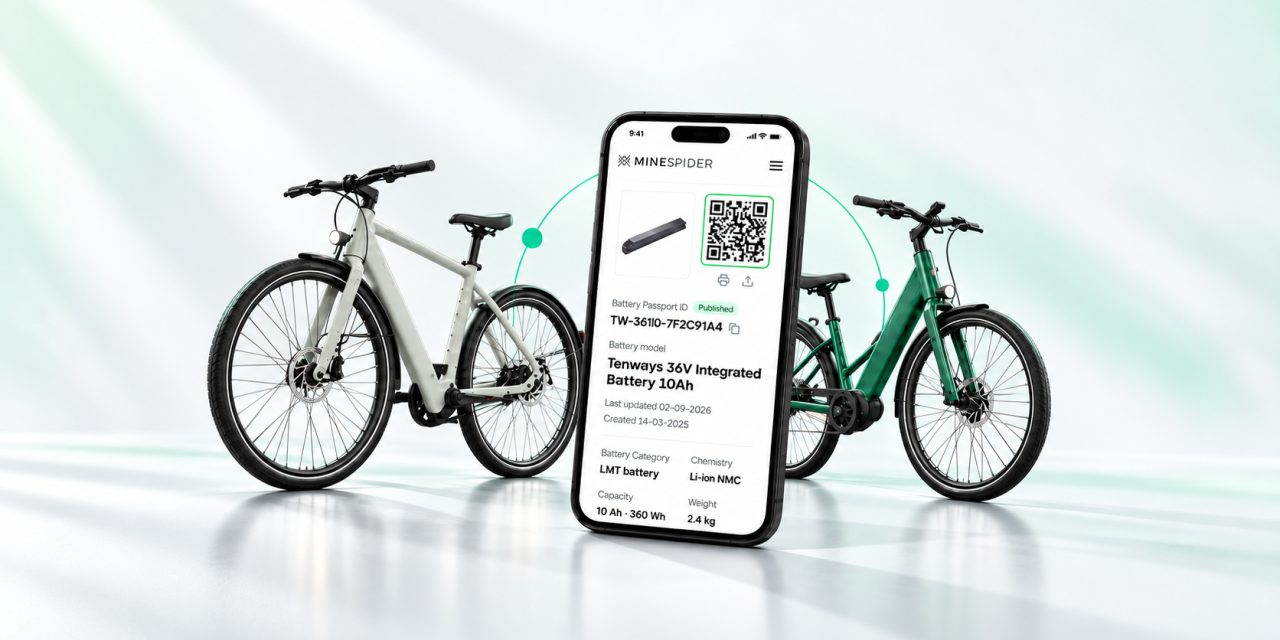
Tenways and Minespider have collaborated to bring digital e-bike passports to Tenways e-bike batteries.
The release says the collaboration positions TENWAYS at the forefront of e-bike battery transparency as the industry prepares for 18 February 2027, when the EU Battery Regulation will require LMT batteries placed on the EU market or put into service to carry a Digital Battery Passport.
By beginning implementation ahead of the deadline, TENWAYS says it is moving early to establish the supplier engagement, data structures and digital infrastructure required to support compliant Digital Battery Passports at scale.

Bringing Digital Battery Passport Readiness Into E-Bike Manufacturing
Under the EU Battery Regulation, every LMT battery placed on the EU market or put into service will need a Digital Battery Passport from the 18th of February 2027. The passport will contain information relating to the battery model as well as information specific to the individual battery, and must be accessible through a QR code linked to a unique identifier.
The regulation also requires the information to be accurate, complete, up to date, structured, searchable and interoperable.
For e-bike manufacturers, preparing for this requirement means more than creating a QR code. The underlying battery data needs to be collected, structured and connected across the relevant parts of the product and supply chain.
Through its work with Minespider, TENWAYS says it is putting this infrastructure in place ahead of the regulatory deadline. The implementation will support the creation and management of Digital Battery Passports and establish a structured approach to the battery information that needs to accompany TENWAYS products.
“The Digital Battery Passport is becoming part of how e-bike manufacturers will manage product information, not simply another regulatory requirement to address at the last minute.
Working with TENWAYS allows us to put the infrastructure into practice with a real LMT manufacturer and help turn the requirements into a workable process. Starting early gives manufacturers the opportunity to build the right data flows and learn what works before the regulatory deadline arrives.” – Nathan Williams, Founder & CEO, Minespider
Preparing for a More Transparent Battery Lifecycle
According to the brand, sustainability is one of its core values, with its broader mission centred on making green mobility accessible and supporting riders through high-quality e-bikes and long-term service. Its sustainability initiatives include efforts around responsible production, environmental partnerships and extending the impact of e-bike mobility.
Digital Battery Passports ‘add a data layer to that approach, creating a structured digital record that can follow the battery through its lifecycle and make relevant information available to different actors according to their access rights.’
TENWAYS says implementing DBPs now provides an opportunity to prepare for the regulatory requirements while building the foundations for better battery data management as its e-bike business continues to grow.
“As e-bike adoption continues to grow, we believe the industry also needs to become more transparent about the products and batteries behind that mobility. Preparing for the Digital Battery Passport now allows us to approach the new requirements proactively and build the right processes into our operations rather than treating them as a last-minute compliance exercise.
We see this as an important step in supporting a more responsible and connected e-bike industry.” – Amir Fazeli, General Manager, TENWAYS Europe
In the release, both parties say the collaboration reflects a broader shift in the e-bike industry as manufacturers prepare for the next stage of battery regulation. With the February 2027 deadline approaching, companies placing LMT batteries on the EU market have a limited window to understand their data requirements, establish supplier data flows and implement the systems needed to manage Digital Battery Passports at scale.