It’s not every day you see a start-up in the cycling retail space showcasing its impressive first year of trading.
Spend any time chatting with Kev Williams and it’s immediately obvious that the success is built on a host of business experience, backed by a clear vision for the business he is building.
Simon Cox sat down with Williams to explore his background and the way this shaped the first 12 months of trading for Discounted Bikes – Shropshire.
[divider style=”solid” top=”20″ bottom=”20″]
Let’s open the conversation at the very start of your bike business adventure. Am I right in saying you start with one bike and £75?
Yes, that’s right, I was targeted by a digital ad from John Pye Auctions. That drew me in.
Initially, I thought what was being offered at auction looked too good to be true. My thinking was, “there are all these bikes, there must be something wrong with them”. So, to test this out, I bought one, which then turned up built. Because I don’t come from the industry, I wasn’t aware of the Forme brand. We weren’t really into biking at this point.
My bike background is based on where we lived, by Eastridge in Shropshire. I was brought up with bikes and the likes of local lad Andy Titley, Steve Peat and Rob Warner – coming to Eastridge to race.
By the time of the John Pye auctions these memories are in the distant past. So we bought one bike from the auction, I thought let’s just see what it’s all about for £75 (pre-auction RRP was £250). It was a 16” Forme Harpur in Red, it was by far the best kid’s bike I’d seen. Lightweight, bright colour, superb components and it looked awesome.
We sold it quite easily through Facebook Marketplace. We made a profit. We bought a couple more and tested the water, fast forward a few months and we’d created a brand called Discounted Bikes – Shropshire, launched a Shopify website, secured warehouse space and began turning over 100s of bikes.
In total, we probably resold around 800 bikes, plus a decent amount of branded components and accessories. We’ve continued to source more stock and secured additional Reid bikes through Adam at Adaptive DCS.
We genuinely fell into this business, we didn’t start with a plan, but we saw an opportunity and took action. It’s been great fun and served a purpose. We’ve found a passion in making and taking the journey, one which we’re looking to continue.
Of the bikes you sold, how many are children’s bikes and how many are adult bikes?
Of the 800 or so, probably 90% were kids’ bikes – that’s balance bikes up to 26-inch wheels. We picked up some adult bikes which sold quite quickly. Our stock mix was determined by availability at the auction.
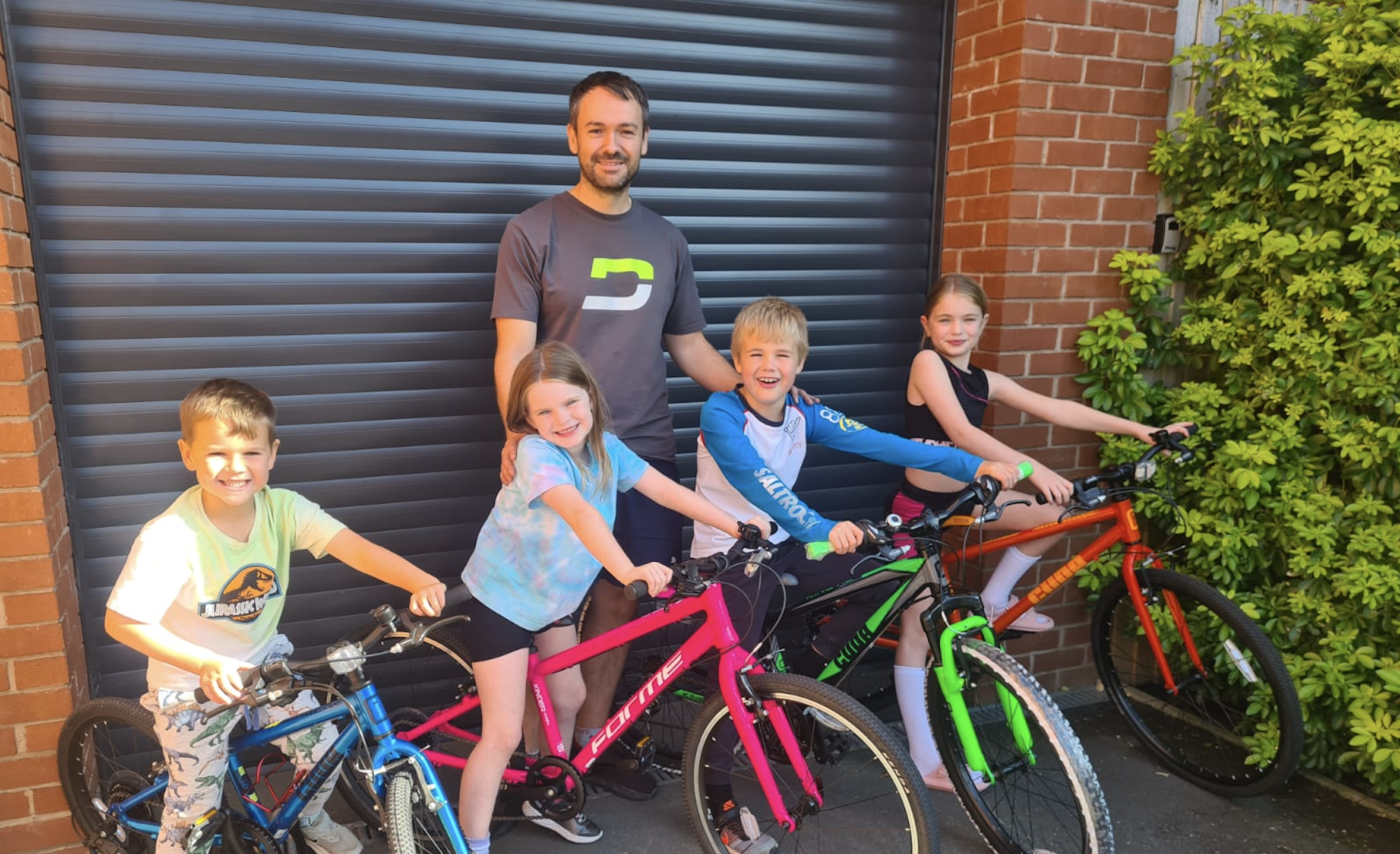
The kids’ bikes are where we found our passion. Parents came to collect bikes from our house, already knowing the price before they arrived at our door. Many of those who bought from us attend the local school. Kids test rode the bikes outside our house. The conversion rate was extremely high. Seeing kids jump on the bike and their faces light up: That’s where the magic was for us.
We made a little bit of money but the main measure of success was seeing another kid on a bike, and, being parents ourselves, when we look at the screen time stars for my kids – It’s not healthy.
Trying to help other parents combat that – keeping their kids active on a bike – is a great feeling.
When you look at the stats behind this, they are quite frightening. Research shows the percentage of kids who are active now, riding bikes, is less than half what it was in the early 2000s – that’s just mind-blowing for me.
We’re from a generation where it was always normal to pick your bike and ride. It was just second nature, but it’s almost like tablets have replaced that. Then you look at kid’s obesity levels going through the roof, and it’s all linked. Exercise promotes physical and mental health.
That’s why my wife and I are involved in building the business. That’s what we’re really passionate about helping challenge, change, and address these issues.
This is great to hear, especially as the industry has seen real challenges with selling children’s bikes. Part of that is a subscription model, which has, understandably, become very popular, and part is also price point (and margin).
Agreed. For us, at the start, sourcing bikes from John Pye Auctions meant we could be really generous with our pricing as our business costs were very low.
At one point we’d been selling through eBay, but when we looked at eBay’s charges, and the inability to target a local audience, we decided there was a better way to make this work.
We reached out to Mark Crosby who specialises in digital marketing within the outdoor sector. Mark has been a guiding light and launched our Google ad campaigns. This triggered significant traffic to our website and helped us save some money. We were able to increase local sales by promoting the business through partnerships with local sports clubs and schools.
We love seeing local families out and about on bikes brought through us.
Now you’ve come to the end of stock, what’s next?
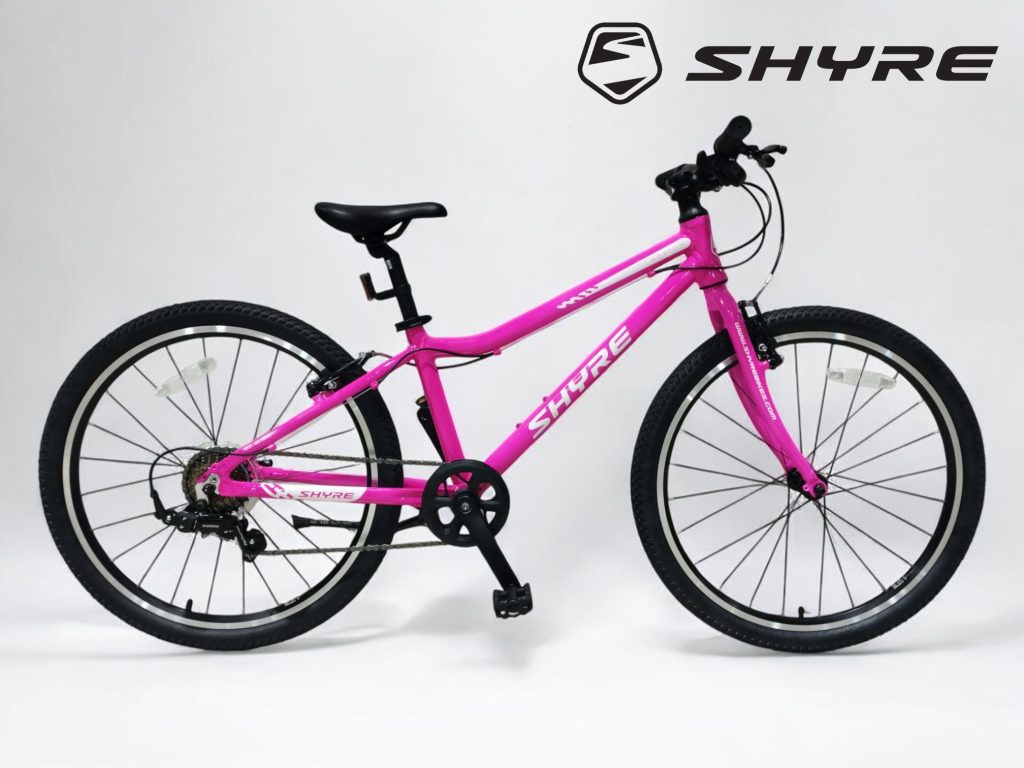
We’re super excited to announce the launch of our very own kid’s bike range. Shyre Bikes. We could have taken the profits and moved on, but we can see a gap in the market for a lightweight and affordable kid’s bike, so we are aiming to fill that gap with our new range.
We are expecting sample bikes in the next few weeks, with a further 150 bikes before Christmas. The first model in the range will be the Shyre Hopton, available in two colours, at 16”, 20” and 24”. We hope to sell these bikes quickly, and then re-invest in a larger batch for 2025.
We are also having conversations with some really influential people in the sector. We’re building a brand with longevity, which will need experienced people to help steer the business in the right direction.
As we talk it’s clear that, whilst you’ve started a business from your home, initially out of curiosity, then as a passion project, you have a solid business background.
I’ve previously launched a start-up, an app-based business, so a blend of tech, e-commerce and logistics, which had many challenges and lots of success.
You learn so much from a start-up business, you do every job yourself and learn about every part of the business. In my day job, I consult to social housing providers.
We don’t need to be doing this. However, once we saw the look on kids’ faces, and those of their parents, we (my wife and I) knew we’d found our thing: To get more kids on bikes.
We just love seeing the reaction of kids, and parents, when we’ve got them a bike. This brought another element of the model into focus: A VIP/white glove handover experience. Parents book a time slot. The test ride and collection experience felt personalised. We share the fun and the passion with them. They are 100% the focus when they come to collect. It’s something many brands talk about but so many struggle to truly deliver in a way that the hospitality industry, for example, would rate as a five-star experience.
Though our bike stock, and how we source it, will change in year two, our approach to service is something we won’t be changing.