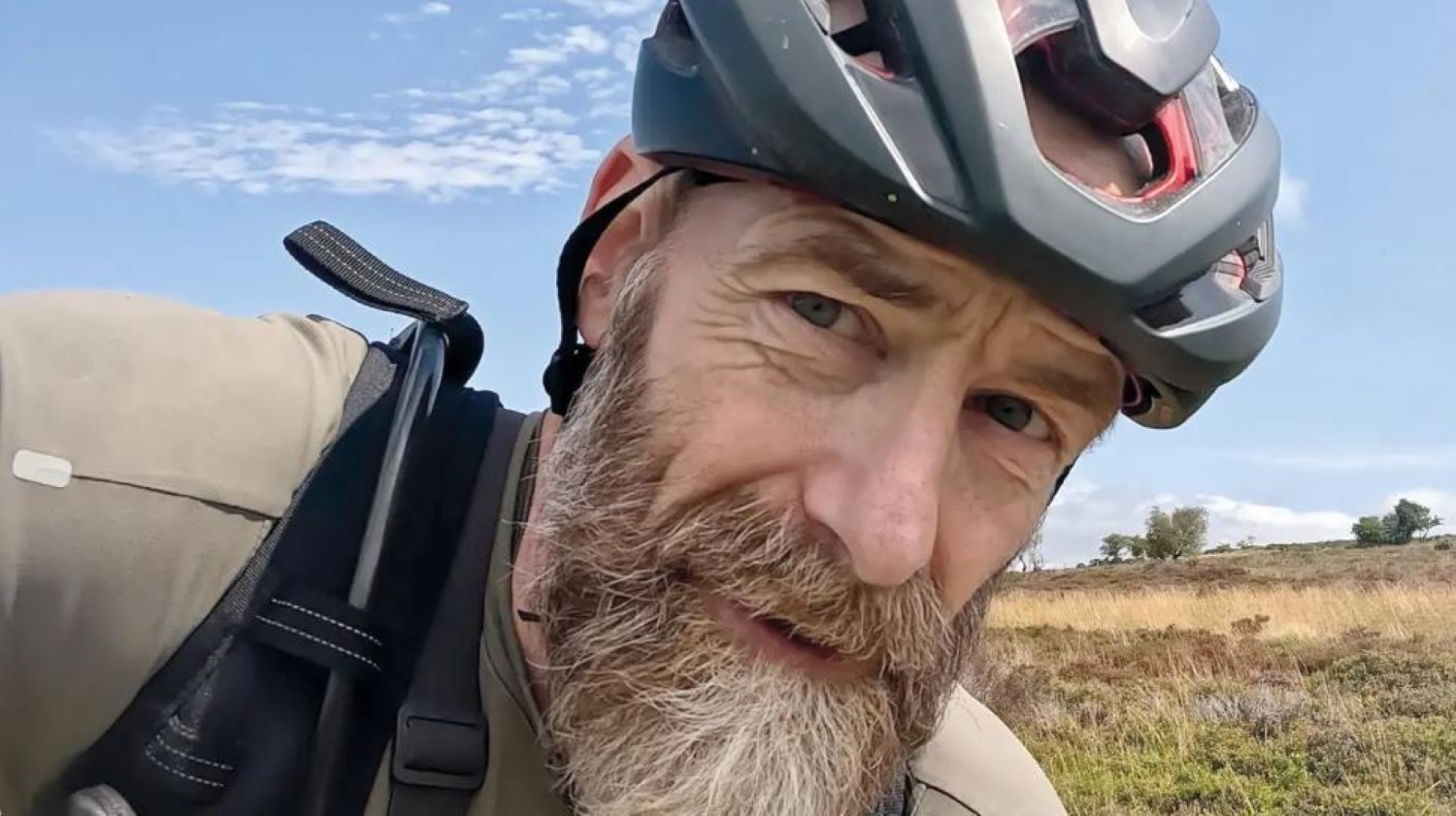
Any conversation with Guy Kesteven is an event. A combination of personality, enthusiasm and knowledge like his isn’t a common occurrence. And that’s something Guy would never say about himself (which is why I’m saying it here).
What you’re far more likely to hear Guy talk about is the way our enthusiast-focused industry takes itself too seriously, whilst simultaneously laughing and not taking himself too seriously, despite likely having forgotten more about bikes and bike stuff than most will ever have known.
With this in mind, we sit down for a good chat, some ideas, and an interest in seeing where the conversation takes us. A cup of tea is, obviously, involved in the making of this edition of ‘People who make the industry‘.
[divider style=”solid” top=”20″ bottom=”20″]
Guy, let’s start by exploring the way the industry segments the market. Bikes for different riding types, niches within a niche, and how that works (or doesn’t) for engaging the wider potential audience.
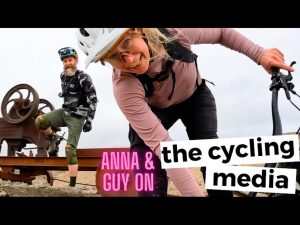
You’ve seen my video with Anna Cipullo, right? Someone made a great comment that the kind of riding that we were doing, and that the vast majority of people who ride bikes off-road do, yet there’s not even a phrase for it. You know, there isn’t a category of bike for just riding along.
It’s like the rambling of the bike world…
Yeah. Or, it’s the equivalent of a trail running shoe. But no, we have to have downhill or free ride or down country or XC, or…, and all of those are tiny tiny tiny. Even from a mountain bike point of view, we’re massively missing the mass market. People out for a bimble on a bike. People enjoying being outdoors. Enjoying exploring the countryside.
It’s part of our bigger problem. We’re cyclists. A niche. Or maybe what I’m saying is that in the UK, we don’t see the bigger opportunity. You know, get people out of cars – because there’s millions of them.
We attend conferences where much hand ringing takes place about how you’re going to improve the gene pool, increasing the number of people on bikes. Meanwhile, there are companies that people in the UK won’t have even heard of who are taking care of all that, via the fact they’re calling it ‘transport’.
We need to challenge the perception of, you know, how to grow cycling as a whole. That’s what it needs to become. It needs to become a way of people moving people about you know, but real people, not cyclists.
There’s all this hype around gravel. Don’t get me wrong, it’s great to see people out on bikes, but the numbers aren’t having an impact in the way the transport market could and would.
You know when we talk gravel, and we talk mountain bikes, or XC bikes, the start list for some of the gravel events I’ve seen is like 60 or 70 and everybody’s going ‘it’s the future we must invest all our marketing and all our ambassador sponsorship into this’: That’s about the same size as a regional veterans category XC race and everyone’s going now XC’s been dead for 20 years you know.
Trend hopping. Hard to argue against that. Especially in an enthusiast-staffed industry sector.
And you look at the number of people who view cross country on Discovery compared to the number of people who view the downhill. And yet the media is so focused towards downhill, at least the mass available media.
It’s just wonky.
Thinking about the media and the industry, the landscape has changed so much in the time you’ve been involved. Talk to us about that. Give us some sense of how you see it.
What I’m doing now is a much richer, more interesting, interactive experience than what I did when I started, or until relatively recently.
When I started, it was massively gatekept. I mean, I was lucky to slip in the side door and join the party. It’s literally a handful of magazines, probably 15, 20 people tops, with the self-declared authority. The magazines decided which riders were hot or not. They decided what products got featured, and when.
I remember when the guys who set up Bike Magic came and said, “Can we put our URL on the cover?” I had no idea what they meant. It sounded quite sordid (chuckles). And within literally two months, the magazine was no more. The switch was that rapid. I went from sending my copy down to London on a floppy disc in a special envelope to working online directly, or at least trying to, within about two years. Suddenly, having that information and deciding when to share it was totally flipped – being available to people instantly was now the power. Exclusives. Being first was now a focal point. It changed pretty much everything.
It’s great cuz I can post a video and someone goes, “You got that wrong there, mate.” And you’re like, “Okay, maybe I have.” And you dig into it. You know, the feedback is instant. But you can be much more open and honest because of that. That’s what I’m finding more and more with YouTube.
Being your own boss, directly accountable to your audience, gives freedom and makes demands. What would you call out in the current market?
The biggest issues we face – which people won’t call out, because it’s not cool – are the irresponsible/ignorant minority who make things harder for everyone else.
Whether that’s weekend warriors riding like it’s the TdF on a public road / down a bridleway at a gravel event or MTBers ripping ‘schralp’ ruts through protected landscapes.
There are tens of thousands of people riding responsibly on and off-road every day. And the network of carefully crafted and totally sustainable unsanctioned trails is what modern MTB is increasingly based on. But like every group, it’s the minority of bell ends who risk ruining it for everyone.
We need to be braver about calling that out and self policing to secure our place and future as a positive influence in the world.
I’d add those chipping and tuning e-bikes (typically mountain bikes) in here, along with the obvious gig economy illegal e-bikes – absolutely trashing the credibility, feeding the lazy mainstream media narrative, at our own community and industry’s expense.
Yeah. No sense of accountability or responsibility. Entitlement writ large.
Ironically, when I support initiatives like Trash Free Trails or produce videos talking directly about access and trail management, those YouTube videos get less views than anything else I produce. The limit of my audience influence, apparently.
Talking e-bikes, the amount of wear on components seems something nobody wants to really talk about, either. Is it that shops don’t make a point of highlighting the need for regular maintenance, or that customers aren’t aware? Either way, there’s a bigger conversation that needs having there.
If we want to win long-term term new riders – people using bikes for daily travel – there’s a real need to directly address this.
Shops can be far more proactive in scheduling frequent light servicing – chain clean and lube, brake pad wear check, etc – are logical on a bike, but less obvious for people not from a riding background.
Possibly belt drive and a combined motor/gearbox will change things in the near future, but overall, I think we really need to invest in educating people to be responsible for what they ride and how they ride. That’s how we grow cycling sustainably with widespread support, rather than just creating more push back from groups we literally share the roads and hills with.