
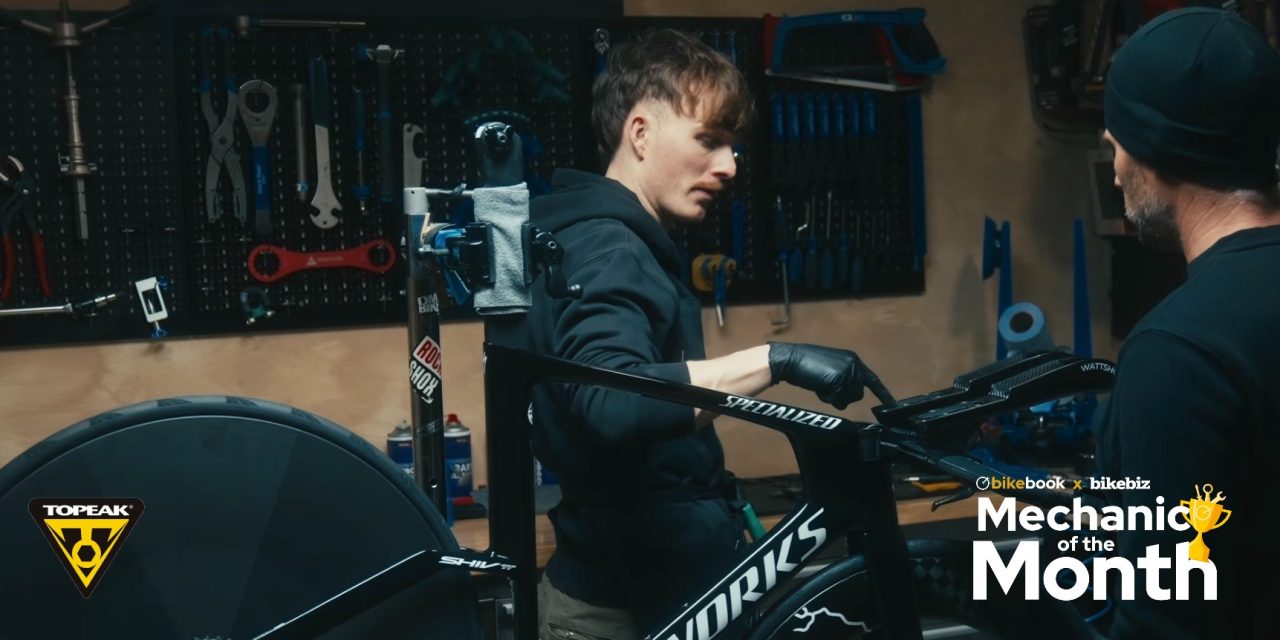
Last year, we launched our ‘Mechanic of the Month’ in partnership with bikebook to champion bicycle mechanics around the UK.
We now have additional support from Topeak, who agreed to support the initiative by offering Topeak tools and best trade pricing across the Topeak Tools/Workshop range (via Extra UK) for 12 months.
Nominations are open to the public via bikebook, allowing anyone to nominate their favourite mechanic.
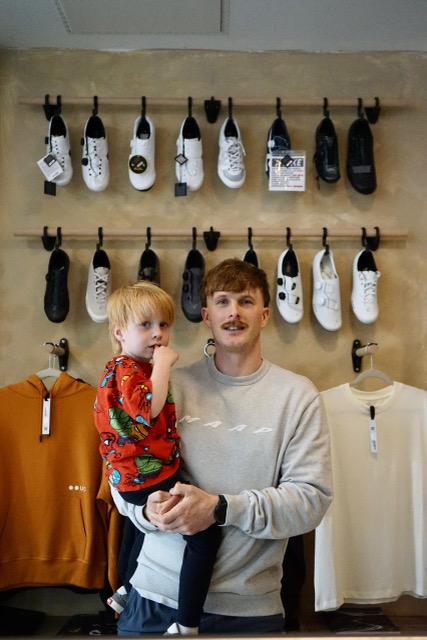
Here we chat to our most recent winner, Sean from Leadout Performance.
Walk us through your journey into the world of bicycle mechanics? What initially sparked your interest in the job, and how did you get started?
I got into the bike industry through a genuine love and passion for bikes — it wasn’t something I originally set out to do. I served in the military straight from school as an infantry soldier, sniper and Physical Training Instructor. Unfortunately, I was medically discharged due to axial spondyloarthritis. At that point, I wasn’t entirely sure what the next chapter looked like.
The one constant was cycling — riding, racing, fixing bikes, and being part of the club environment. I decided to lean into what I loved and give it everything. The mindset was simple: commit fully, work hard, and see where it leads.
Tell us about your current role and where you work?
I’m now Director at Leadout Performance in Bedale, North Yorkshire. We’re a performance-focused bike shop specialising in road, gravel, TT and triathlon. A typical workshop day is centred around custom builds — that’s a big part of what we do. Alongside that, we support a strong local community and club scene, so we’re regularly handling the day-to-day essentials: bearings, bottom brackets, headsets, servicing and general maintenance — all focused on keeping people riding consistently and confidently.
Do you feel mechanics receive adequate recognition for their expertise and the value they add?
Not always. A lot of riders see the bike as the product, but the mechanic is the one who actually makes that product perform properly. A well-built bike, with everything aligned, torqued correctly and dialled in, can completely change the ride experience.
In many ways, mechanics sit behind the scenes, but the knowledge, attention to detail and pride in the work are what keep riders safe and performing well. As bikes become more complex, I think people are starting to appreciate the role more, but it’s still an undervalued craft in many ways.
Do you have a favourite tool you can’t live without, or a particular type of job that you find most satisfying?
A good torque wrench is something I couldn’t live without. With modern carbon bikes and high-end components, precision matters more than ever.
The most satisfying work for me is a full custom build. Starting with a bare frame and carefully building a bike to the highest standard — clean routing, perfect alignment, attention to every small detail. When you step back and see the finished bike ready to ride, that’s the most rewarding part of the job.
Are you using Bikebook? What’s your experience been like?
Yes, we use Bikebook in the workshop. It’s helped us structure bookings and manage the flow of work much more efficiently. Customers can book easily, and it keeps everything organised on our side.
Like any system, it takes time to embed into your workflow, but overall, it’s been a positive tool for managing a busy workshop.

Beyond practical skills, what qualities make someone a great bicycle mechanic?
Attention to detail and pride in the work. Anyone can follow a manual, but a great mechanic notices the small things — alignment, torque, clean routing, and making sure the bike leaves the workshop better than when it arrived.
Problem-solving is also huge. Bikes are becoming more complex, and diagnosing issues often requires patience, experience and a bit of creativity.
In my view, the most important qualities of a good mechanic are recognised industry qualifications combined with genuine passion and attention to detail. Qualifications are important — they validate standards and keep the industry accountable. But they don’t tell the whole story. You also need care, curiosity and pride in your work.
If you’re passionate and you genuinely care about the rider and the outcome, you’ll usually make the right decisions. Continuous learning is essential — technology evolves quickly, and we have a responsibility to stay current and competent.
How important have formal qualifications or continuous learning been in your development?
Continuous learning is essential in this industry. Bike technology moves quickly — electronic shifting, integrated cockpits, new materials and evolving drivetrain systems.
Qualifications can give a good foundation, but experience and staying curious are what really develop a mechanic. The best mechanics I know are constantly learning through builds, new products and working with other people in the industry.
What changes in bike technology or rider culture have you seen over time?
Bikes have become far more integrated and technically advanced. Internal routing, hydraulic systems, electronic shifting, aero optimisation and wider tyres have all changed the way bikes are built and serviced.
Because of that, the role of a mechanic has expanded. It’s no longer just fixing bikes — it’s understanding compatibility, aerodynamics, performance and optimisation.
Riders are also more performance-focused now. Bike fitting, marginal gains and equipment choices are a bigger part of the conversation, so mechanics often end up being part technician, part advisor when it comes to helping riders get the most out of their setup.
What advice would you offer to someone who is just starting out or considering a career as a bicycle mechanic? What have you learned that you wish you’d known when you first began?
For anyone starting out, my advice would be to seek experience and mentorship. Learn from someone established. Ask questions. Don’t guess. Brands and distributors are there to support you — use them. The industry is collaborative if you approach it correctly. Technical skill is built over time, and humility goes a long way.
Follow Sean on YouTube to keep up to date with his work.
