
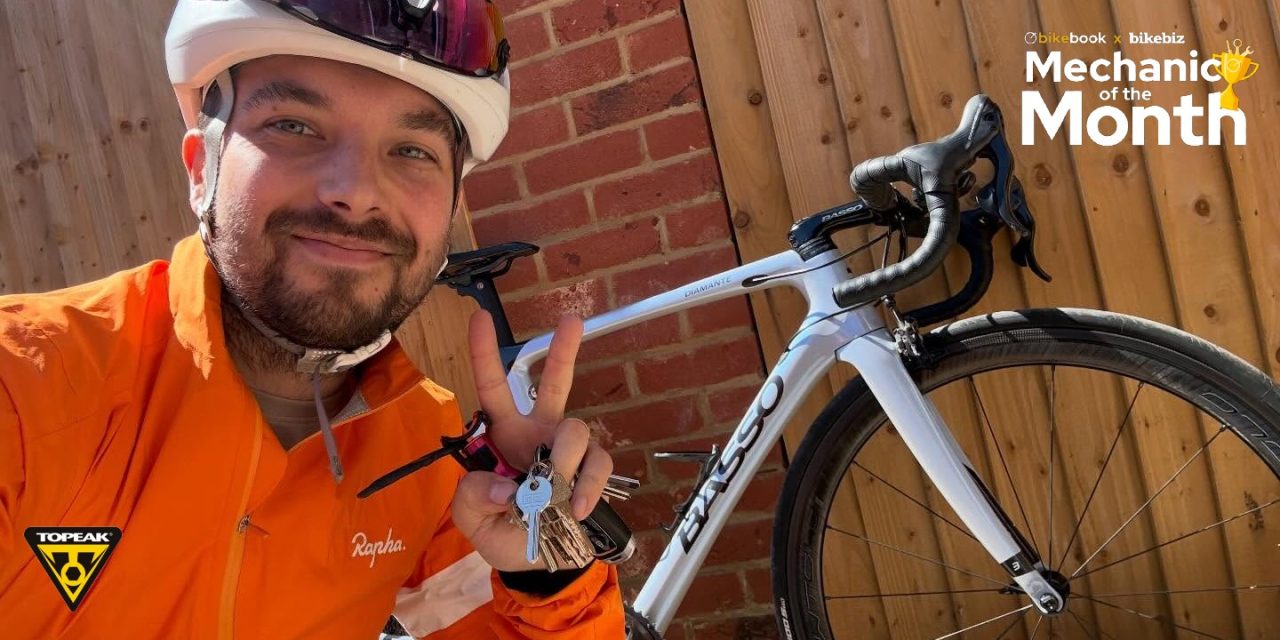
Last year, we launched our ‘Mechanic of the Month’ in partnership with bikebook to champion bicycle mechanics around the UK.
We now have additional support from Topeak, who agreed to support the initiative by offering Topeak tools and best trade pricing across the Topeak Tools/Workshop range (via Extra UK) for 12 months.
Nominations are open to the public via bikebook, allowing anyone to nominate their favourite mechanic.
Here we chat to our most recent winner, Josh Foster, from ProCycle.
Walk us through your journey into the world of bicycle mechanics? What initially sparked your interest in the job, and how did you get started?
My Grandad was big into bikes. I’ve always been particularly interested in road cycling from watching the Tour de France with him, and trying to reach the pedals of his Reynolds Ribble with Campy Veloce. I started working at Dorvics for Cycles at age 19 as a summer job around university.
I quickly moved on to running a bicycle cooperative at Sussex Uni, then Evans during COVID, then Chicken, and even while working as an aerospace engineer, I worked at Lovelo on a Saturday – you couldn’t keep me out of a bike shop! Eventually, HS2 cut the link between my village and the main town, and I started Procycle alongside my main job.
Tell us about your current role and where you work?
Currently, I work as a mechanical design engineer from 9 to 5 and work on Procycle from 5 to 9 & weekends with my wife’s support. I operate a repair shop focused largely on road, gravel, and commuter bikes out of my garage in the south of York. I’ve got close ties with the local cycling club, and York’s a great place to cycle, so even with limited hours, I’m busy!
What does a typical day look like for you in terms of the bikes and jobs you most often encounter in your workshop?
A typical day is an evening. I’m mostly working on commuter and club road bikes. As a Ribble service outpost, I’m also seeing a lot of traffic from there. Most of the drivetrain wear I encounter results from a lack of servicing or maintenance. Therefore, I try to include a little education now and then via YouTube, social media, and in person with club members. My best-selling item is probably a Tiagra 10-speed chain.

In your opinion, what is the most important, or perhaps misunderstood, aspect of a bicycle mechanic’s role?
A bicycle mechanic has true ownership and responsibility for safety, as well as enjoyment. If you can forget that your gears and your brakes exist because they work flawlessly, that’s your mechanic performing magic behind the scenes.
Apply a single dab of Loctite to some chainring bolts, and fresh anti-seize to your pedal threads to avoid trouble after 18 months without servicing. Bike mechanics don’t just build bikes and get the public cycling; they keep people cycling because the focus is on the enjoyment of the ride, not obscure mechanical quirks and noises.
Do you feel mechanics receive adequate recognition for their expertise and the value they add?
I think bike mechanics are inherently non-self-promoting and generally pretty humble (he writes, a mechanic himself). The breadth of cycling today means you can encounter a myriad of different technologies and problems to solve, and there’s an expectation to solve everything fast because “it’s just a bicycle”.
Bike mechanics can jump from being an electrician, to a computer scientist, to a machinist, to a teacher, all on the same bike, and I think that versatility is severely underrated. Toby Hockley from SRAM came on my podcast to discuss this.
Do you have a favourite tool you can’t live without, or a particular type of job that you find most satisfying?
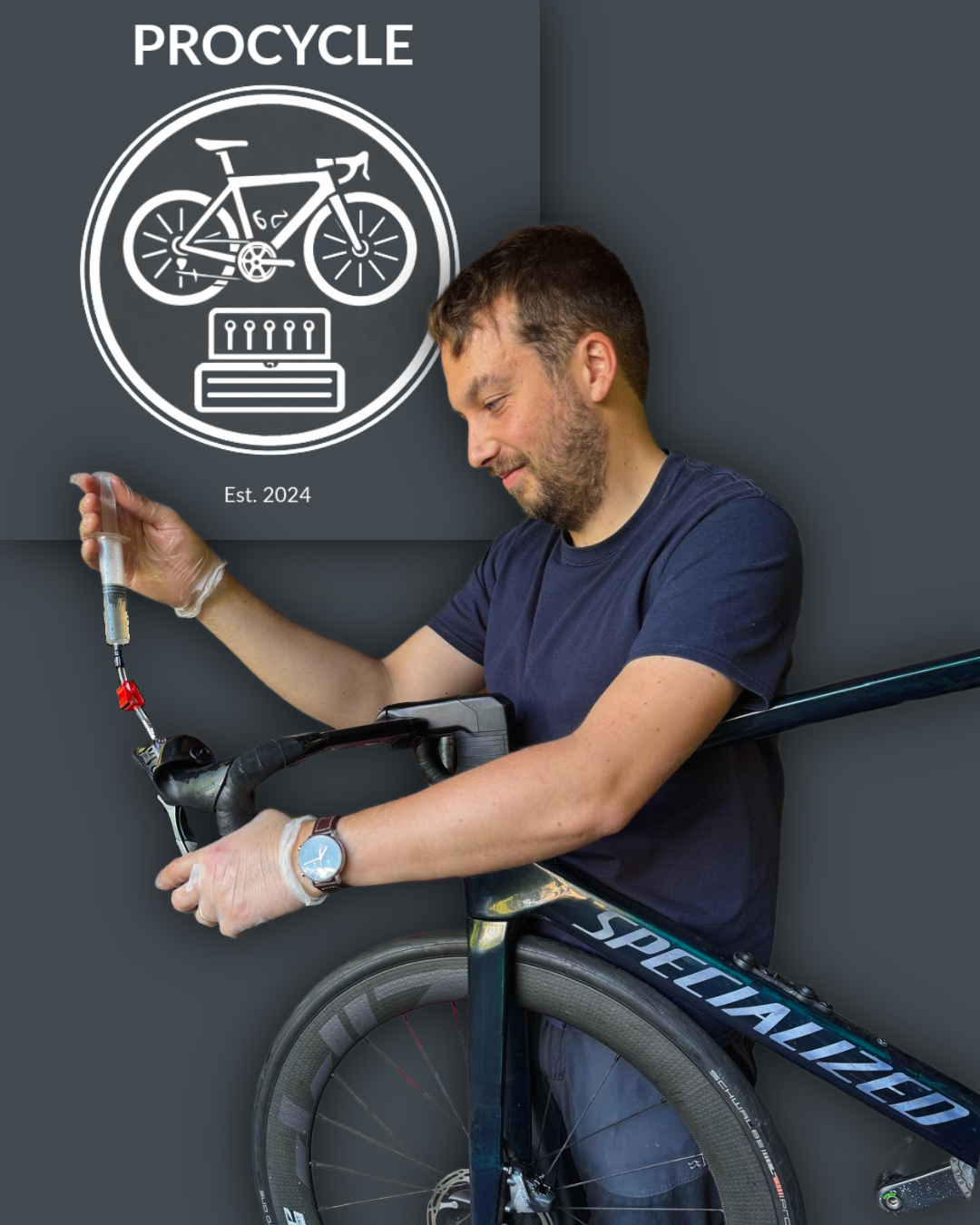
Favourite tool at the moment is probably the bio parts washer I picked up at Icebike. After properly washing the bike, it keeps significantly less dirt off the tools, the workshop, and me. Cleaning a bike and its drivetrain can expose things you wouldn’t otherwise see, helping to finalise the service quote upfront. Satisfying – hydraulic brake servicing, just absolutely nailing the bite point and getting rid of any squish, I’d want mine to be perfect so I can get a little obsessive with it.
Facing disc brake mounts would be a challenging job, considering the time required to align them perfectly. Once that’s done, though, the brake service satisfaction applies.
Are you using Bikebook? What’s your experience been like?
Yes, I’ve been using Bikebook for well over a year, the experience has been pretty flawless, and Jake and the team have been really responsive to my requests. I’m building my new website through Shopify because of the integrations they’ve built in.
I know they’ve got a huge backlog of suggestions to get through, but my main priority is nailing down drop-off times by appointment slot. My very first podcast episode was with Jake from Bikebook in January last year.
Beyond practical skills, what qualities make someone a great bicycle mechanic?
First principles thinking. That means being able to strip an issue back to the fundamentals of how bikes work and build from there, even when unfamiliar with the system.
How important have formal qualifications or continuous learning been in your development?
Qualifications demonstrate learning, raise the base standard, and serve as a good fallback, but they shouldn’t be considered the be-all and end-all. Bicycles are a hugely broad topic, and the tech is shifting at a really rapid pace. I would place more emphasis on continual professional development rather than taking a one-off course and stopping there. I think e-learning can be a really nice supplement when you don’t have the time to attend a 2-week course. I’d love to see courses offered at local colleges for night school.
I think Cycle CPD is on the right track with this, from what I’ve seen from a distance. I have Cytech Theory 1. I mastered Trek University and the Brompton Academy while at Evans, and I’m still topping up with Shimano T.E.C, a RockShox suspension course, but nothing comes close to the time spent working on bikes with a keen mentor.
What changes in bike technology or rider culture have you seen over time?
There’s more variety now than ever before. Simultaneously, you have people booking services where the labour cost alone exceeds the price of a new equivalent bike. You also have bicycles coming in that only need one part replaced, and that single part costs as much as a new bike of the model you just told someone isn’t economically sensible to repair. I think road cycling has had to rebrand and become more accessible, with the initial surge in 2012, which COVID then accelerated.
I’m looking at broad multi-channel sourcing, using different distributors for different types of bikes to maintain proportion. I think a large skill is navigating the price conversation with those who lack deep industry knowledge. Bikebook has been quite good for this with its job reports, addable notes, live chat, etc. It really helps break down barriers and provides visibility into what actually needs working on, which builds trust.
What advice would you offer to someone who is just starting out or considering a career as a bicycle mechanic? What have you learned that you wish you’d known when you first began?
Fixing your own bikes is a great start, but seek proper mentorship, read books, and learn. You don’t have to foot the bill for thousands on a training course, and apprenticeships could genuinely be the way forward. I wish I had known so much more at the start, because initially, I knew nothing. Then, I read, watched YouTube videos, took courses, got a job in a bike shop and just kept building. If you’re going it alone, some industry background (training, shop job) and insurance are a must in my view.
Never be afraid to turn down work you’re not comfortable with. It’s good to stretch yourself, but not when you’re 8 hours deep into head-scratching. Bicycles are awesome, and being a bike mechanic is awesome, but bicycles aren’t toys, and safety is a serious element.
Follow Josh on Instagram to keep up to date with his work.
