
This piece first appeared in the February 2026 edition of BikeBiz magazine – not subscribed? Get a free subscription.
By Simon Ford, Sales & Marketing Director, ABUS UK
ABUS UK’s Sales & Marketing Director, Simon Ford, outlines the case for abandoning the “lazy route” of low-cost, predictable sales in favour of expert advice, thoughtful range planning, and innovative solutions.
Three decades of visiting cycle shops and what has changed? There have been many popularity changes, through BMX, MTB, Hybrid, Road, e-Bike and Gravel, periods of popularity that will always ebb and flow, they are all bicycles and stocking what consumers want obviously makes sense. Remember the Fat Bike period?
It’s Christmas as I write this, which takes my thinking back to days of hundreds of bicycles lined up in cycle shops, all pre-sold, awaiting collection from happy parents, each wondering firstly, will it go in the car, then how they will wrap it, then can they hide such a large object from a keen, seasonally excited child. Although some bicycle sales do still take place specifically as Christmas presents, now an iPhone or Xbox perhaps tops a kid’s Christmas list. A call to a long-standing cycle shop owner confirmed my thoughts: two to three hundred Christmas bikes a year “back in the day,” he tells me, but down to eighty units in 2015, 24 in 2020, and just eight in 2025. Different times.
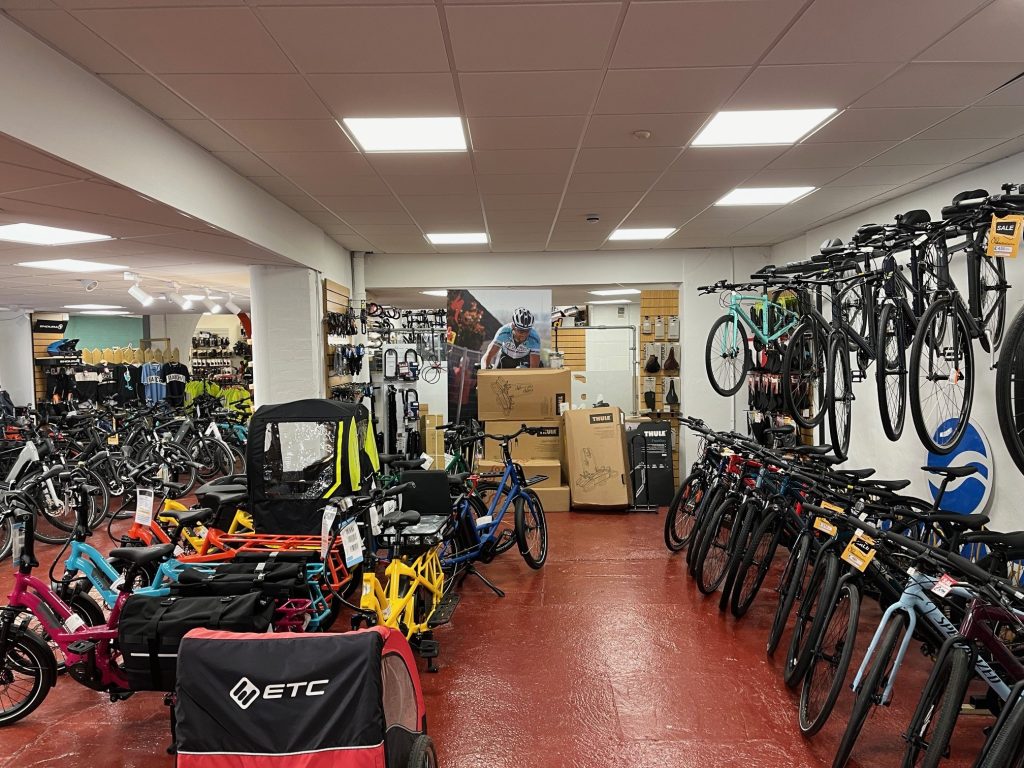
In-store, there have been changes to the proportion of sales between bicycle, workshop, and PACS. Pressure from online retail, ever-increasing operating costs, and falling footfall all bring challenges. The mix of products, workshop capacity, space assigned to product categories, and understanding where revenue comes from is more important now than ever. Does a metre-wide display of bottle cages at a prime store location make commercial sense? What is the potential best-case return? For years, most grew each year; yes, we worked hard, but we also benefitted from a predominant tailwind. That tailwind in recent years has shifted, so now could be the time to consider aerodynamics.
From a retail perspective, I am curious, interested and inspired to learn when I visit my local supermarket. It is a typical, large, fringe-of-town affair, the same as most towns have. To me, like or loathe them, they are the experts at retail. Nothing is anywhere without a reason. How the store flows, the positioning of product, good – better – best, end of aisle, top, middle, or bottom of shelf, lighting, smell, everything is designed to appeal to you, and help you, the shopper, spend. A dopamine rush from the front doors. For any retailer, the supermarket’s methods should be of interest. What can we learn, and why wouldn’t we want to?
With PACs, three of the most popular items in store are lights, locks, and helmets. Working for ABUS, the good news for me is that ABUS offer all three, lights admittedly in a small way, with just a few helmet lights. Focusing on locks, consider how the average IBD lock wall has changed over recent years, how much is a decent lock, what does the lock range look like, and how much revenue does that lock sale bring?
I will offer here two recent examples of store visits.
Store #1 has a 4-metre-wide section of mostly D-Locks from a variety of brands, with retail prices between £10 and £50. I have no doubt that this retailer purchases these locks at a great price, but even with a 60% GPM, what is the best result from selling that lock? With such a wide assortment of locks at the same retail price, is that validating to the consumer the amount a lock needs to cost? Placing so many similar D Locks horizontally across the eye-line (buy-line) leads to a predictable purchase and value in the till.
Store #2 has a small selection of just five locks, and yet, interestingly, the store manager tells me that lock sales are popular. These locks are partly out of sight behind the till area, in the bottom third of a slat wall. Retail starts at £10 for a cable lock and tops out at £55 for a D-Lock. If the consumer manages to find these locks, what is the best revenue outcome here? Does this promote the need for a good lock? The bicycles at this store include £5k e-bikes, and the store is in a wealthy area. Surely lost opportunity here.
Could it be that when selling a bicycle, we are reluctant to suggest the consumer spend more money, and could it be that we ourselves have decided that £50 is the right amount to spend on a lock, whilst at the same time we decide that a single D-Lock is the correct solution? With locks being one of the first and best after-sales add-ons when buying a bicycle, should we take this category more seriously? At ABUS, we would obviously say so. Some slight changes can increase revenue and profit in this major category.
From our experience, consumers, when given the choice, are interested in lock options other than, or as well as, a D-lock, and are often happy to spend more than the average £50. They are also open to advice on how to best lock their bike. Consumer knowledge on the range of locks available tends to be limited; they can be unaware of the growing use of angle-grinders to steal bikes, for example, or how desirable bikes are to thieves, or that professional bike thieves exist. For these reasons, locks present a fantastic opportunity for cycle shops to engage with consumers, offer good advice and build customer loyalty. Satisfied customers share their experiences, a win for any cycle shop.
Explain to the new bicycle owner that the £20 cable lock can be cut in seconds, and their buying decision may be easily changed. £20 locks are not bad and can form part of a range, but they should be offered alongside a selection of locks up to the best available. Having only the obvious or majority low-cost options leads to one result: a lost higher-priced sale opportunity, less profit in the till and potentially a customer whose bike will not be secure.
Recently, I was at my local train station and noted a newish-looking CUBE MTB locked with a 6mm cable through the top tube, neither QR wheel nor QR Seat Post secure. Would that owner have appreciated it if someone had explained the dangers of leaving that bike like that? I think so. Clearly I don’t know the specifics on how this bike was purchased, maybe he or she ignored the shop’s advice, but my point is that when selling a bicycle, a lock discussion should be made every time, otherwise it is a sales potential lost, and that sales potential, considering the high margins available on locks, along with credible price points, delivers good cash profit to the till.
Decreasing retail price points are appearing, and this can be a threat. Absolutely, value is no terrible thing, but at what cost does it come to the retailer? I was recently with a retailer who told me that he had replaced a lock with an alternative brand because the retail price point was a little lower, and the margin was higher. I did the math, and this retailer realised that for every lock they sold, they took less cash and more importantly, actual cash profit in the till, so they were working for less. It is a one-way street, sell as much as the year previous (if you can), but lower turnover and lower cash profit. Combined with reported lower cycle shop footfall, the outcome is like a snowball rolling down a hill.
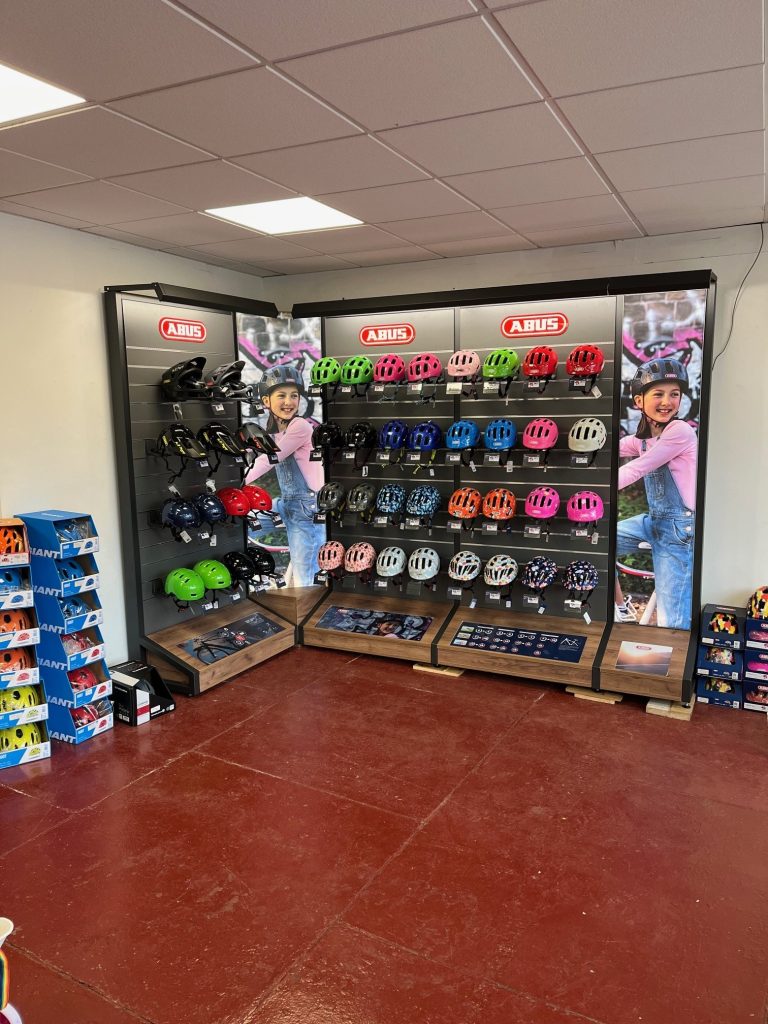
Beyond designing, manufacturing, marketing, and selling product, ABUS recognise the need to invest in the retail network. We do this by assisting with range planning, merchandising, advertising, point of sale, store events, staff training and more. ABUS UK now has four full-time representatives in the UK and Ireland to support retailers. The future of our business is not simply excellent product; it will come from supporting our customers. We are here to help in any way possible.
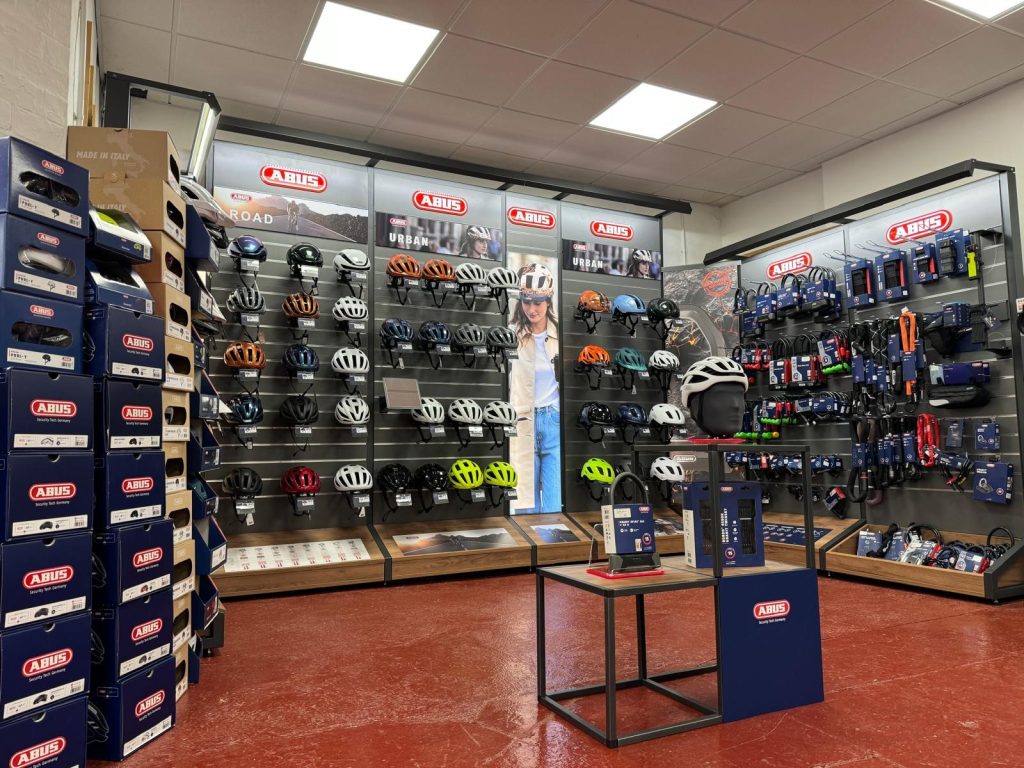
ABUS want to improve sales for all, and one way is to improve on a traditional wall of similar D-locks, by adding new, exciting, creative, modern products alongside. And for helmets, to go from an illogical mix of helmets to, where it suits, a well thought out offering of kids, road, urban and MTB helmets. Both these actions are supported with industry-leading shop-in-shop fittings to help with the consumer’s store experience. Inspiration has come from European markets where ABUS guided range plans and shop-in-shop displays have, for years, grown business for retailers. In recent years, results in the UK and Ireland have mirrored the European successes, examples of which are available. Having an interesting well laid out and displayed range is a good start.
Consumers may be unaware of the range of lock styles that are now available. How a folding lock works and is stored on your bike, for example, can be hard to work out if you have never seen one before. Open questions, such as where is your bike stored, what is the risk where you live, or where do you leave your bike, can lead to what level and style of lock is recommended and from there, with the right range stocked, choices can be made at varying price points. Have you considered security at home? Is your garage and shed an easy target for thieves? The conversation is easy to extend beyond “take this £50 D-Lock because it is Sold Secure Gold,” that is the ‘lazy’ route that could cost much-needed profit.
The ABUS One Key offering is something consumers and some retailers may not be aware of. One Key is a fantastic opportunity for the retailer. A significant percentage of e-bikes use an ABUS cylinder for the battery lock and maybe also an ABUS frame lock. Most bicycle retailers will be aware of the ABUS credit card-style keyring tied to the handlebars on new bikes. With this, and the key number printed on it, unlimited amounts of different locks can be built using the same key. It is a cool feature that consumers love, and a real benefit for cycle shops. New locks built with One Key take around two weeks to arrive, at which point the customer revisits the cycle store for collection, and at this time, the new bike owner needs a comfier saddle, some pannier bags, so the opportunity then extends beyond the sale of the locks. Win, win.
In challenging and changing times, success may not come from relying on or doing the same as before. Pausing to consider alternatives, adapting from the obvious to the new and evolving, not stagnating, becomes more important. Referencing back in this piece to Christmas bicycle sales, what we did or had before will not necessarily happen again, so we need to adapt. The recent BA data at last shows cycle industry sales growth in some areas, but each of us, trade, and retail, must remain outwardly thinking, open-minded and focused to grow from the pool available. Yesterday is gone, there is now nothing to lose and all to gain.