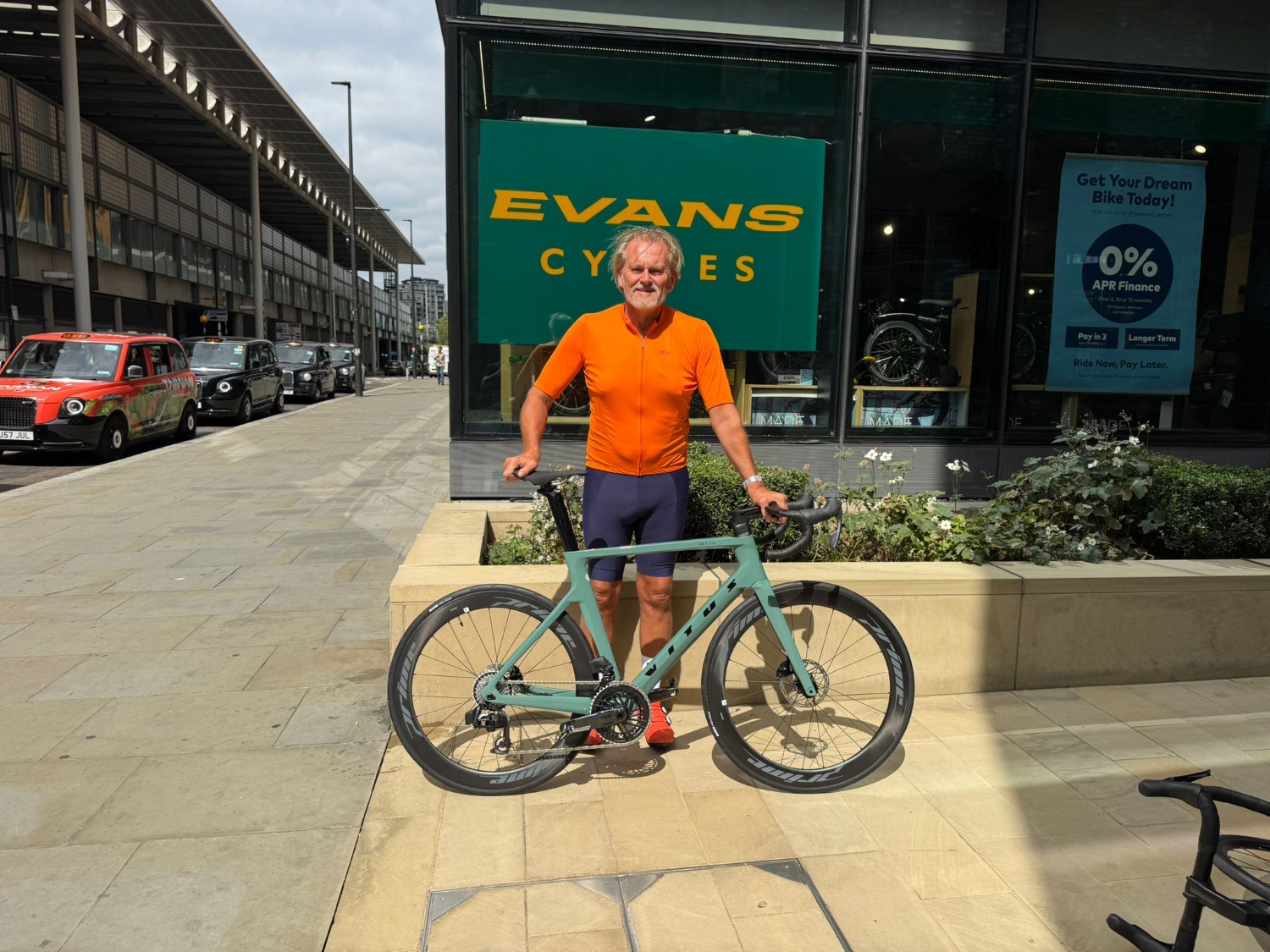
When BikeBiz sat down with new Evans Cycles MD, Rob Bentley, we intended to focus on how Evans – part of the pan-European Frasers Group – utilised the wider retail group’s insight and expertise.
What became clear during our conversation was that there was another element of the story to explore.
With this in mind, here is Part 1 (Part 2 in the October edition of the print magazine), in which Rob shares insight into his professional background and his long-running love of the bicycle.
[divider style=”solid” top=”20″ bottom=”20″]
Rob, thanks for making time to speak with us. David Greenwood – Head of Marketing at Evans Cycles – mentioned that you might like to expand upon the original focal point of the feature.
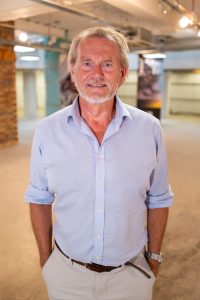 I think it makes sense.
I’d start with the fact that I’ve spent approaching 40 years working for the NHS. My time in the organisation has spanned operational – hands-on, as a craniofacial surgeon – and senior leadership roles – creating and maintaining the working environment, enhancing operational capability and efficiency.
How does a senior leadership role for an employer of 1.5 million people (NHS England) shape you professionally?
In more ways than you can imagine, to be honest. What I’ll say here is that experience leading large transformational change, which focused on altering structures and processes in complex organisations like the NHS, is a unique opportunity.
My professional development journey includes an MBA at London Business School. It’s this combination of education and application which I’m bringing into my role at Evans Cycles. At Evans, this experience is being used to carry out an end-to-end review of the bicycle retail business, emphasising the importance of a seamless customer experience – online and in-store.
When you see an organisation or business as a structure, there are a lot of similarities, common elements. As a quick, very simple explanation – you are mapping processes, testing the processes, optimising the processes, and measuring the quality of the outcome – for everyone involved.
This means our staff are the internal customer – our brand custodians – and our external customer experience is shaped by the way you support and enable your staff.
Are we, as a business, able to consistently deliver a truly valued customer experience?
Is the process we have mapped out flexible enough to support a wide variety of circumstances, whilst also being robust enough to give clear guidance for anyone using the processes – think new starters, or people changing roles?
How do bikes enter your world?
Riding bikes as a child meant getting my first taste of freedom, and, for part of my working life, I’ve commuted by bike. Later on, it – cycling – once again became a hobby, a pleasure; riding with friends and enjoying the simple enjoyment of sharing time outside. A bike is a powerful tool for good in a wide variety of ways.
Thinking about the health and well-being aspect of cycling, how do we, as an industry, do a better job of lobbying government, making it safer and easier for the general public to choose a bicycle as a daily form of transport?
At Evans, I will be exploring the potential to influence conversations about cycling infrastructure and public health through programmes and events which bring us into more frequent contact with the general public.
Making it easier for people to experience using a bicycle is critical. More people riding means more voices and more influence. A bicycle as a vehicle – a low-cost, low-emission, reliable form of daily transport – is a distinction that is important to make.
Evans already has relationships with Center Parcs and Forest Holidays – supplying bikes and running cycling courses, aiming to encourage family cycling and confidence in safe environments. I’m also interested in early involvement in cycling education through schools, and keen to explore opportunities to collaborate on initiatives like “School Streets” and “Bike Buses” to get children engaged in cycling in safe environments.
While being careful to avoid conflicts of interest with my NHS role, I should highlight that prevention, including exercise and addressing obesity, is a key pillar of the NHS’s 10-year plan, making cycling promotion a complementary effort to improve public health and reduce healthcare costs.
As a business, where do you see the near future taking you? How else will you reach more members of the public?
Our geographic footprint – location and number of stores – has to grow. Being on the high street is an advantage we need to maximise. We are visible to people during their daily lives. Being present alongside other high street staples can’t be emphasised enough. If 65 million people don’t currently ride a bike, when was the last time they saw a bicycle shop in their daily life – without actively going out of their way? If we (cycle retailers) are not visible, how do we become visible, familiar, spark curiosity, and feel accessible?
For Evans, Project 100 – expanding the business to 100 stores – is about easier access. If we want to be able to form partnerships with businesses, to become a Cycle to Work provider, then we need to make it easier for people to find us locally and visit us regularly. We can’t expect to build connections and community without a local presence. We see B2B relationships as a strong means to form connections that extend beyond the initial B2B foundation. Cycle to Work customers becoming regulars is an opportunity we are determined to explore in depth.