

We were recently invited to visit the Stashed Products factory in Abermule, Mid Wales. Based in the rolling hills of Powys. Despite being founded in 2021, Stashed has seen phenomenal growth, recently being honoured with the King’s Award for Innovation in 2025.
Whilst there, we sat down with founder and design engineer Elliot Tanner to get some deeper insights. Following their success with the SpaceRail system, they have become a go-to for retailers looking to reclaim space in their workshops.
We sit down with Elliot to talk about the brand and the launch of their new modular range, LodeStar.
In the March issue, we’ll be publishing the feature from our visit to Stashed. Subscribe to BikeBiz for free if you’d like a copy!
Stashed built a massive profile through direct-to-consumer (D2C) channels early on. As the brand matures, how has your internal structure or approach changed to accommodate the specific needs of a professional retailer network?
To accommodate the professional retailer network, we’re focused on building brand presence and strength with a solid product that is consistent and repeatable. The product range has been refined and repackaged specifically for the retail environment, and the company is committed to providing great margins, strong in-store POS, and quick delivery, mostly next day. Internally, the team has expanded to include dedicated roles such as Technical Support (Neil Halcrow), a Business Development Manager (Chris Hill), an Operations Manager (Jamie Johnson), a Head of Finance (Helen Duncan), and increased production operators.
A B2B area on the website now offers support, a login portal for simple ordering, a commercial section with case studies, dealer locators, and training to maintain the quality level of their D2C experience. We also support retail through shows across the UK, EU, and Europe, and have established distribution in Italy, Germany, Switzerland, the UAE, and Iceland, with plans to expand to the USA, Canada, Australia, and New Zealand.

When you introduced the Rack Mount system for industrial pallet racking. What was the primary driver behind that development? Was it a specific industry request, or a response to a broader trend you were seeing in workshop and warehouse management?
The development of the Rack Mount system was driven by both personal experience and industry insight. My background working in a bike shop gave me first-hand knowledge of the challenges of storing bikes in a commercial space. We focus on innovation, and the system allows for the use of existing pallet racking, which is an improvement over difficult-to-build structural systems. It’s weight-rated, easy to assemble, and doesn’t require extra shipping. The specific idea was sparked by seeing the YT Industries setup, which used timber boards on racking, prompting the thought that a better solution could be created.
This led to further adoption by companies like Trek, Decathlon, and Atherton Bikes. The Launch Pad accessory, for example, was developed specifically for Sigma Sports to save them time and prevent damage by eliminating the need to put foam on bikes for storage. This all aligns with a broader trend we observed: bike shops are squeezed for margin and need gains everywhere, making improved workshop storage a necessity for consistent revenue and happier customers.

Tell us more about the new LodeStar range. What specific workshop and retail challenges is it designed to solve?
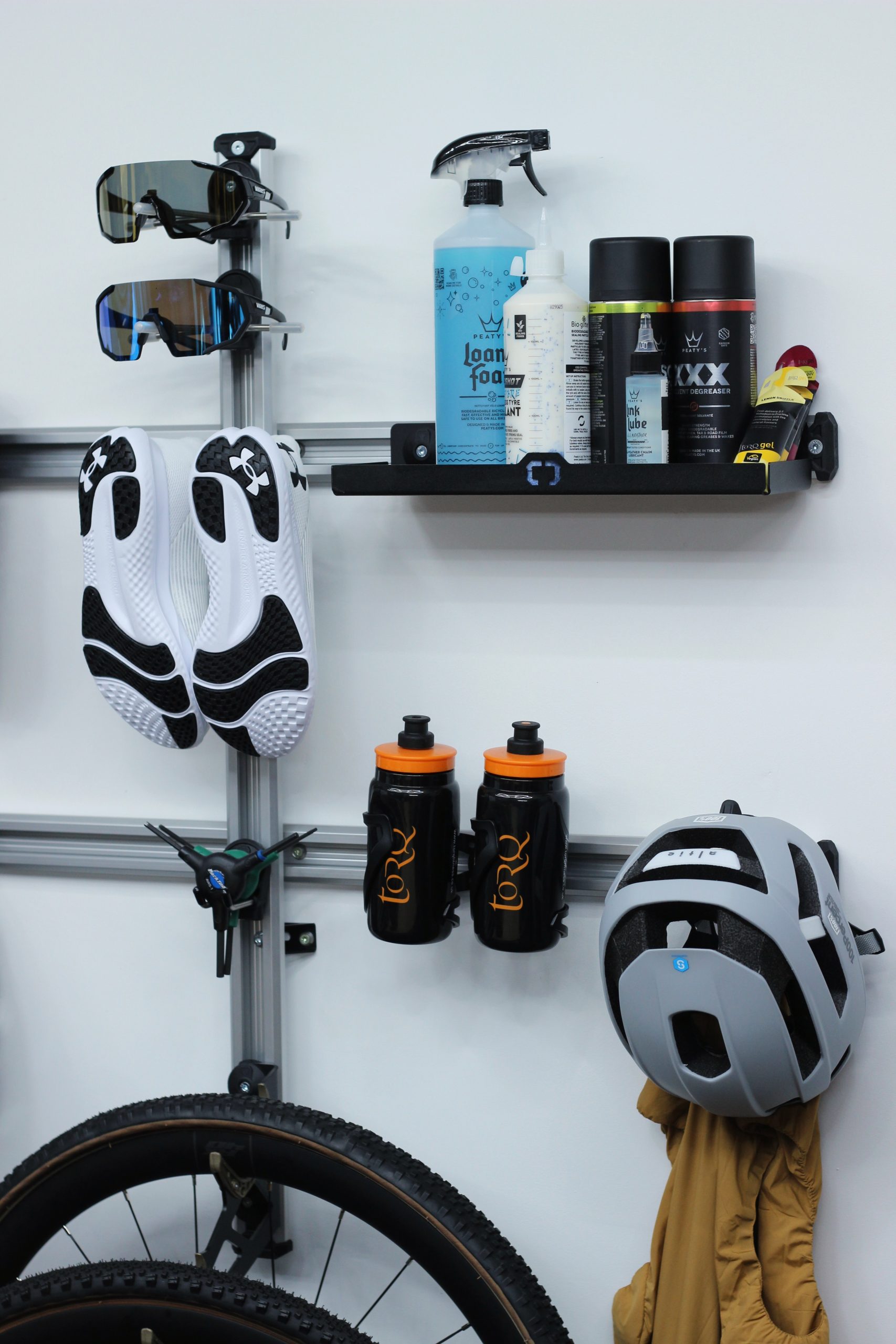
The LodeStar range is a modular active lifestyle storage system. It was initially developed to solve a storage problem at home, but the commercial potential has since become clear, generating significant interest. LodeStar is designed to store the various items that are a problem outside of bikes.
For retailers, it beautifully visualises storage, providing high aesthetic appeal for product presentation. In a workshop setting, it is utilitarian, robust, and a valued part of the storage system, especially for spare wheels and tools.
When a shop owner considers a full store or workshop fit-out with Stashed, what are the primary performance indicators or benefits they should be looking at to justify that investment?
The primary benefits shop owners should look at to justify the investment include:
- Increased storage space
- Easier access to bikes and parts
- Improved throughput in the workshop
- Reduced cost for workshop operations
- Reduced rental space cost
- Improved health and safety
You’ve stayed very committed to Welsh manufacturing. Beyond the “Made in Britain” label, how does that localised production model actually impact your ability to serve the trade and innovate quickly?
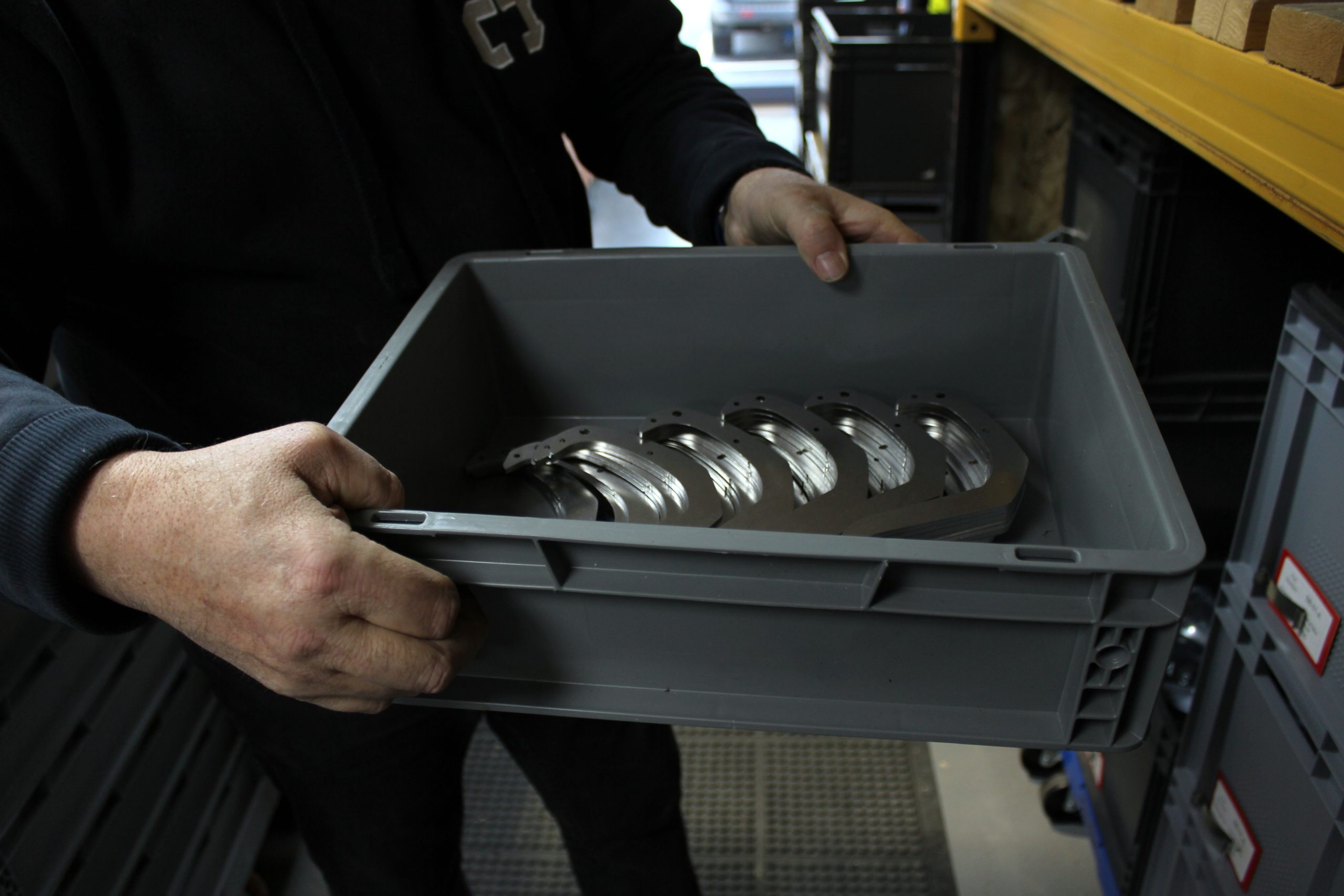
Manufacturing locally in Wales is a major advantage that goes beyond the “Made in Britain” label. It means we don’t have to commit to large amounts of stock or long production runs. The ability to drive to suppliers allows for quick quality checks and prototyping, which is reflected in our 0% warranty rate. This quick and local process allows us to update and create ideas, with prototyping happening within days, not weeks.
While UK costs present a price challenge, we feel our products represent great value and are now cheaper than the main alternatives. R&D is also easier with UK suppliers, allowing for quick and iterative testing of ideas, which will facilitate the very fast development of new LodeStar ranges in the future. Our local model supports working with customers to quickly develop or customise products based on commercial insight.

