BikeBiz Bicycle and cycling retail news
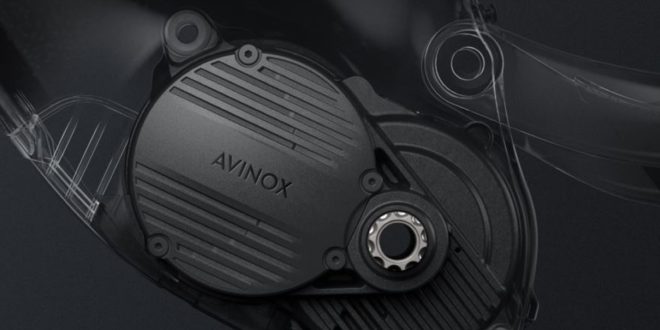
When BikeBiz had the opportunity to sit down with Ferdinand ‘Ferdi’ Wolf, Avinox Product Experience Director, we wanted to make it count.
You already know all about Avinox, about software updates, about Amflow sales impact. With this in mind, we took a different tack, exploring a wider-reaching conversation.
Credit to Ferdi and the Avinox brand – keen to dive in and discuss industry responsibilities, talking about how ‘now’ shapes the future of eMobility, and how much of that opportunity is available to existing cycling industry businesses.
Ferdi – where do we start?

Let’s start by saying that Avinox is in the process of becoming a ZIV member. We take our leadership position seriously as developers and deliverers of new technology, and want to play an active role in shaping the future of the industry.
Having our origins as a DJI incubation project, that industry disruption through technological innovation, is in our DNA. We see opportunities where others maybe also do, but aren’t so confident to take the step or leap. Being a point of focus and scrutiny comes with the territory as ‘disruptors’ and ‘challengers’ who shake up the established order.
It’s important to reiterate here that we want to do this in compliance with regulations and hand-in-hand with the industry, hence the move to become ZIV members.
We see our market-leading technology as a platform from which to shape future discussion and development within the whole eMobility sector and not just one part of the cycling community.
That’s a strong way to start a conversation – matches the impact Avinox and Amflow have had on the market.
To be fair, we’re not the only ones making moves here. There are companies launching Class-3 enabled e-bikes (28 mph / 45 kph) and even throttle-assisted e-bikes in the US. Both are legal and compliant products. Both expand how sections of the industry see e-bikes. Both rely on human input – pedals turning to engage assistance. No meaningful pedalling, no assistance. No confusion here.
You’ll likely have seen the CONEBI news about Speed Pedelec classification potentially moving to sit with regular bicycles and e-bikes (eapc).
There’s a host of reasons why we’d want to see this, as well as other innovations and developments for eMobility
People – the general population, not us ‘cyclists’ – riding bikes benefit most from assistance, especially where mobility restrictions and physical challenges are present, and this is before we even get into those using cargo bikes to replace cars or small vans for commercial applications.
Our industry’s responsibility is to manage and maximise the transition to new eMobility solutions, making the best of the opportunity it represents.
As a brand, we are custodians of the future, of cycling-as-transport, promoting the many eMobility advantages. Avinox’s current customer base may be heavily eMTB weighted, but this is not the only application for our e-bike drive systems. Behaviour and resulting mainstream media coverage make or break what comes next, for the entire industry.
We have witnessed our innovation pushing the entire industry forward. Just because there isn’t currently a cargo bike with an Avinox system doesn’t mean there won’t be in the future.
Imagine a 200Kg load rating and a 10 % gradient on a road where an eCargo bike rider shares the road with other vehicles. It’s not hard to see why people would benefit from Avinox’s levels of assistance or what impact that has on the wider market.
Now add ABS and traction control – both already available on ebikes – and you see how eCargo bikes can be positioned as two-wheeled EVs, appealing to people familiar with these technologies in their car, and reassuring them that the same safety systems are engineered into their new e-bike.
As innovators and disruptors, what do you see when we explore a wider drive systems conversation?
You’ve seen the conversation around Downhill World Cup riders adding weight to their bikes, right? The bike feels more stable and planted. This discovery comes from riding ebikes in training.
Now, ask when we will see belt drive used in conjunction with a motor and gearbox as one unit going mainstream. Centring the weight makes so much sense. A belt adds durability under loads – from powertrain and cargo weight – that chains don’t and can’t.
If I’m riding a bike for transport, why do I want all the cleaning and maintenance of a chain? I don’t. It’s a barrier. A frustration.
When we see people using micromobility solutions in Southeast Asia and China, we possibly get some sense of where the future is to be found. Utilitarian transport solutions in volume, whilst specialist enthusiast products cater to a different set of needs and wants. The overlap will be extremely interesting.