If you start with a blank sheet of paper, what does your innovation dream deliver? This is the question Viiala asked. The goal: To create a radical technological advance which reimagines what a two-wheeled vehicle is, comparable with the Software Defined Vehicle era of four-wheeled vehicles.
Call it a moonshot, or a skunkworks project – however you label it, you have a clear innovation driver.
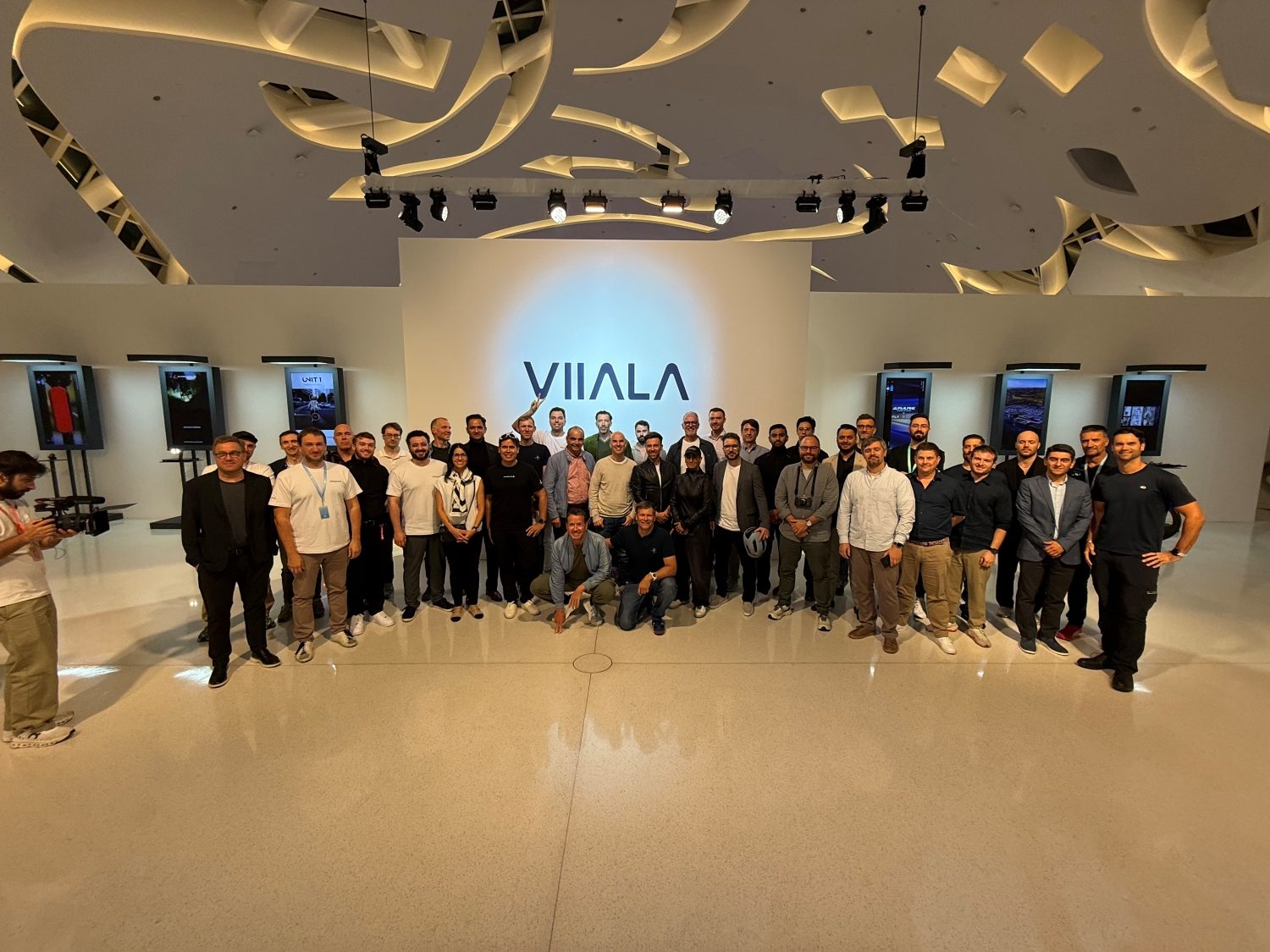
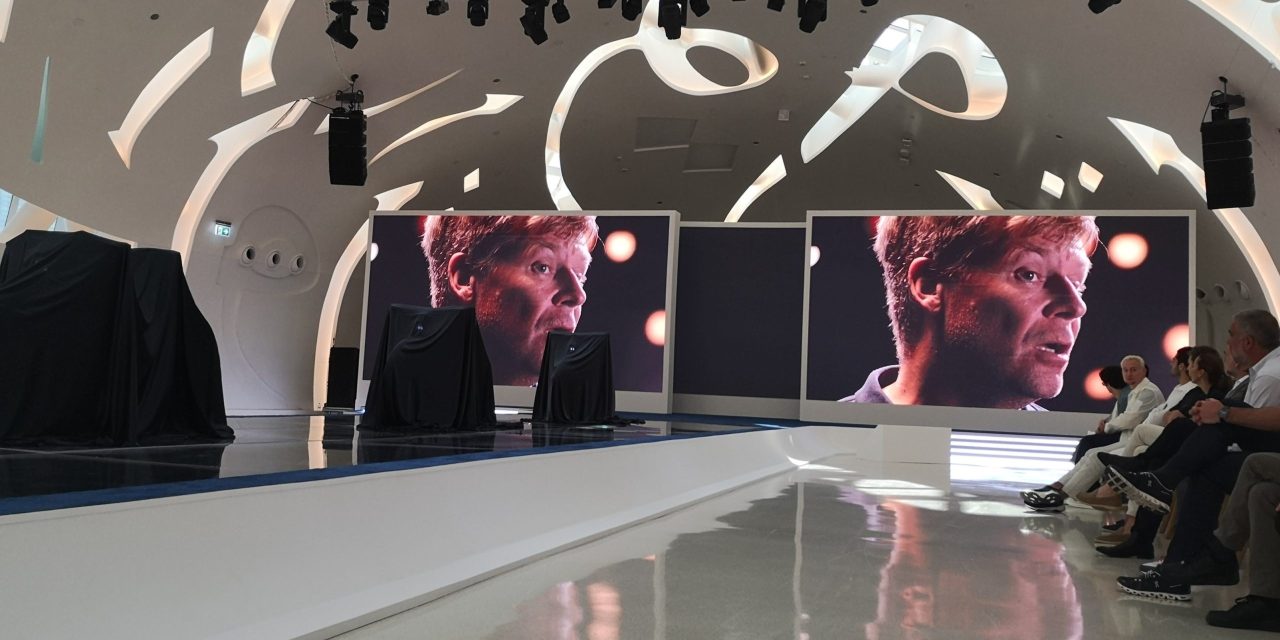
What Viiala shared at a private event hosted at the Museum of the Future in Dubai showcased 17 innovation partners gathering to introduce the project.
 The clear point of attraction: A unique innovation opportunity. For the cycling industry reader, businesses like Pinion, Fox, Time and Gates are on board. Others, bringing new technology and construction techniques, can’t yet be mentioned.
What does this ‘innovation attraction’ I speak of look like? The overlapping – auto, motorcycle, SDV – industry interests of a number of partners will likely give you some idea of the ambition of the brand which carries Tomi’s name.
Viiala – the team that is François-Henri Bennahmias, Tomi Viiala, and The Honourable Merchants Group – is very much about something beyond the conventional cycling industry.
Pushing boundaries isn’t about a 32-inch wheel or different gear ratios. It’s about transforming what a two-wheeled vehicle is for an audience that looks for new mobility solutions.
When you’re working with Humna Khan, founder of Astro, a pioneering business in additive manufacturing testing, it gives some sense of the ambition of the project.
Technology integration means thinking about how leaders in the Software Defined Vehicle world of the new auto industry are making interaction with the vehicle a seamless, user-enhancing experience – whilst also ensuring enhanced user safety. Yes, V2X is discussed, ensuring the rider has a 360-degree sense of their place in the space they occupy.
I need to stress here that whilst this could sound like an abstract conversation. It’s most definitely not. With Viiala, this is an active work-in-progress, partnerships-driven reality. A live project with partners engaged, working toward a clearly articulated vision.
How active?
Rideable prototypes in 10 months. Product model tease and pre-orders opened in October of 2027. Customer 001, Francois, taking delivery of his Viiala in June of 2028.
Is this a low-volume product? Yes. Intentionally so.
Does the determination to launch a product made in the low thousands offer a unique test bed, way beyond the typical production verification stage, for all parties involved? 100% yes.
Where else is innovation like this going to be combined to deliver a genuinely for-sale product – not a concept for display, only seen at a trade show?
Using an auto analogy, think of it as BYD teasing the Yangwang U9, having showcased its capabilities in early 2023. At the time, many in the legacy auto space laughed it off. In September of 2025, it became the world’s fastest car. Bugatti previously held the record.
 Sound like a lot of hype? Asking yourself if I’ve been paid to write this? It is, and I have not.
Viiala isn’t about comparison with what’s already available. Having attended several bike shows the Viiala team states it saw nothing to inspire the journey they are on. Incremental development isn’t the motivation here. If that sounds like bluff and bluster, remember the 17 partners already onboard. I can’t name the motor manufacturer, but when I can, it will make a lot of fully justified waves.
Now, Light Electric Vehicles (LEV) are a major part of future electric mobility. On two wheels, we, in Europe and North America, currently have the bicycle, the e-bike and eMotorcycles.
As the electrification journey continues, it will become increasingly apparent that the Asian market has already found a hybrid approach which delivers a new vehicle type. Not e-bike (EAPC or S-Pedelec) in appearance, but also not eMotorcycle in performance.
This is how I’d best explain why Viiala talk about a ‘vehicle’, not a bike or even an e-bike. It’s not semantics; it’s a vital differentiation. Yes, a Speed Pedelec, but not as anyone has delivered thus far.
When you know that Craig Dent of RIDE-studios, the business behind the designs, has a Motorcycle and Automotive background, this makes even more sense.
People who don’t currently consider a bicycle or e-bike, people who don’t call themselves cyclists, will see a new vehicle form and, from the way it looks, understand it isn’t the two-wheeled object they visualise when they hear ‘bicycle’ or ‘e-bike’.
That low-volume production approach means this definitely isn’t going to be an ordinary e-bike for the mass-market customer. A premium product is the goal. Something appealing as an object, a design, and as a technological tour de force.
Viiala will offer three distinct vehicles, designed around short urban journeys (€15,000), for regular transport-focused use, including commuting (€20,000), and a high-performance option designed to enable the riding of a TdF stage at the speed of Tadej Pogačar (€25,000).
It’s the last vehicle, which, for the enthusiast-focused industry, likely gives an inkling of just how far in advance of the current e-bike offering the Viiala battery technology and motor capability will need to be.
And that’s only scratching the headline-grabbing surface of what is in the works.
Curious to know more? Hold that thought.