
This piece first appeared in the June edition of BikeBiz magazine – not subscribed? Get a free subscription.
[divider style=”solid” top=”20″ bottom=”20″]
What goes into making a helmet? Passion, determination, teamwork? It’s easy to forget how much work it can take to take something from idea to finished product. When you buy stock or pick up something from a shop, you don’t see the work that went into it.
Idea, concept, prototype, testing. All play a part in the process.
It’s easy to forget that there are people, time and effort behind a product. When we purchase something, it rarely comes with a story. Well, not always. So, how are Abus helmets made?
BikeBiz were recently invited to Italy by ABUS to tour their manufacturing facilities for their road helmets. Whilst there, we got to visit Maxi Studio as well as an EPS manufacturing factory to find out just how ‘Made in Italy’ their helmets are.
What I find interesting and what you need to know are likely very different things. Being invited to explore ABUS facilities in Italy is a privilege; it’s also an opportunity for me to tell a story. Many of you may know much of this already, but being able to share something you may not is why having the opportunity to visit and share that story allows us to take pause and connect with brands on a different level.
You might sell ABUS products in your bike shop, distribute them or use them day to day. But do you know the process each product goes through? The time that goes into creating each helmet, and why they choose to do things a certain way?
Maxi Studio: Sheets, moulds and assembly lines
In 2021, ABUS acquired Italian helmet manufacturer Maxi Studio S.R.L., integrating ABUS and Maxi Studio into one. Much of the production takes place in Vanzo Nuovo, Italy. Upon arriving, we were split into groups. The trip was organised for the ABUS Factory Racing team, ABUS customers and press, all to connect and help showcase what ABUS has been working on.
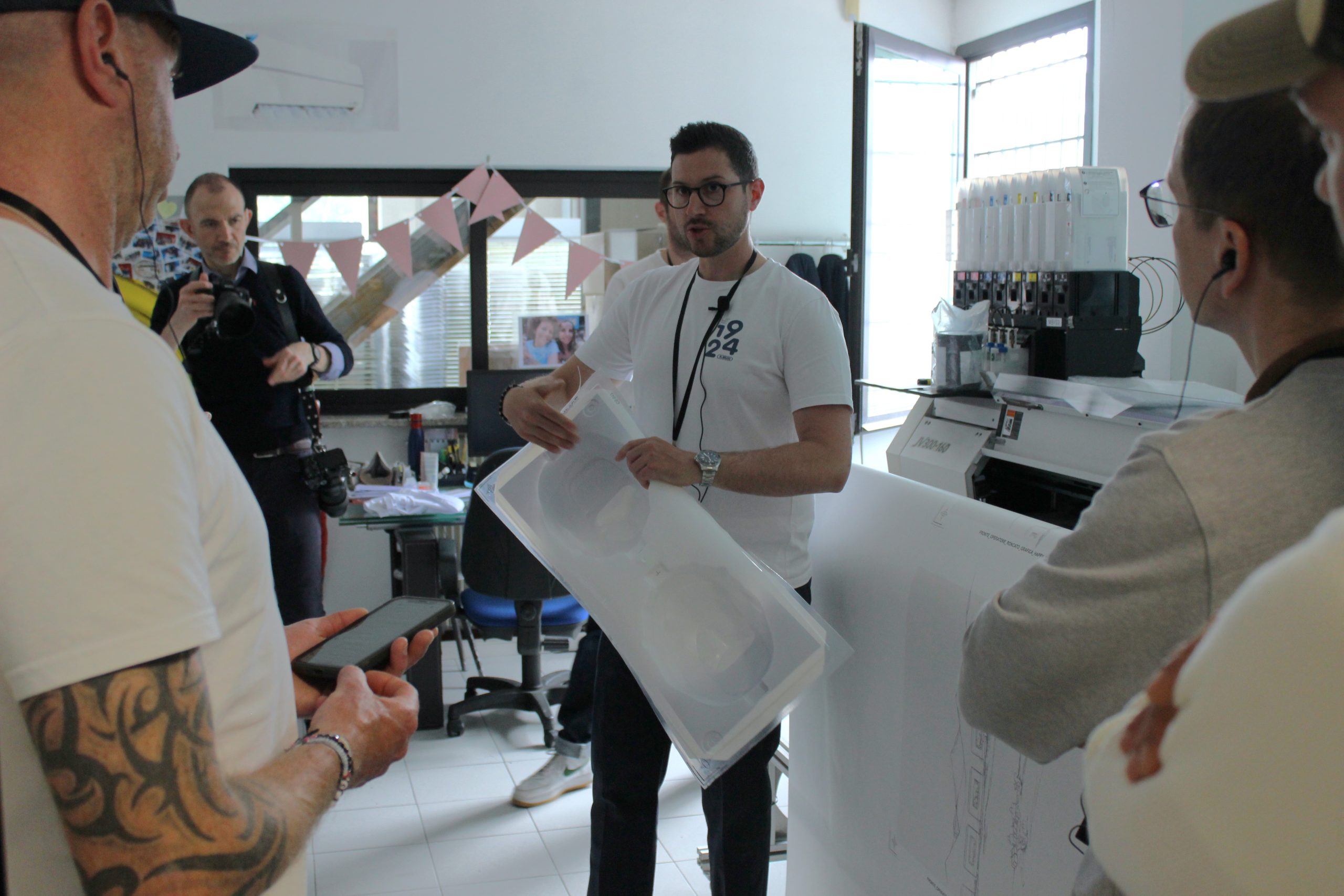
Project Manager, Mattia Carotto
We were shown around Maxi Studio by Project Manager, Mattia Carotto, who took us through each step of the production process at the facility.
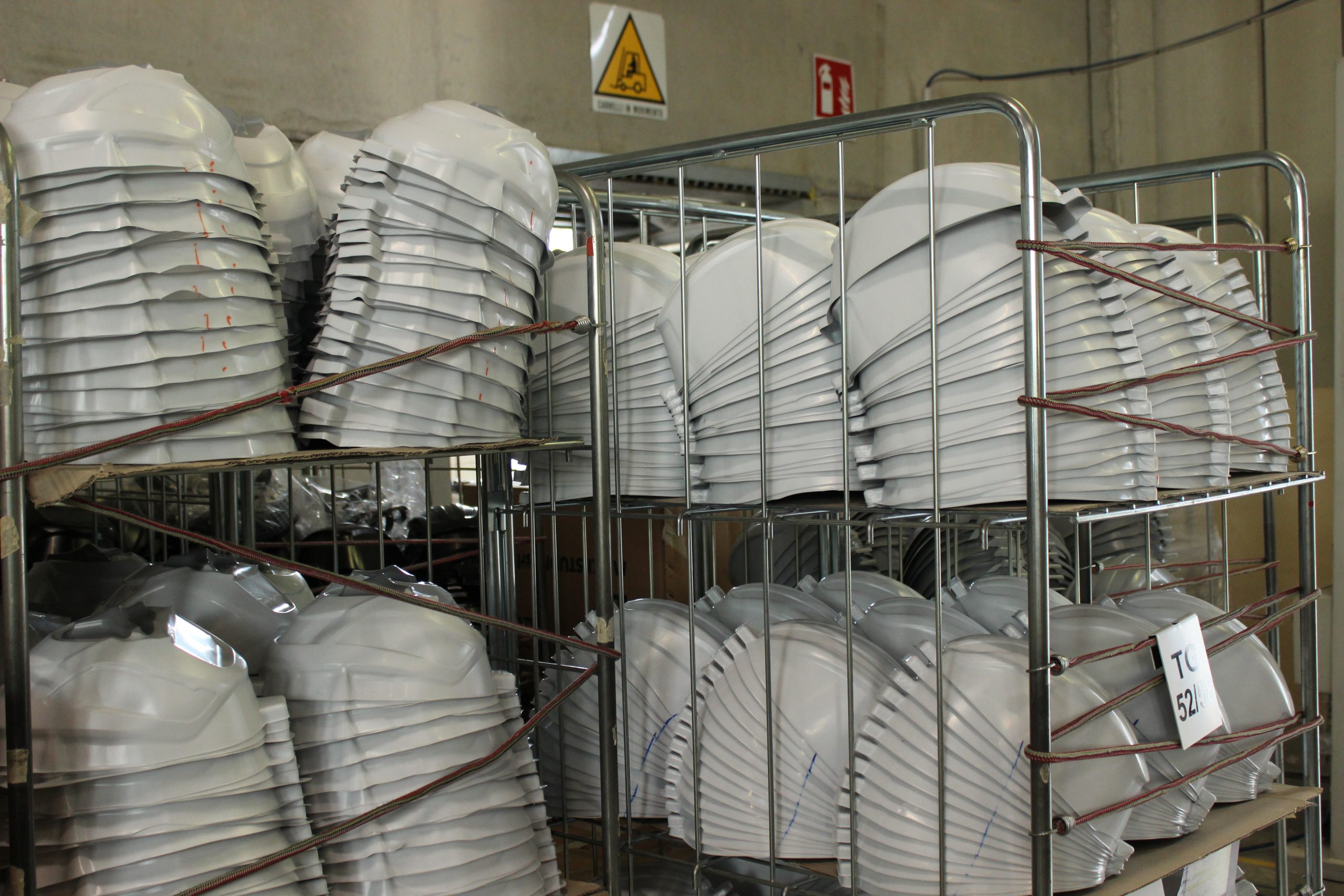
It starts with a transparent polycarbonate sheet, purchased as big sheets and cut into smaller sections, depending on the production cycle. Mattia explained that they use a special polycarbonate because it undergoes a lot of stress, hot and cold treatment and deformation. It’s a special material with a dedicated blend and a mixture of components in a mixture of different thicknesses.
The sheets are manufactured in Belgium, made specially for ABUS, with a film that offers extra protection. The film either stays on until the helmet reaches the assembly department or is removed during painting, depending on the desired finish, and sticks to the sheets thanks to its electrostatic properties.
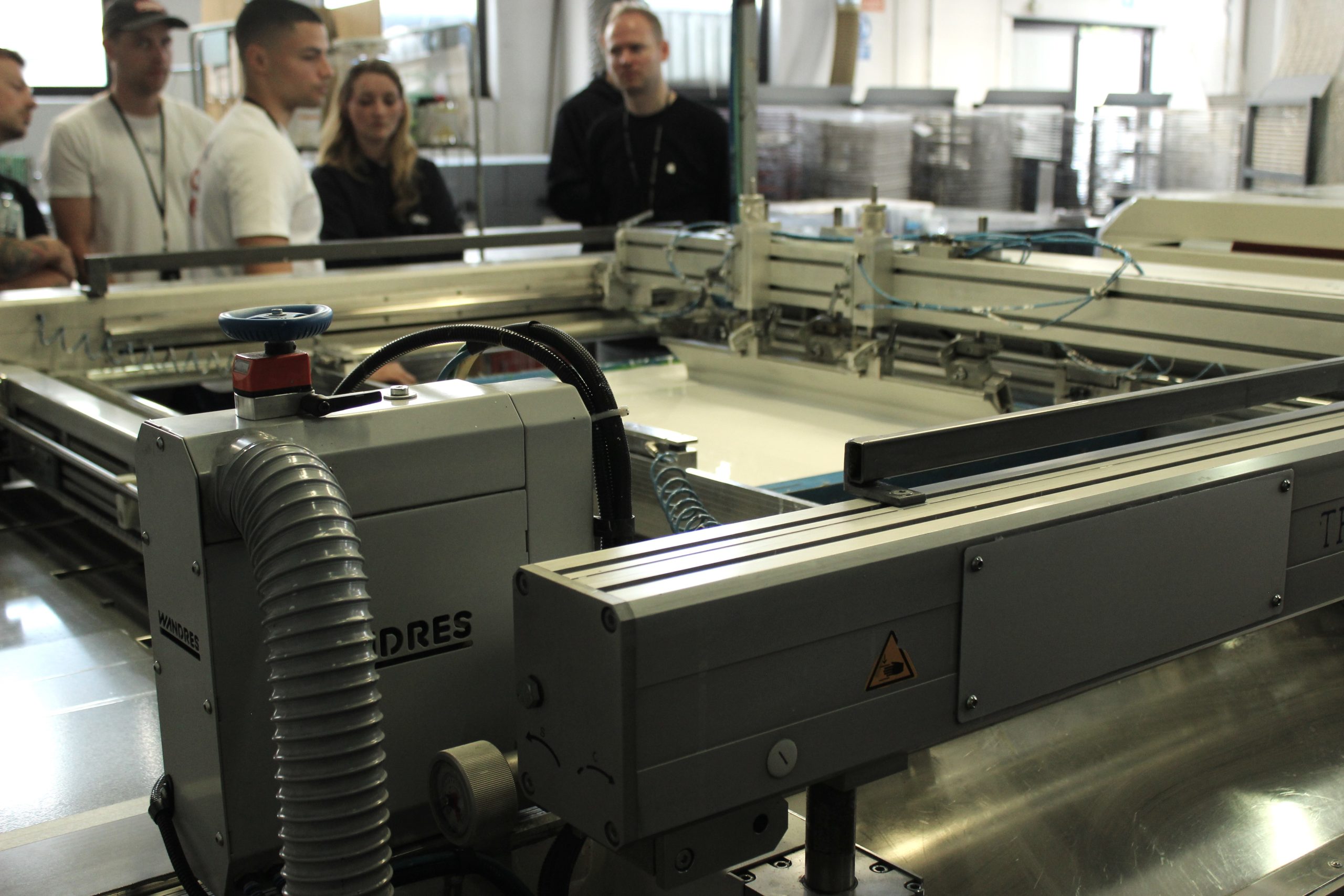
The thickness of the sheets correlates with stiffness, weight and cost. The tooling works to create sheets in line with the current product cycle. It’s not quite cut and dry; things such as internals, thicknesses and structure are dictated by which helmet is being produced. Once sheets are cut, colour and logos are added using a screen printing and spraying process, something Mattia explains is often outsourced due to a lack of trained operatives in Italy, but Abus has a good team of operators able to do this task in-house.

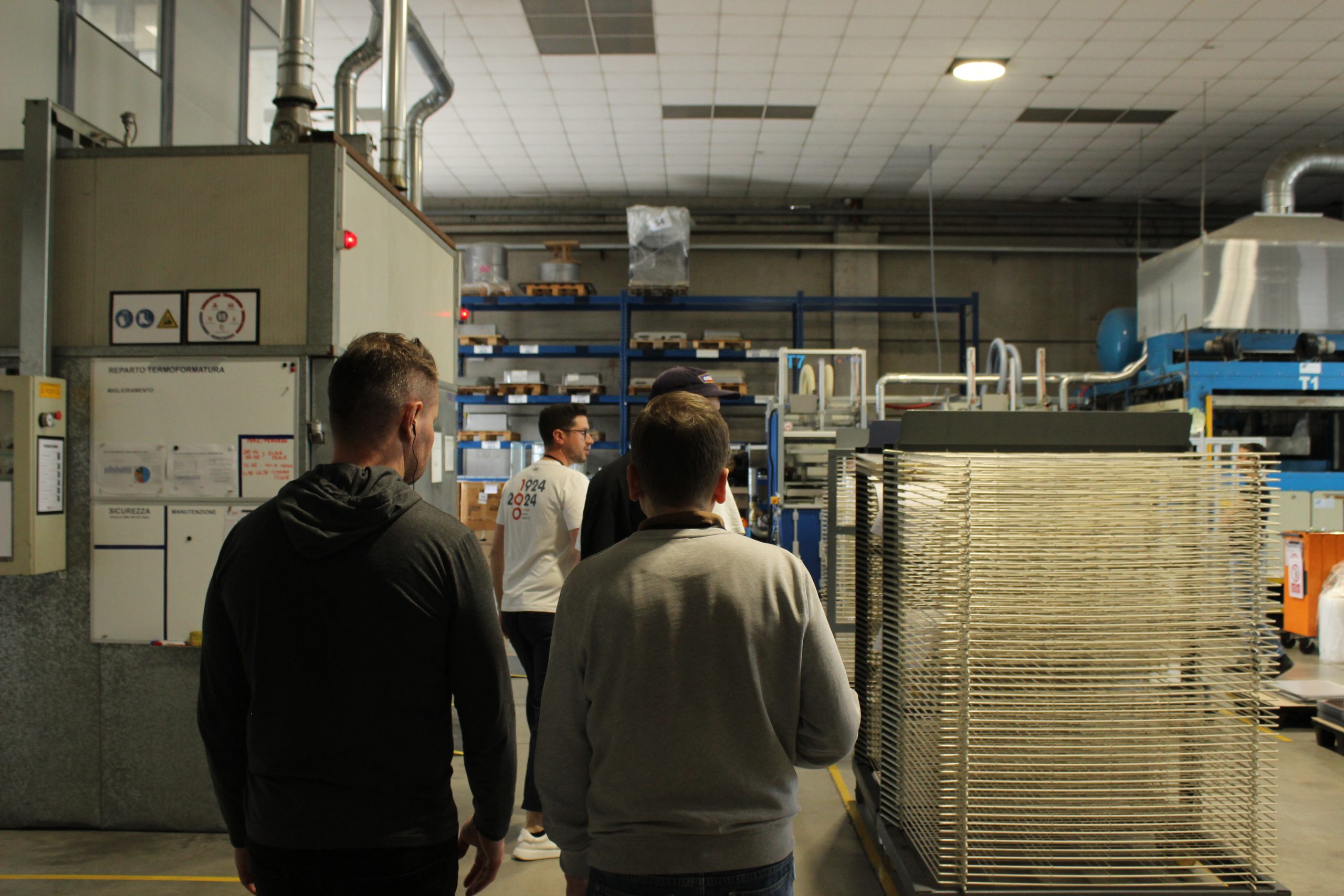
Once parts have been cut and painted, they are heated, which causes the sheet to melt slightly, removing any bubbles before moving on to the next part of the process. This part, Mattia described as magic, and he wasn’t wrong. Watching the sheet get placed into the tooling, onto a specific thermoforming tool, one of which is made for each helmet and each size. When the sheet is placed inside, the air is sucked out, forming the shape of the shell. This is a very involved process; there is tooling for the back, top and lower shell for each helmet. It’s also a costly process, with each piece of tooling costing around 3000 euros, and depending on which helmet, they can use up to 30 moulds.
Following this, the shells are inserted into another machine to undergo very precise CNC cutting before they move on to the next step.
Minus one, every part of the helmet is made in Italy. The only thing not made by them is the retention system, something supplied by a historical partner, but otherwise, end-to-end, each component is made in Italy. Interestingly, there are elements of Maxi Studio’s past life still ongoing, with the production of suitcase shells and ice cream machines taking place amongst the helmet production.

Maxi Studio
Speaking about the visit, one of the guests, Rodney Rouse from the Bike Lounge in Nottingham, talked about his experience, “We were invited to Abus as a retailer of their helmet and security products. Whilst there, it was really insightful as to how much goes into the manufacturing process and how much of the process is still done by hand and how time-consuming the process is. It really helped add value to the products by seeing this, and being able to explain the ins and outs of the entire manufacturing process will certainly help when selling the products going forward, with actual, genuine experience.”
All of ABUS’ road helmets are currently made in Italy, with the production of other helmets, like the mountain bike and children’s ranges, made in Asia. The internal part of the helmet, the EPS, is produced in another facility.
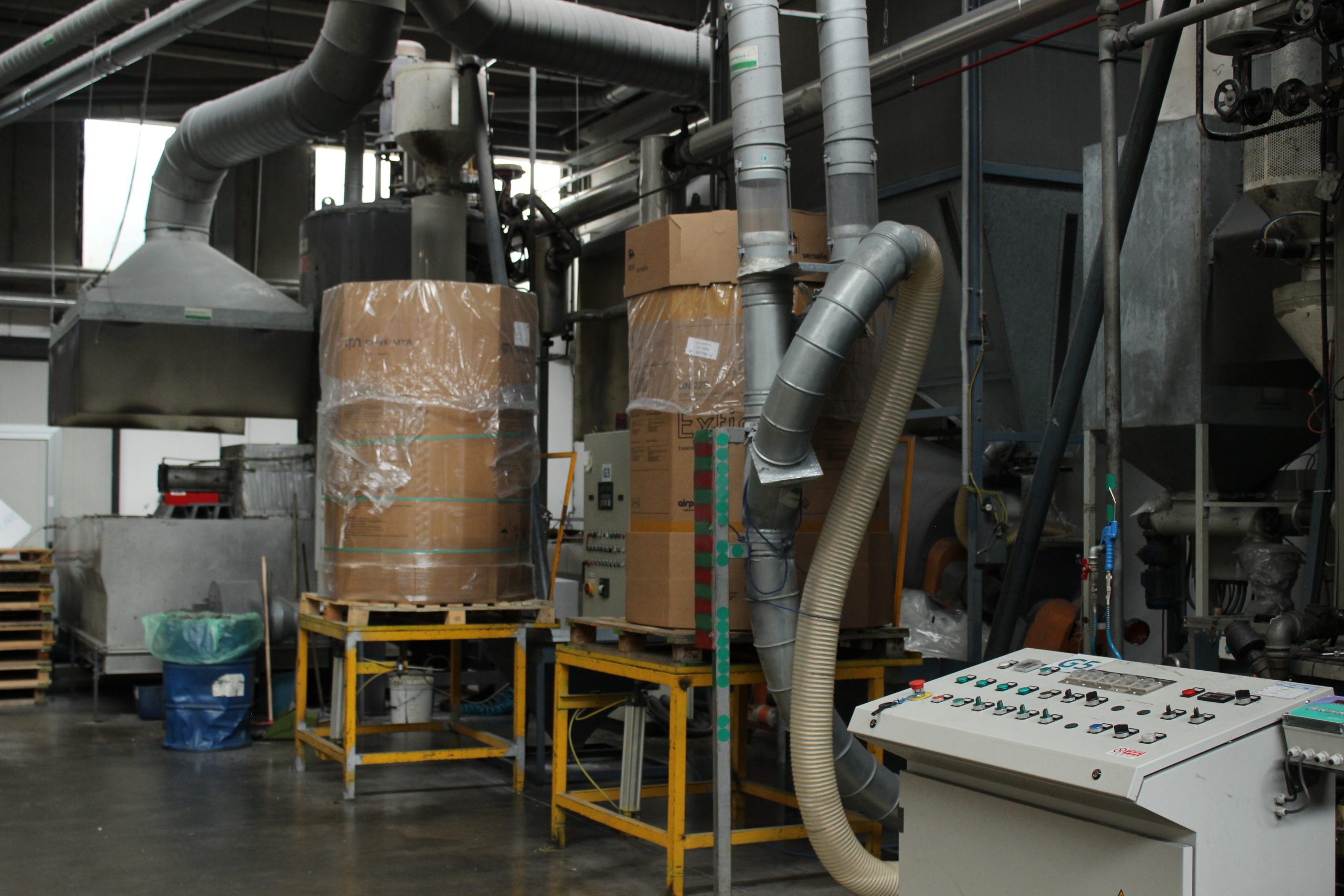
Since 2017, Maxi studio has grown from 45 people to around 90, which will grow again in future as Abus brings all elements of its production under one roof. They’ve also recently brought some elements of testing in-house, performing a range of safety tests to streamline elements of production and testing in a new laboratory.
EPS Factory: Combining all the Elements
EPS, also known as expanded polystyrene, might look like polystyrene, but they have very different characteristics. It’s the part of the helmet designed to take impacts, formed from raw material by being preheated and formed for the inside of the helmet.
ABUS believe, though they admit they aren’t sure, that they are the only European manufacturer making white EPS in Europe, as many moved production abroad. And whilst they aren’t the only manufacturers to make white, it’s something that took them two years to develop using their own formula.
The EPS production starts off as very small spheres that are heated by steam to increase their volume. This activates a gas that acts as a sort of glue to hold them together.
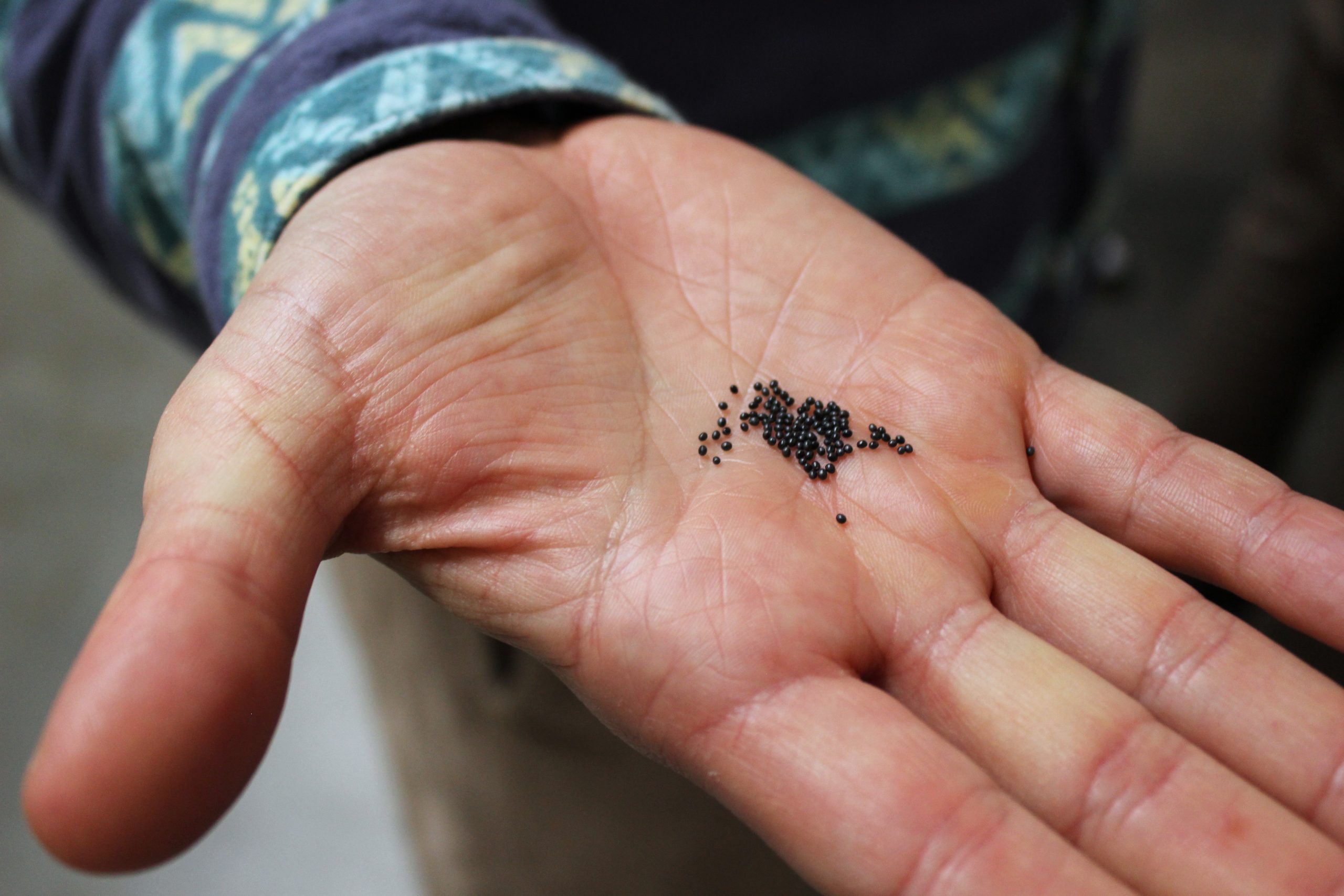
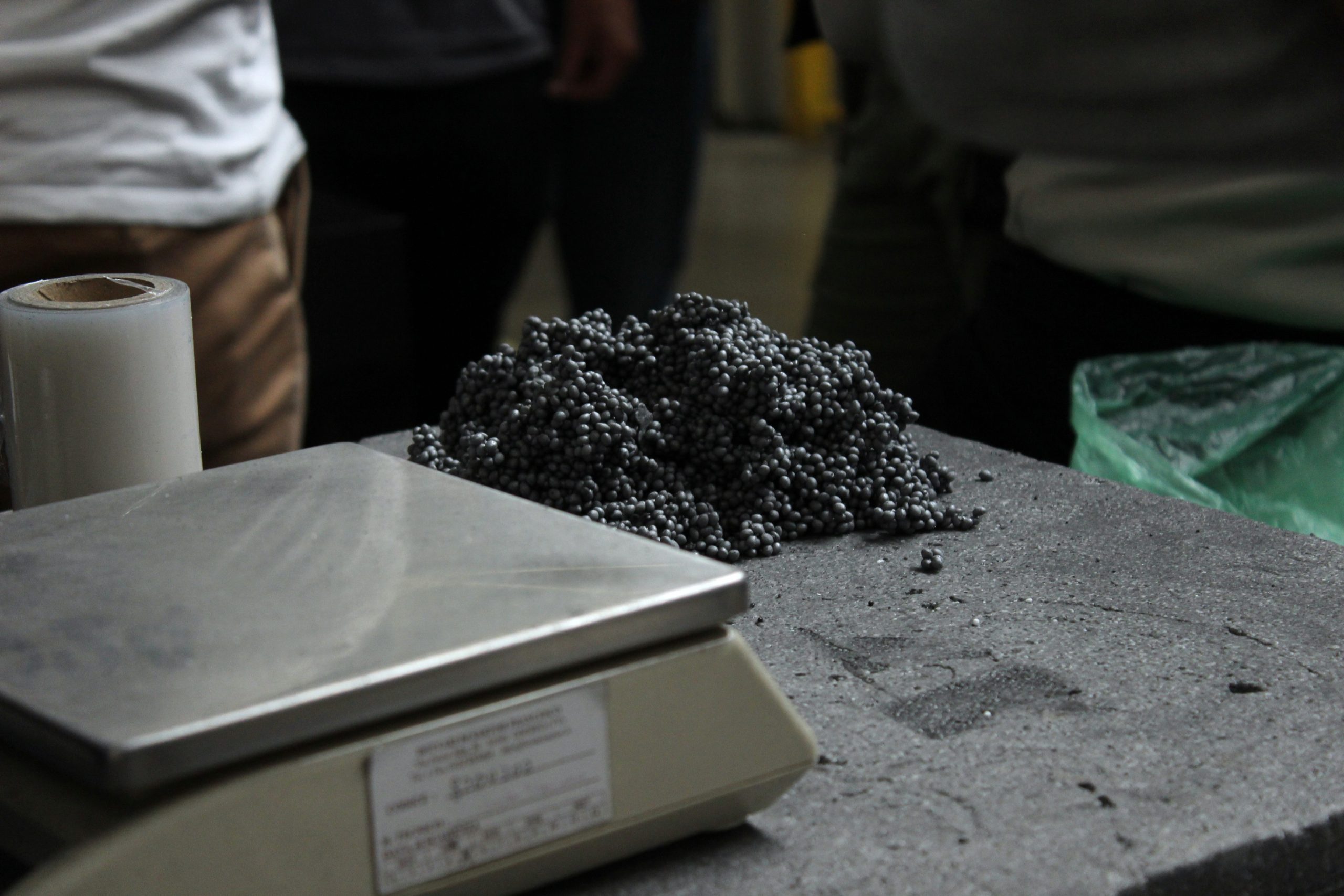
Each part of this process is phased to ensure there are no defects during production. When the helmet is ready to be combined, the machine performs multiple tasks, injecting the material and adding additional anchor points. The tool injects the material, and with foam and heat, each part is combined. The outer shell has a certain glue that helps it bond to the EPS during the injection moulding process.
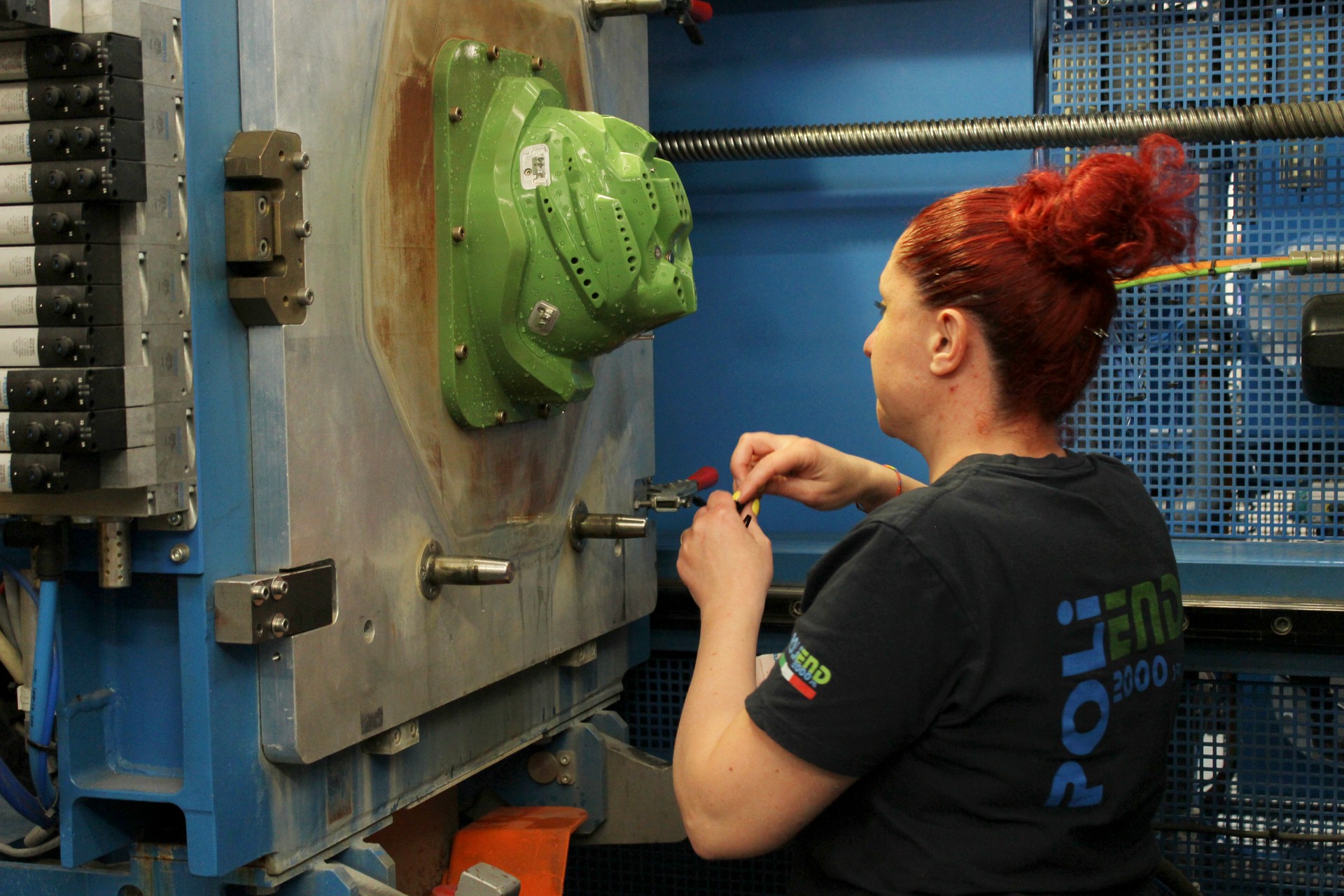
in moulding process
There are strict testing protocols in place, with helmets being weighed during production to make sure they are within the limit. ABUS say you will not find any EPS that comes from them with holes in; they only want to create masterpieces.
Weight is important due to its correlation with safety; the weight must be within certain limits to meet internal tests and external certifications.
Once this process is complete, helmets go back to Maxi Studio for the finishing touches, something done by hand, minus the logos, which were once done by hand, but has since been automated. Otherwise, straps, padding, and final quality control are done on a production line.
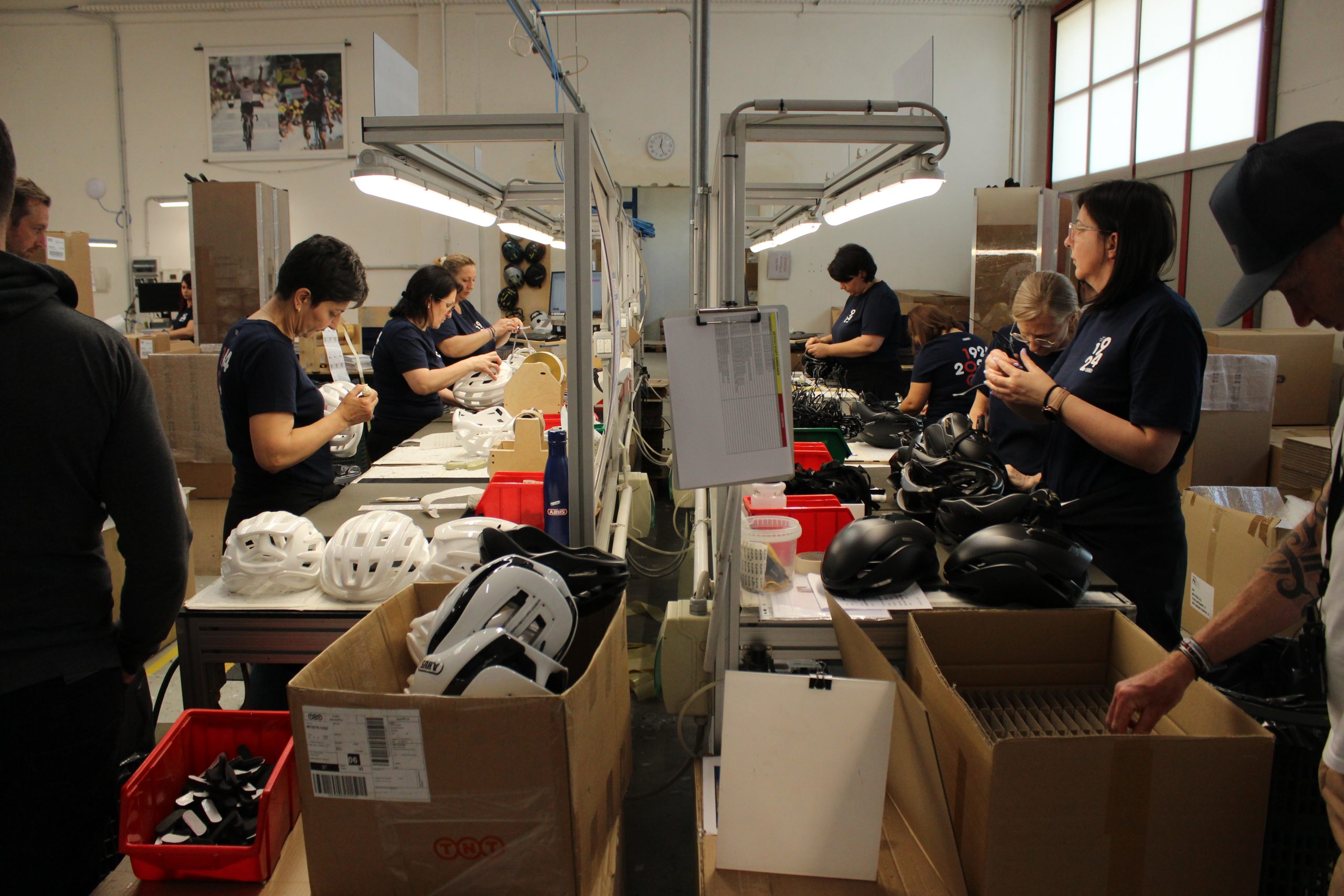
Final touches are done on the production line
Tim Wood, from Echelon Cycles, was another retailer invited on the trip, and following the tour of each facility, said, “A product is so much easier to sell when you’ve seen it designed, developed, produced, and marketed.
I wasn’t fully aware of the helmet safety standards, taking the viewpoint that all helmets exceeded a fairly basic set of standards. Having been on the visit, I’m now enlightened and can talk to consumers in more detail. It’s also good to know that a lot of the Abus road range is produced in Italy, whereas most of the competition is manufactured in the Far East.
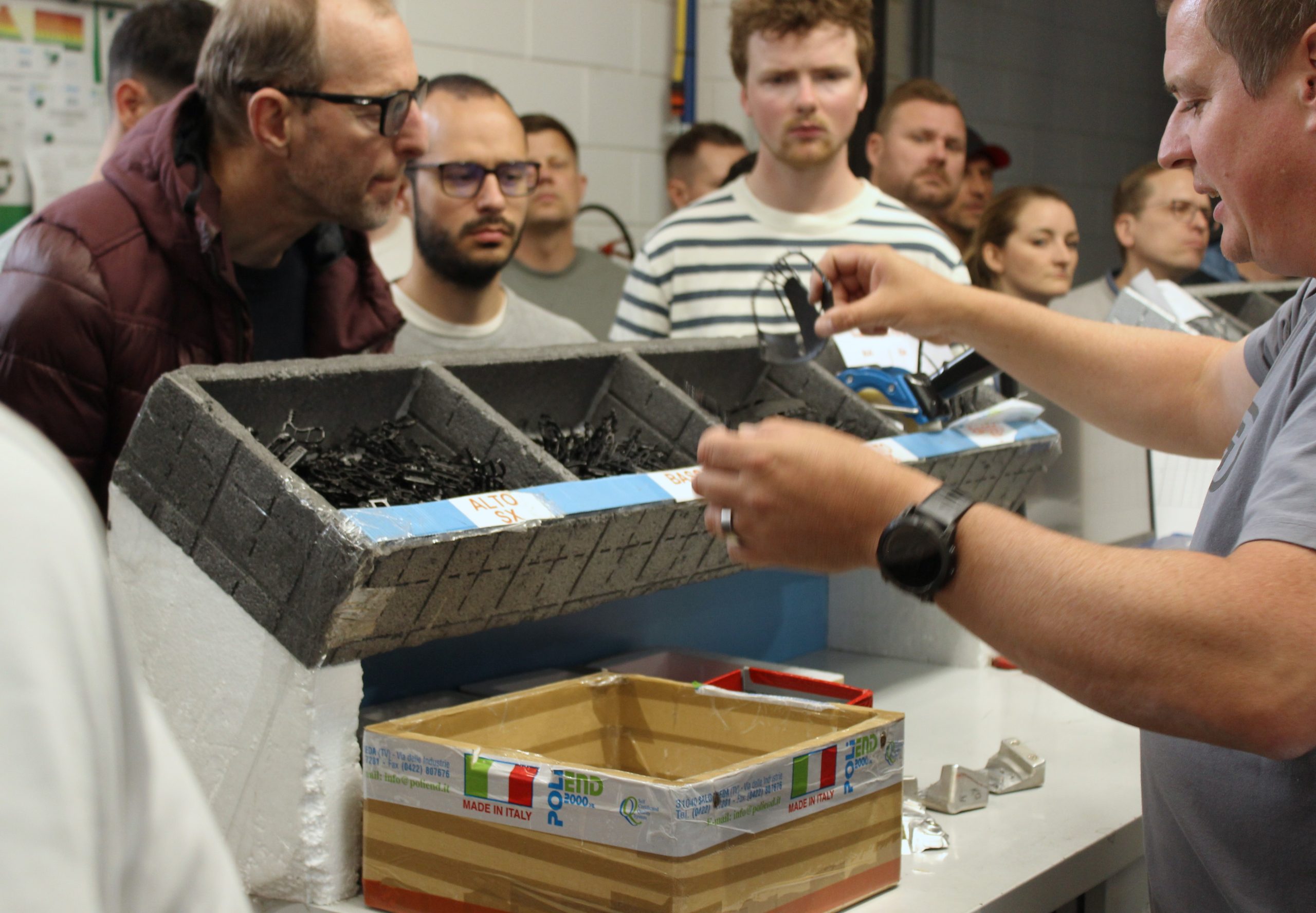
Seeing a lot of the manufacturing process, from screen printing the shell, through putting the individual components of the helmet into the mould, before injecting the EPS in, gives you plenty to talk about. It also shows the time involved and helps justify the cost.”
The Future of “Made in Italy”
All the back and forth between different factories and facilities is a problem. Not only does it cost time, but having things spread out makes things such as quality control, something they are very strict on, a challenge for ABUS.
The solution? Bring everything under one roof. And that’s the plan. By next year, ABUS hope to build their own facility, bringing Maxi Studio, production line, EPS production and testing into one. They recently purchased some land, and construction is due to begin soon.

Helmet testing lab
This move also means an increase in production capacity with a view to doing things in a more sustainable way.
ABUS have some exciting plans in the pipeline, with the new plant amongst them. This move cements their dedication to high-quality production and means we may see more than just road helmets produced in Italy in the future.

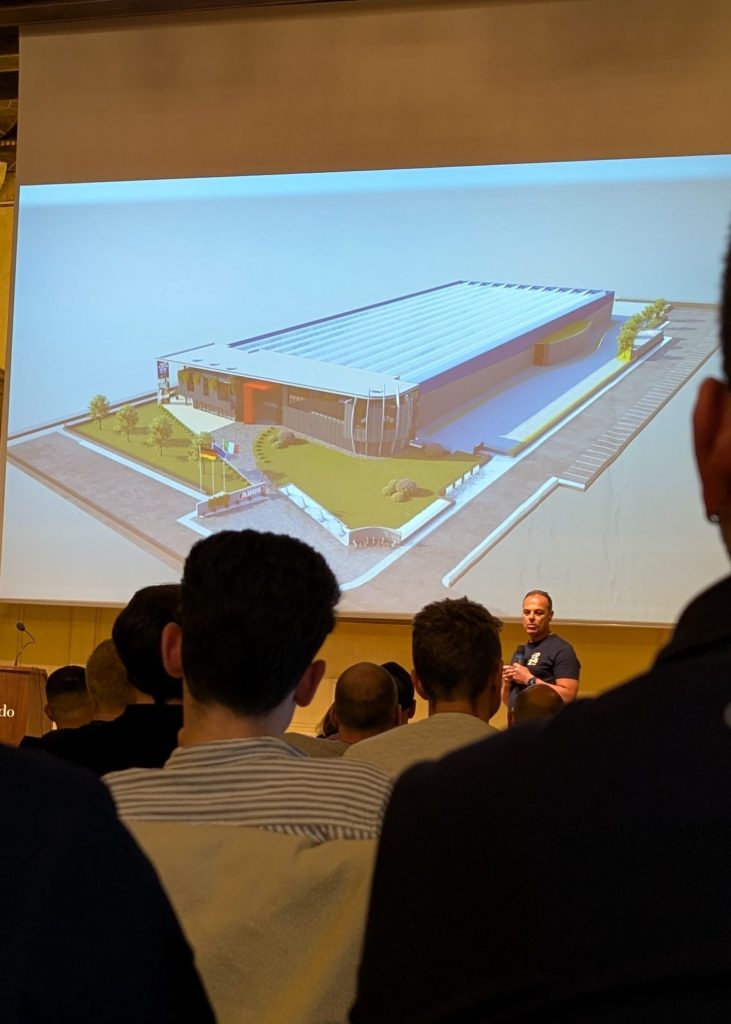
Want to visit? ABUS host an open house in both Italy and Germany, and they take people on a regular basis. Contact ABUS UK for more information.