In May, we announced the 18 people who would judge each category in this year’s BikeBiz awards.
To allow you to get to know the judges better, we’ve asked them all to give us insight into who they are, what they do and a little more about them.
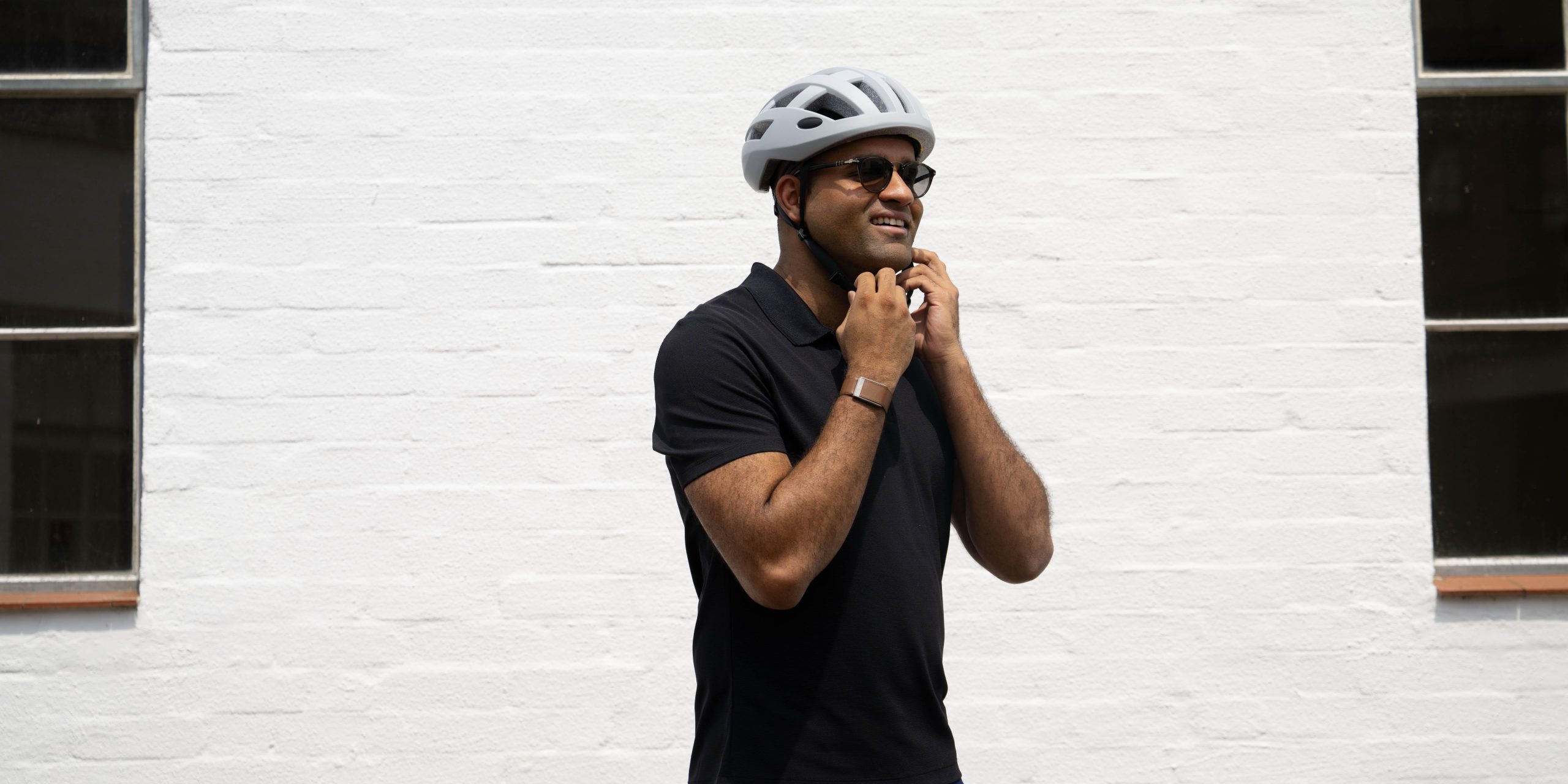
Here we hear from Ani Surabhi, CEO of Quin, a designer and engineer known for creating innovative wearable safety tech. He has developed wearable sensor technology that detects crashes and contact emergency services to get the injured rider help.
You’re on a call or you meet someone at an event, when introducing yourself (and having to sum up many years in a few words), you say?
I’m the founder of Quin. I’m a designer and engineer and after a serious cycling accident, I became focused on rethinking and innovating helmet safety. This idea was brought to life, firstly through better materials, then through embedded crash detection tech that allows helmets to automatically call for help when it matters most.
Everyone in this industry has a unique ‘origin story’ that set them on this path. What was that for you, and how did that initial spark evolve into the professional journey you found yourself on?
In 2010, while studying at the Royal College of Art in London, my life changed in an instant. I was cycling when someone opened a car door in front of me. I woke up in a hospital 5 days later – my helmet had split in half. I was lucky to be alive, but the experience left me with a question: why hadn’t helmets evolved to offer better protection?
That question drove me to design something new. Inspired by the cartilage structure between a woodpecker’s skull and beak, I created a helmet made entirely of paper—lightweight, sustainable, and offering 3 times the protection of traditional materials (which are still used today). It proved that intelligent design, inspired by nature, could push safety forward.
To test it, I needed crash data, but commercial rigs were out of the reach of my budget. So I built my own. I created a crash sensor and algorithm that measured impacts in three dimensions and assessed their severity. In solving that challenge, I saw a larger opportunity.
What if a helmet could detect a crash, understand the seriousness by analysing the data at the point where injuries are the most life-changing (the head), and automatically call for help?
That idea, years later, became Quin. We’re on a mission to give every helmet intelligence – so it doesn’t just protect during a crash, but responds after it too. Because real safety is about more than providing basic protection from impacts – it’s about ensuring you can get the help you need when it matters most.
Given your role as a judge for the BikeBiz Awards, if you could pinpoint one innovation or trend within the cycling world over the past decade that you believe has been truly transformative, what would it be, and why does it stand out to you?
One of the most transformative shifts in cycling over the past decade is the development of safety tech- alongside a growing consciousness among cyclists of their own safety and wellbeing. It’s no longer just about protection in a crash; it’s about prevention, confidence, and riding with peace of mind. The availability of lightweight sensor tech, that offers real-time data and crash detection without compromising comfort.
What’s truly exciting is that riders are actively seeking out these tools, not to limit the adventure, but to make sure they can keep chasing it, day after day. That mindset, paired with intelligent, accessible tech, is what will drive the cycling experience, and therefore, the industry – forward.
Delving a little deeper into judging, what are you going to be looking for when looking at the shortlists for each category, regarding who you might vote for?
When judging, I’ll be looking for entries that strike a strong balance between innovation, thoughtful design, and solid engineering. Product design is my personal and professional passion, so I’m naturally drawn to details – how something is made, how it functions in the real world, and how elegantly it solves the problem it sets out to address.
I’m especially interested in entries that show a deep understanding of the user experience, combining technical performance with design clarity and purpose. While I have a background in safety and tech, I won’t be limiting my focus to those areas. I’ll be looking for products and ideas that elevate the cycling experience – whether through smarter functionality, beautiful simplicity, or a quietly brilliant solution to a real-world need.

Looking five to ten years down the road, what’s a ‘blue sky’ idea or a radical shift you love to see happen for the cycling industry that you believe has the potential to truly reshape how people move and interact with bikes?
Looking ahead five to ten years, I think we will see connected, wearable sensor tech, data, and AI come together to create a fundamentally safer and smarter cycling ecosystem. Imagine bikes, helmets, and infrastructure all seamlessly connected – sharing real-time data about road conditions, hazards, and rider behavior, while protecting individual privacy through anonymization. AI could analyze this vast flow of information to predict risks before they happen, optimize routes, and even coordinate with city systems to reduce accidents and improve traffic flow.
This kind of radical integration wouldn’t just make cycling safer; it would transform how people experience urban mobility, making riding more intuitive, responsive, and accessible for everyone. It’s a future where technology truly empowers riders and communities to move confidently together, to predict and thus prevent.
Among your many contributions to the cycling industry, are there any projects, initiatives, or achievements that stand out as your absolute proudest, and what made it so personally significant for you?
One of the most meaningful moments in my career was hearing from a Quin rider whose helmet detected a crash, alerted emergency services, and ultimately got them the help they needed. That moment crystallized everything we’d worked toward, not just the years of R&D, the hard work and sleepless nights of building a business, but the belief that design and technology can make a life-or-death difference.
I’m also incredibly proud of Kranium, my early work designing a helmet out of sustainable paper-based materials. It challenged conventional thinking and showed that we could radically rethink safety without compromising on sustainability or performance. That experience taught me to always challenge conventional wisdom and gave me the confidence to continue to challenge the status quo with bold ideas.
Throughout your career, the industry has likely undergone significant changes. Have there been any shifts you’ve personally experienced that required you to adapt, and how did you navigate that change?
When I first started exploring helmet safety, the idea of embedding sensors and algorithms into something as traditionally ’low tech’ as a helmet was seen as niche, or even unnecessary. But I believed the future of safety would hinge on data, intelligence, and responsiveness.
Over the years, I’ve watched that once-radical idea become an industry priority, as the value of integrated safety systems has become clear. To stay ahead, we’ve had to evolve quickly, embracing advancements in materials science, edge computing, AI and telematics.
Adaptation, for me, has meant staying deeply curious, building multidisciplinary teams, and being willing to constantly reimagine what’s possible.
If you could offer some advice, whether something you were told, or a hard-won lesson you learned, to those working in the cycling industry that you believe might resonate or help them in their role, what would it be?
Don’t wait for permission to solve the problem that keeps you up at night. When I started Quin, there was no roadmap for intelligent helmets – we had to create it from scratch. It wasn’t easy, but it taught me that innovation rarely starts from consensus.
If you see an unmet need, especially one that could make a meaningful difference in people’s lives, follow it. Be rigorous, be bold, and surround yourself with people who challenge and inspire you. Progress doesn’t come from following trends; it comes from building what doesn’t exist yet, and doing it with empathy, purpose, and integrity.