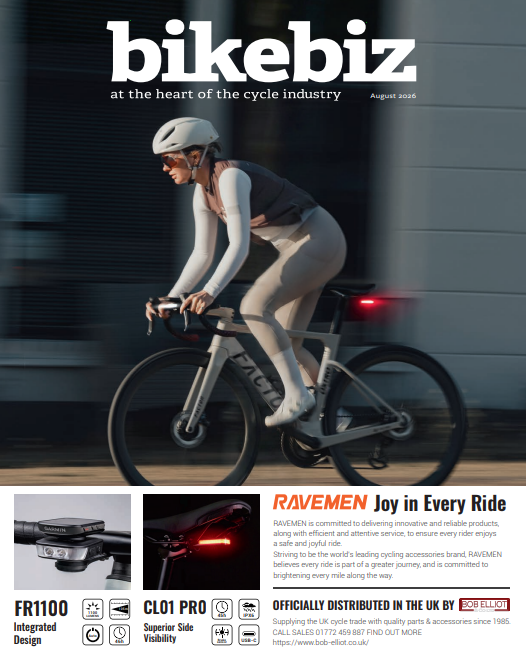

As the e-bike space rapidly evolves, HPS Watt Assist has partnered with leading electric drive systems specialist, Maxon, delivering a system that shifts the focal point from a full-time ‘always-on’ system to an ultra-lightweight ‘only on when needed’ solution.
What do you get when a former McLaren F1 engineer and a former pro cyclist decide to make an e-bike system? ‘HPS Watt Assist’ is the answer.
I can hear the shouts of ‘what does it weigh?’ even as I type this, so, without further ado, here are the headline numbers: 722g, or 1.2kg. And that’s for an entire e-bike system, based on one of two battery options.
Fair to say that HPS Watt Assist is not the typical e-bike system. Here we explore that in some detail with Harry Gibbings, founder of the business.
No ordinary e-bike
“E-bikes are ugly, they’re heavy, and they don’t handle well,” says Harry. “So, we decided to create a system that would make the bike look great, maintain the right handling, and it would be lightweight.”
In performance cycling, weight is vital. Not only does weight and its distribution impact a bike’s handling, but it also has a particular disadvantage to speed – especially when the road goes uphill. “What HPS has created is the world’s lightest e-bike motor and battery system.”
B2B OE supplier focus
HPS Watt Assist is available to high-end road bicycle manufacturers to integrate into their bicycle frames, achieving the same look, size, and handling as a ‘normal’, un-assisted racing-style bike.
The system features a slender drive system that fits into the bicycle down tube, while a lightweight battery is housed in a cycling drinking bottle design that sits in a bottle cage on the frame’s seat tube.
This configuration ensures that the bike’s centre of gravity remains low and central. Crucially, this means that, unlike other e-bikes, the frame can maintain a standard wheelbase and fork rake. As a result, a bike integrated with Watt Assist handles in the same way as a high-performance bike. And looking at a frame equipped with an HPS system, you’d be none the wiser that it is electrically assisted.
Torque-dense drive system
To achieve this design, a drive system with high torque density and low weight is crucial.
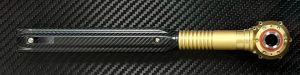
“Maxon’s motor provides 13.8Nm torque in a package weighing just 300g,” states Harry.
Harry learnt of Maxon through the company’s exploits with its NASA projects, where its drive systems have been involved in every Mars mission to date. A Maxon brushless, four-pole DC motor, optimised for torque density, is paired with a customised gearbox that achieves virtually silent operation, unnoticeable to the ear while cycling, while maintaining long-life durability.
Active assistance as related to battery size
On a normal e-bike, the battery is a significant weight contributor, but HPS overcomes this with a special design that generates 93 watt-hours (Wh), giving 1.5 hours’ use for just 722 grammes. There’s also a slightly larger version that provides 185Wh for 3 hours’ use at 1.2 kilos.
For experienced cyclists, 1.5 hours isn’t a long ride, but Watt Assist isn’t intended to be used like a normal e-bike.
“With a regular e-bike, riders typically use its power all the time, but with Watt Assist, I define it as ‘climb time, ’” says Harry. “Our system isn’t designed to be used constantly. We’re targeting experienced cyclists, and Watt Assist provides that extra assistance to be used just when you need it, whether that’s helping you crest the brow of the hill, or riding into a strong headwind.”

Natural power delivery
The HPS approach to power assistance is also unique in that, unlike a conventional e-bike, its input doesn’t come from a torque sensor. Instead, Watt Assist uses pedalling cadence in combination with a wheel speed sensor. This method, Harry notes, gives the rider a more natural sensation of power assist and relies more heavily on human effort.
“You get this feeling that the power is coming from your legs and not a motor. With our system, you have to be cycling at a certain rate for the torque assist to be applied.”
Power and control (on your handlebar)
A button on the handlebar selects the increments of assistance. There are two modes: ‘Peloton’ mode features six small increases in torque, providing a sensitive output suited to riding safely in a group. There’s also an ‘Attack’ mode that rapidly advances to the maximum 13.8Nm assistance when sudden acceleration is required.
Torque assistance levels have been developed through extensive testing, including telemetry generated by riders, including former professional cyclist Philip Deignan. To read the selected assistance level, Watt Assist connects wirelessly to a rider’s handlebar-attached computer screen display.
Precise motor control
When the handlebar button is pressed, this communicates with a Maxon electronic motor control unit (EMCU). This master controller operates the HPS programme and its corresponding modes and torque levels. In combination with the input of the wheel speed sensor, the EMCU commands an additional Maxon controller that regulates motor torque and speed, and the resulting assistance that the system provides to the rider.
“We looked at other motor manufacturers, but Maxon was by far and away the best. The precision-engineered drive system gives us the fine control we were looking for, in a torque-dense, lightweight package,” says Harry.
Leading engineering design and development at HPS is Gary Anderson, former chief mechanic at the McLaren F1 team and the designer of the Jordan F1 car. Maxon UK & Ireland engineer Matt Dean worked closely with Gary in the specification and development of the HPS drive system.
“Matt Dean has been instrumental for the entire length of the project,” says Harry. “He was a guy we could work with – and we continue to work with today. Along with the support of the head of Maxon UK & Ireland, Will Mason, Matt has provided extremely valuable assistance throughout to help develop Watt Assist.”
HPS is currently working with premium bicycle manufacturers, integrating Watt Assist into their frames, and we can expect to see the first releases in the next 12 months.
About Maxon UK
Maxon DC micromotors move everything that has to be rotated with high precision and reliability. They are used to drive applications as demanding as NASA’s Mars rovers, as well as racing cars, through to humanoid robots, cardiac pumps, and high-precision industrial applications.
Maxon has headquarters in Switzerland and distributes its motors worldwide. Maxon UK provides engineering expertise, service, and support to UK OEMs. Supplying Maxon’s high-precision DC motors, gearheads, sensors & encoders, as well as servo amplifiers and controllers, Maxon UK’s engineers can specify customised requirements and design complete micromotion systems.